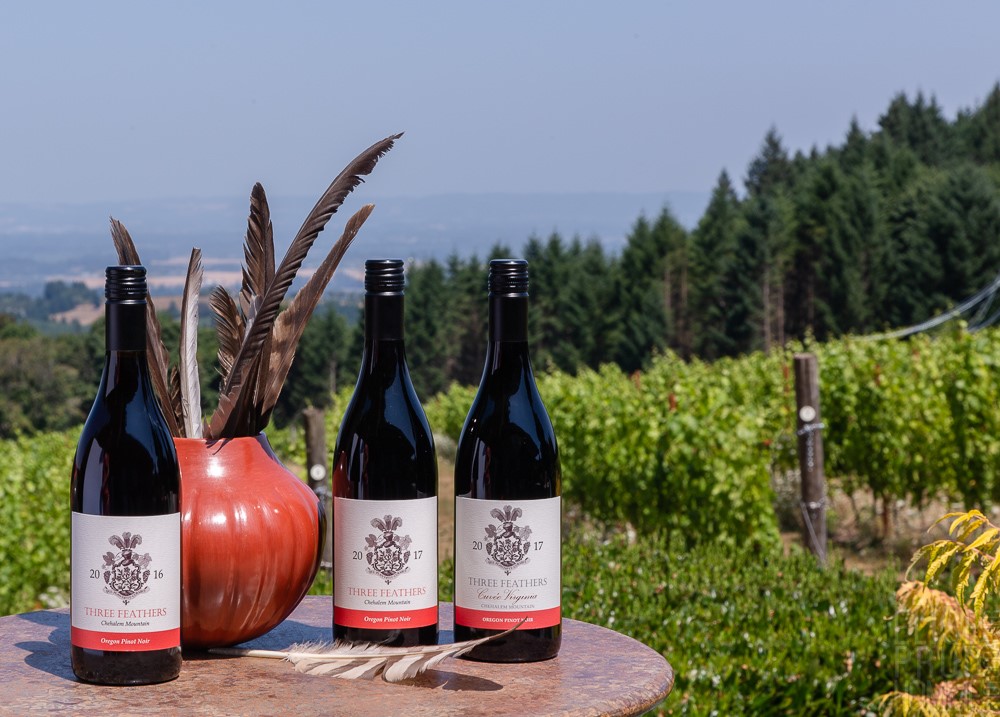
Three Feathers Estate submitted a selection of wines to critics at Wine Enthusiast for their rating this spring.
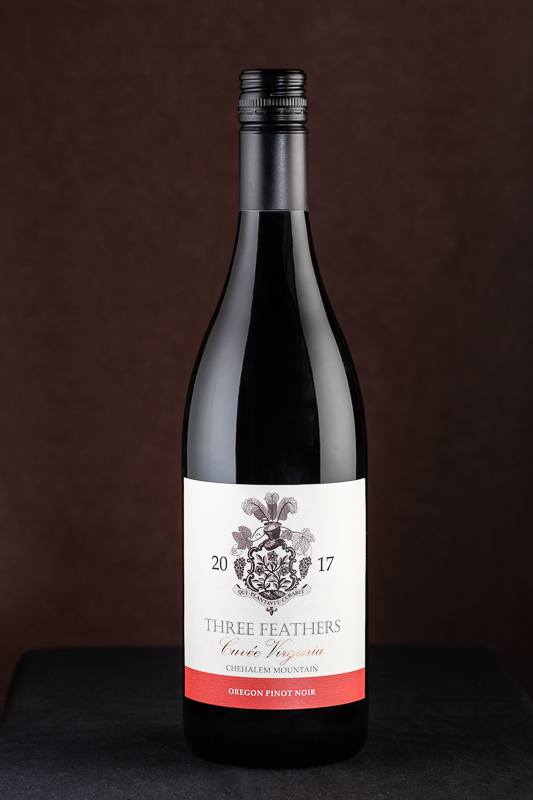
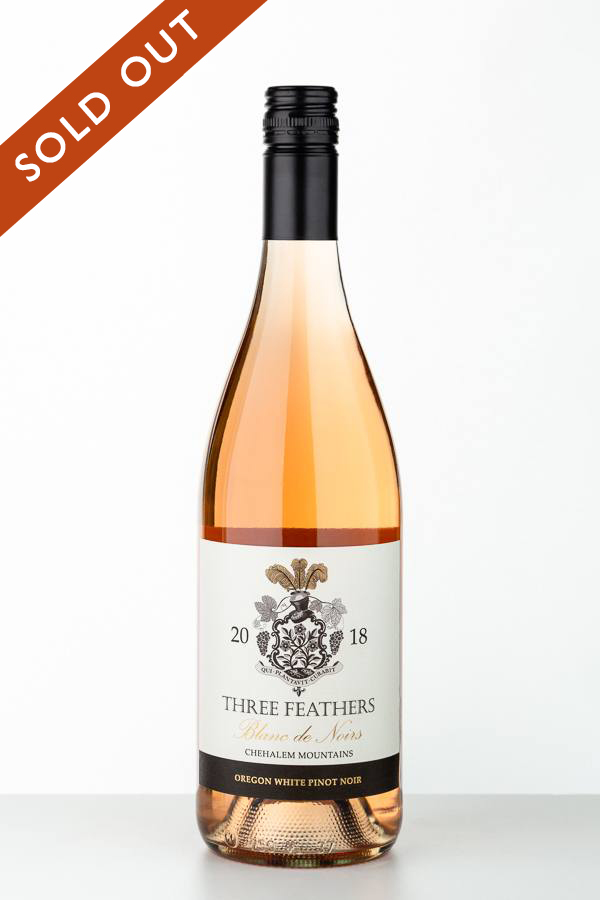
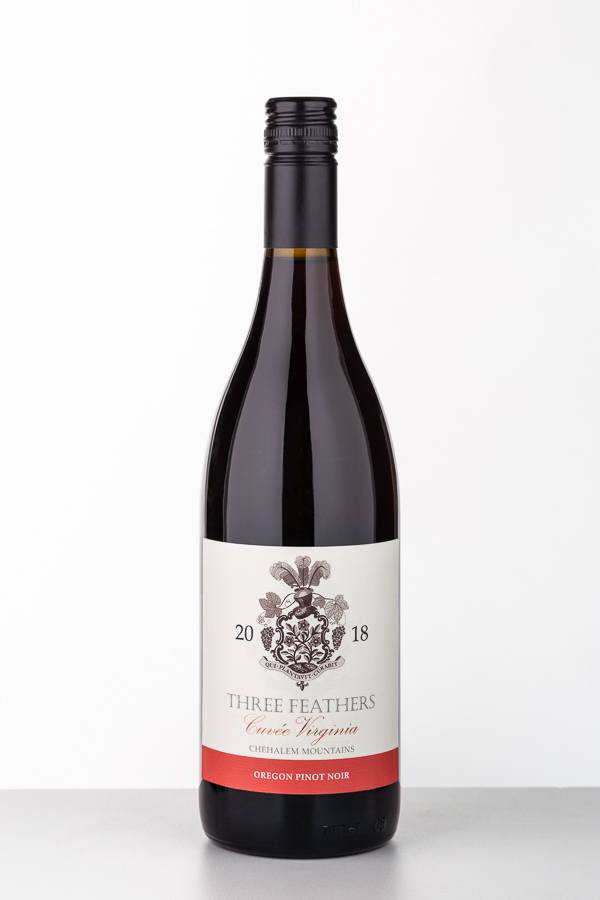
Their response was an 89 point rating for our 2017 Cuvée Virginia Pinot Noir and an 86 point rating for the 2018 Blanc de Noirs. Although we would love to have been in the 90’s, we are happy to figure in the category of “Very Good – a Wine with Special Qualities” along with other more famous vineyards in our region.
Contributing Editor and wine critic, Paul Gregutt, described our 2017 Cuvée Virginia Pinot Noir as “A pretty purple-red color, the flavors push Marionberry fruit up against astringent black-tea tannins….” and found “… autumnal fruit flavors of apricot and peach, playing out broadly across the palate….” in our 2018 Blanc de Noirs.
Three Feathers Estate is part of the NEW Laurelwood AVA!
We are also pleased to announce, in the wine-making news department, that on June 3, 2020 the Alcohol and Tobacco Tax and Trade Bureau (TTB) approved a new American Viticultural Area (AVA) that encompasses our vineyards; the Laurelwood AVA – a sub AVA of Chehalem Mountains.
The designation is named for the unique Laurelwood soil profile of our area and its contribution to the characteristics of our wines.
During the Missoula Flood period, dating back more than 10,000 years ago, strong winds blew in an exceptionally fine soil, known as Missoula Flood loess, to this area. Loess is silt-sized sediment formed by the accumulation of wind-blown dust produced by the grinding down of basaltic and other volcanic rocks by glaciers during the last ice age. It is particularly rich in iron, giving the Laurelwood soil a reddish color and contributing to the particular flavor of our Pinots.
Laurelwood soil produces more Burgundian style Pinot Noir wines – light and elegant in style and texture with well-defined tannins, whereas Oregon’s sedimentary soils typically produce earthy, robust and black fruit centered wines.
Wines from young vines grown in Laurelwood soil will have bright, spicy flavors such as cherry, blackberry and white pepper. As the vines age, the wines will take on deeper notes of dark fruit, violet and black tea, as confirmed by Paul Gregutt in his review of our 2017 Cuvée Virginia Pinot Noir. A rainy and cooler growing season on Chehalem Mountains will also contribute to darker fruit flavors and violet or lavender aromatics.
Despite the situation worldwide with the Corona-virus, which meant for us that our schedule of wine tasting events was cancelled, the grape vines continue to grow and need tending and we have maintained a strong focus on the plants.
Everything is going well. We have had varied weather from dry in April, to wet in May. Some heat but mostly cool and damp. This brings on growth but also the possibility of molds and Mildew on the plants. We have to be diligent with our spray applications to prevent disease.
We have been developing our human resources, notably creating a crew to help with the pruning and canopy control so that we can do our work in a timely manner and not when others are available. Right now is the most labor intensive time. The shoots are growing rapidly and need to be controlled as they grow in order to keep them out of the way of tractors and train them for maximum production.
Ironically, we spend a lot of time creating healthy and strong plants and the rest of the time pruning off excess growth to create the best possible harvest. We seek a balance between foliage and fruit.
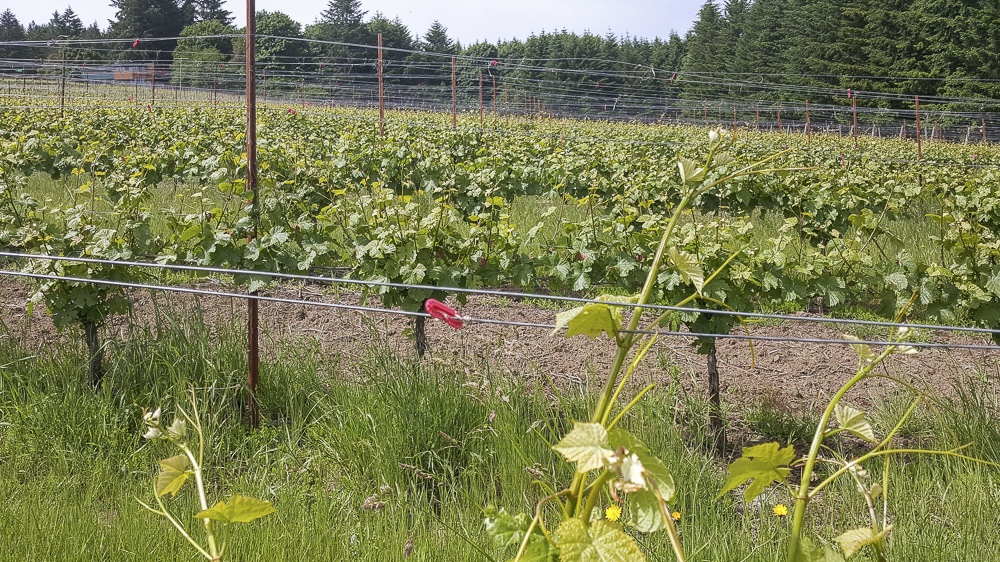
Torio Vineyard growth and cover crop grasses
We have been letting grasses grow in the aisles – as a cover crop – and are now ready to cut them. This will mulch the plants and add nutrients to the soil in a natural way. This year we are attempting to grow our own clover seed on an extra field to use in the aisles next year. We will harvest the clover hay in the spring and spread it in the rows to help with nitrogen fixing.
Three Feathers Memorial Day Wine Tasting event
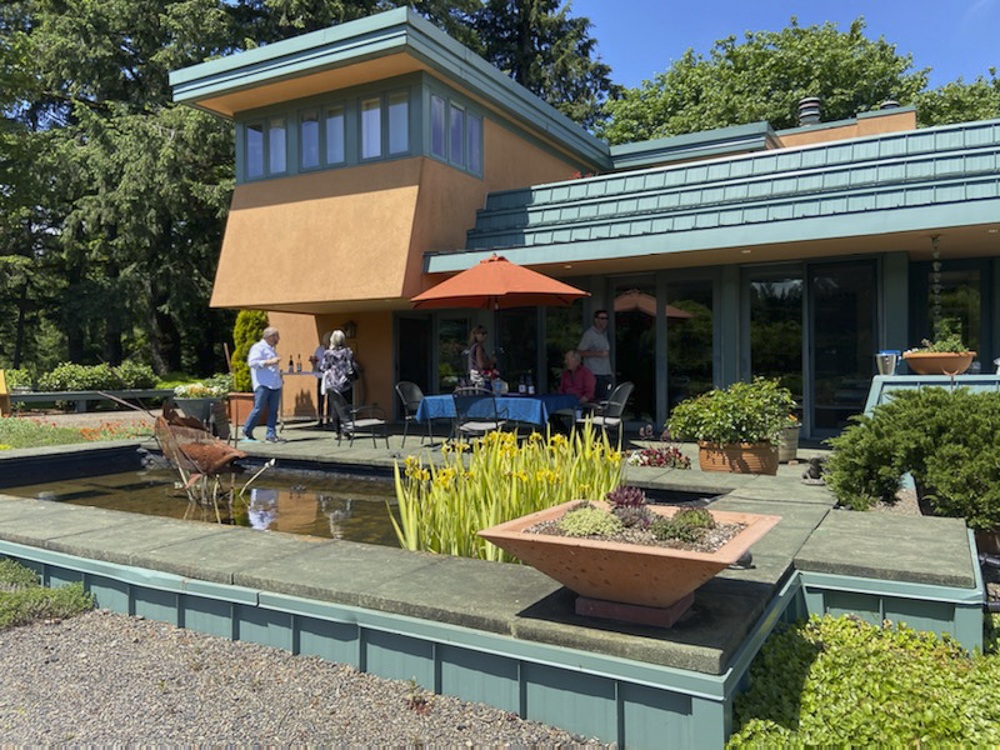
Our annual Memorial Day Wine Tasting Open House took place as scheduled on Sunday May 24. Friends of the vineyard and a couple of newcomers gathered at the house and enjoyed a sunny day of tasting, kicking back at an appropriate distance, and feeling a sense of normalcy that we all crave. We sold some wine, added a couple of Club Members, and enjoyed the gardens in full bloom.
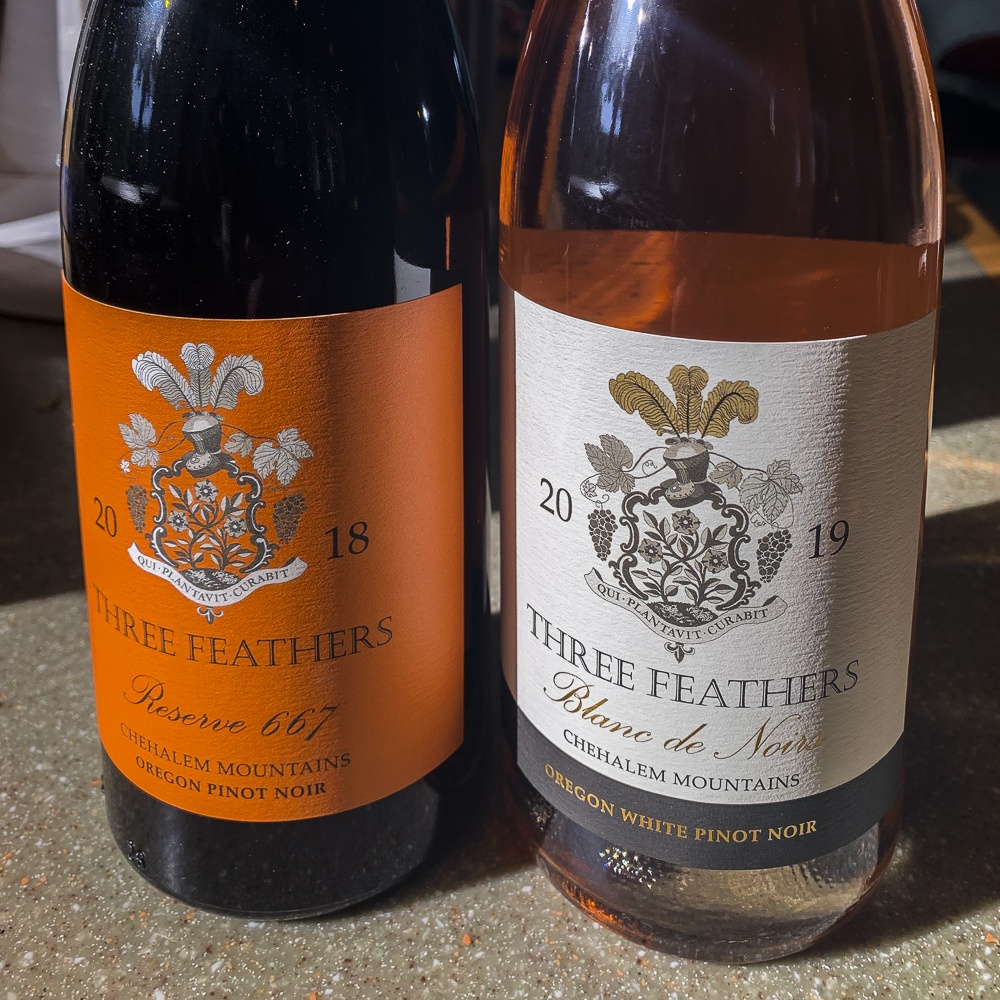
Just bottled Three Feathers Reserve 667 and Blanc de Noirs 2019
Additionally, we just bottled our 2018 Reserve 667 and our 2019 Blanc de Noirs! These wines will be released in a couple of months once they get used to their new bottles and we will publish an article about them at that time.
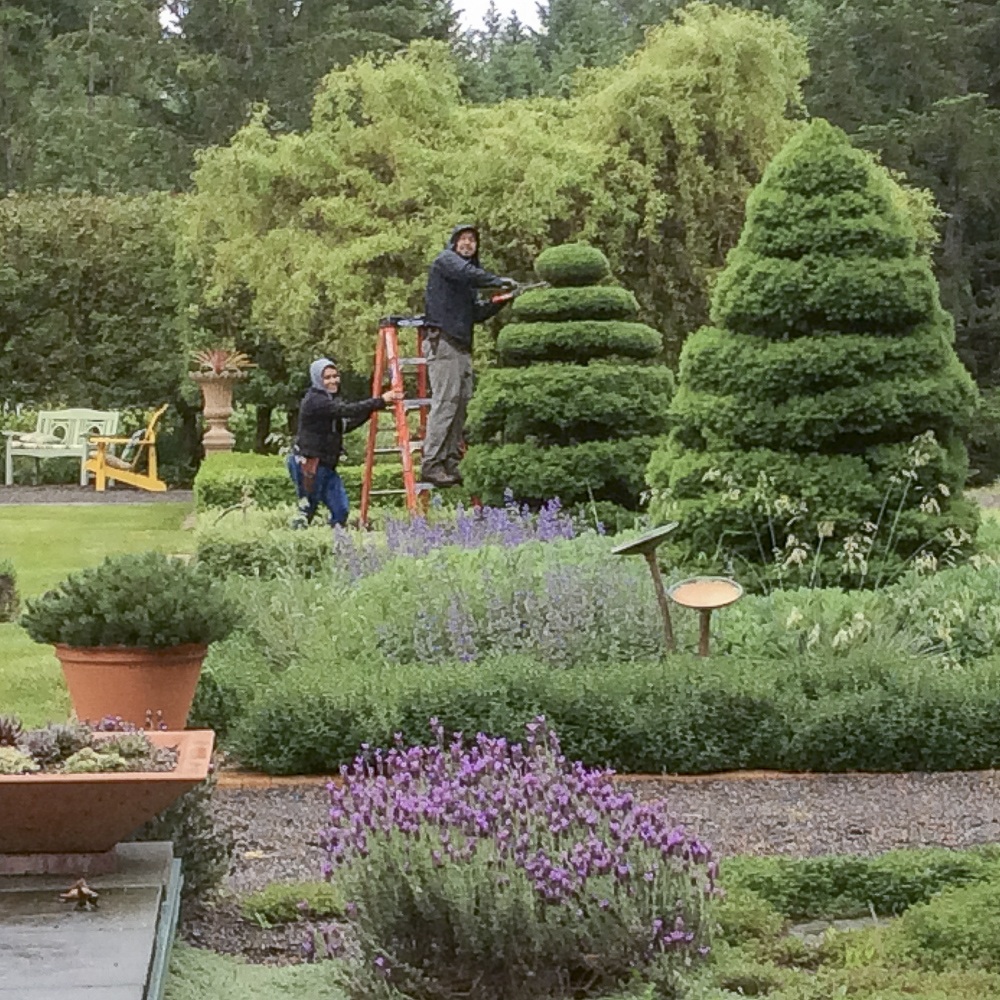
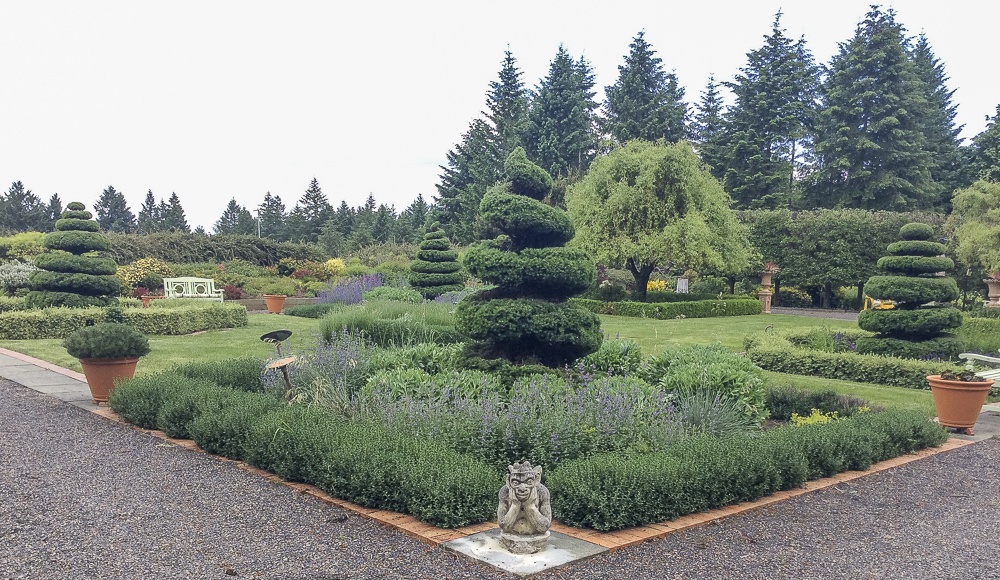
We include some photos of our garden topiaries getting a much needed haircut. We all need a haircut right now, but in this case these 25 year old trees have never been properly pruned.
Our 25-year old topiary trees get a haircut
Jose is a professional from a local wholesale nursery who has come in his spare time to prune. They look fabulous and add so much to the landscape. Thank you so much, Jose.
Three Feathers topiary trees professionally pruned
Our 3rd annual Memorial Day Wine Tasting Open House | Invitation only
Sunday, May 24, 2020 from 11 am to 5 pm | Tasting fee $15
This year we will be tasting three vintages of our Pinot Noir from 2016 to 2018.
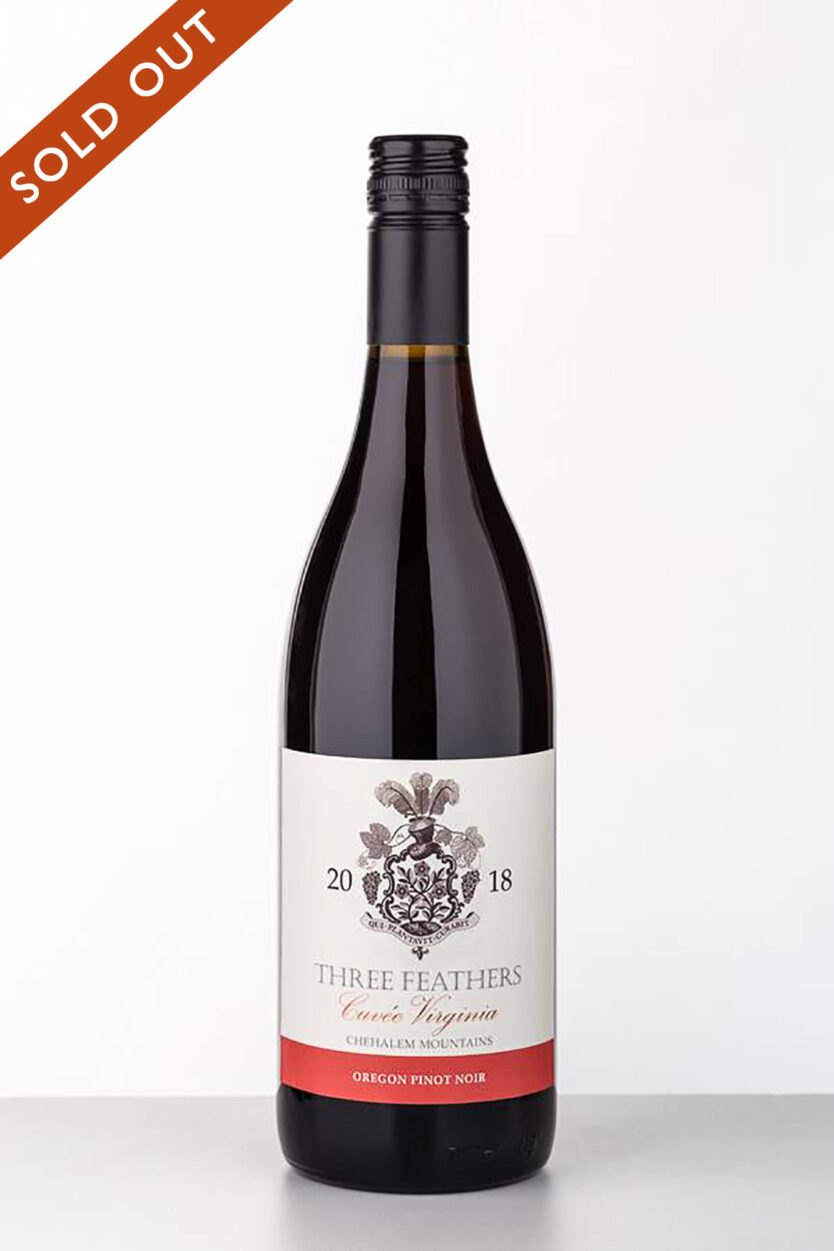
The 2018 Cuvée Virginia, a blend of our two Chehalem Mountains sites, will be featured for the first time. Bottled in August of 2019, this wine has been curing since then and is now ready for it’s debut.
We will be showcasing our 2018 Blanc de Noirs – our very popular Blush wine that won a Silver Medal in the Wine Competition for the 2020 McMinnville Wine and Food Classic (unfortunately cancelled).
Additionally, we will have available a barrel tasting of our 2018 Reserve 667 – a Wine Club exclusive. The Best of the Best, three premium barrels of 2018 single-clone Pinot Noir were aged for 18 months in neutral French oak. The longer time in the barrel intensified the flavors and colors. Peppery, with deep cherry and berry flavors, this limited edition Pinot Noir sets a new standard of excellence. Only 75 cases were made and Flight Club Members will benefit from first access and pricing.
Three Feathers Flight for only $15 The flight of five wines will be offered for a tasting fee of $15.00, including a buffet of substantial bites to accompany.
Be sure to contact us and confirm your reservation.
Three Feathers wines are the product of our unique location, soil, elevation and microclimate. These elements combined make our wines diffrent from any other. Every vine is nurtured on wind blown soil high in the Chehalem Mountains.
Announcing the Release of our Three Feathers 2018 Cuvée Virginia Pinot Noir
We are proud to announce the release of our latest Cuvée, the 2018 Cuvée Virginia. Bottled in August of 2019 we have been keeping it until now so the wine has had a chance to develop in the bottle. This Cuvée is a sophisticated blend of Pinot Noir grapes from our two Chehalem Mountains vineyards; Three Feathers and Torio Vineyard.
As 2018 was a warm dry year, the grapes at Three Feathers ripened to exceptional sweetness and abundance. Barrels of wine from the 667 grapes at this site were selectively blended with the Dijon clones and Pommard harvested at Torio Vineyard, where the juices were slightly tarter. This combination yielded a pleasing balance between sugars and acidity and is smooth from start to finish.
Three Feathers Estate Pinot Noir perched on a vineyard wall in Saint-Emilion.
Three Feathers Blanc de Noirs on the stele of Chateau-Pavie-Macquin
Tale of Two Vineyards | Three Feathers Estate, Willamette Valley Oregon visits Château Pavie Macquin, Saint-Emilion Bordeaux
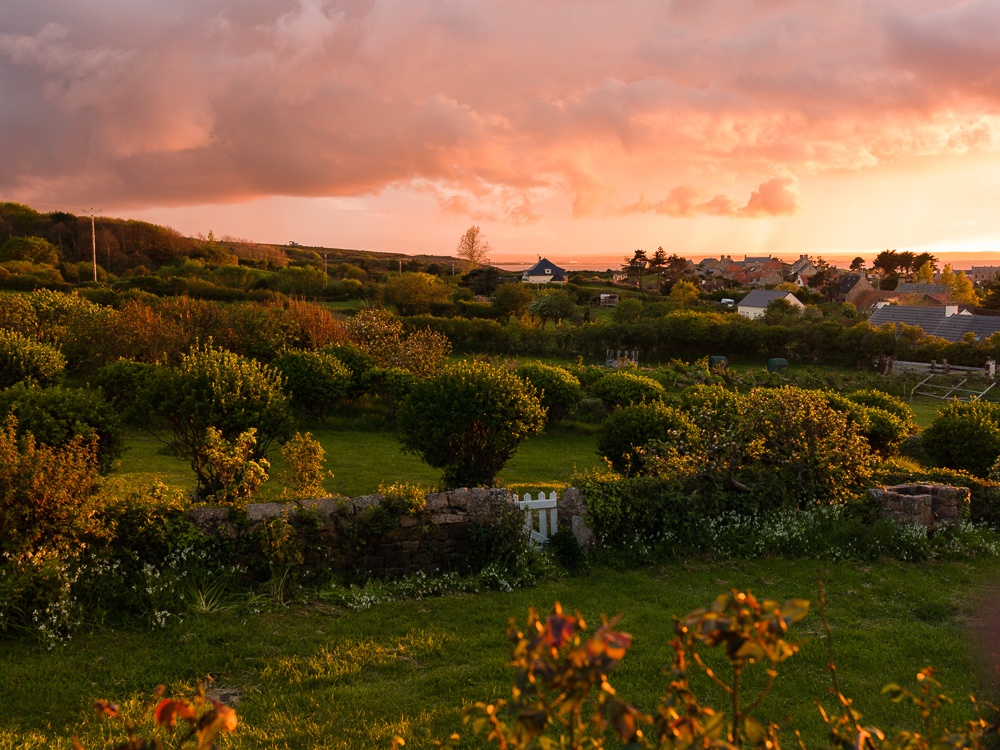
Tale of Two Vineyards starts with a neighborly “getting to know you” over coffee in our Normand vacation home, English Channel in the distance. A dear girlfriend wished to introduce me to two childhood friends of hers, sisters, living in Normandy and vacationing in Bordeaux: “They make wine and so do you, so it should be fun to meetup!” she said, and without further ado, we did.
Our Normand Shire, Cotentin, France.
In our small home in the Shire (as we have nicknamed our seaside village next to Cherbourg), two worlds connected in coincidental ways; American and French, Bordeaux and Burgundy…. We met Agnès and Cécile Corre, sisters and partners in the family-owned domain of Château Pavie-Macquin in Saint-Emilion and they brought over an extraordinary bottle of their 2006 Château Pavie-Macquin 1er Grand Cru Classé as a hostess gift for dinner. Mutual plans were laid to sally forth and explore unknown lands with this bunch of merry women.
In the summer of 2017, Agnès traveled to Oregon with her children to visit family in Eugene and made a long detour to Three Feathers on Chehalem Mountains. Agnès was impressed with our endeavors at Three Feathers, called them “pioneering”, and said our story was reminiscent of her grandparent’s challenges at Château Pavie-Macquin. Over a glass of 2016 Three Feathers Oregon Pinot Noir in the formal topiary garden, we celebrated our first bottled vintage, shared vineyard lore and discussed terroirs in general knowing full well that Bordeaux and Burgundy are like apples and oranges, not to mention Bordeaux and Oregon Pinot Noir!
Portrait of Albert Macquin in the family home
Agnès knows all about pioneering. Her great-grandfather Albert Macquin (1852-1911), who purchased about 64 acres from various châteaux in Saint-Emilion from 1887, is famous for saving his own vineyard, as well as that of the entire Bordeaux region, from the devastating vine disease phylloxera that had been wreaking havoc since 1866. Agricultural engineer, Macquin was aware of new techniques involving
grafting the phlloxera resistant Vitis labrusca American rootstock onto Vitis vinifera vines. While other châteaux were looking to cure the infected vines, Macquin proceeded to
replant his entire vineyard with more resistant rootstock and was able to rebound quickly from the phylloxera epidemic that was crippling the Bordeaux wine industry. Albert Macquin is hailed as a man of transformation and reconstruction, advocating Vitis berlandieri which is less susceptible to chlorosis – he produced more than 1 million plants in 1887 – and developing scientific vine plot monitoring.
Albert MACQUIN – Saint Emilion owes him the use of the grafted plant which was to save the vineyard ruined by phylloxera
The phylloxera story is a cross-viticultural one that intimately links France and the United States from a rootstock perspective.
Exchange between France and the Oregon is at the root of vine planting
in this State since the mid-1800’s when early Oregon vineyards were planted on their own roots, before the arrival of phylloxera, by European settlers. This contrasts with European vineyards, where
all wine grapes have been necessarily grafted onto Phylloxera-resistant
rootstocks since the nineteenth century. Since phylloxera was discovered in Oregon in 1990, most new vineyards have been planted on phylloxera-resistant rootstocks. Agricultural engineers without borders, in true botanical spirit, have been sharing, comparing, grafting and testing since ocean transportation made it possible way back when.
We decided to schedule a long detour from Paris to Bordeaux to check out the illustrious Château Pavie-Macquin and in the fall of 2019, just after harvest, our schedules coincided and a date was set. While selecting a couple of bottles (our 2017 Three Feathers Oregon Pinot Noir and 2018 Blanc de Noirs) to bring down with us, the daunting prospect of proposing our wines to taste in a region of such historical reputation began to make itself felt. In anticipation, I boned up on Bordeaux and Burgundy – since, just like Burgundy wine, the Pinot Noirs produced in the Oregon Willamette Valley are single varietals – and learned some interesting things.
Recognized for their fineness and elegance, only cuvées from the same grape are blended to make Burgundy wines; Pinot Noir for reds from northern Burgundy, Gamay from the Macon and Beaujolais regions. Bordeaux wines (powerful and robust) derive their richness and complexity from savvy multi-varietal blending of Merlot, Cabernet Sauvignon, Cabernet France, but also in smaller quantities Petit Verdot and Malbec for the reds.
1995 Magnum on display in the tasting room of Château Pavie Macquin.
Why are Bordeaux and Burgundy bottles shaped differently… and why are wine bottles made to contain 75 centiliters?
In the 18thcentury the city of Bordeaux flourished through maritime trade with the colonial world of the time. Back then, wine bottles did not have a standardized shape and their capacity depended on the manufacturers, making the job of commerce quite confusing. English traders based in Bordeaux had the idea of fixing their capacity at 75 cl to facilitate the calculation of barrels to bottles; a Bordeaux barrel making 225 liters, or 50 gallons, contains therefore 300 bottles and one gallon is equivalent to 6 bottles. An English innovation that has imposed itself over time to become a mandatory European standard, with a few exceptions.
The English also invented the dark glass bottles and cork stoppers to
better preserve the wine. For exporting Bordeaux overseas, the angled bottles were cut to measure in order to be efficiently stored in the holds of boats. The elbow of the Bordeaux bottle was conceived to prevent the lees of the wine (yeast deposit at the bottom of the bottle) from running out when pouring.
Contrastingly, Burgundians maintain their own traditions – making “pieces”, as they are called – not “barrels”, of 228 liters (300 bottles). Their king grape varieties, focused on the fruit, are aged in gently sloping bottles, aerodynamic and feminine. Burgundy vineyards are delimited by “Clos” whereas Bordeaux vineyards are identified by “Castles”. This tradition dates back to the Middle Ages when the monks in charge of cultivating the vines for the Bishopric surrounded the rows that gave the best wines by small stone walls. Those areas became the Clos, of which the walls of Clos Vougeot are still visible today.
The town of Saint-Emilion seen from the King’s Tower, Gironde, France
Overview of the the rock-carved sanctuary, or Monolith, carved out in the 11th century, Place du Marche, Saint-Emilion, Gironde, France.
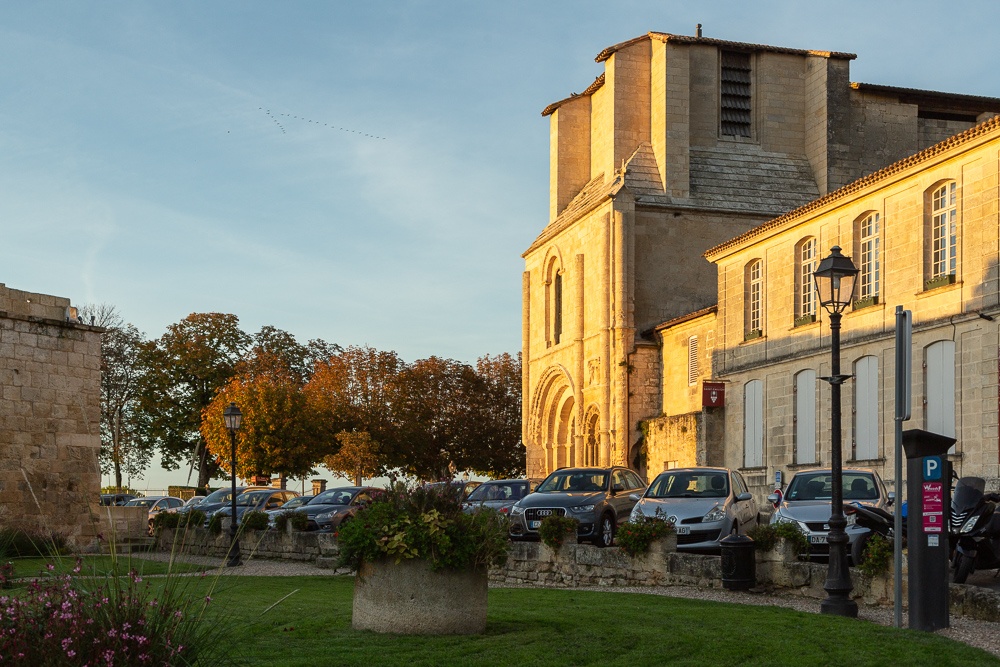
Collegiale Church of Saint-Emilion at sunset, Gironde, France.
Saint-Emilion is a very beautiful and impressive town with an exceptional 12th century gothic church, the Église Collégiale, and a spectacular monolithic church of gigantic proportions (38 meters long and 12 meters high). The weather was sparkling and the tourist population was not at its peak, so we were able to stroll around and take photographs without interference. I was impressed by the careful preservation of the buildings, steep cobblestone passageways and the Middle Ages / Tolkien feeling of it all.
Family home at The Oaks of Macquin, part of Wine Estate Chateau Pavie Macquin.
We stayed with the Corre sisters in their ancestral home located on Les Chênes de Macquin (The Oaks of Macquin) vineyard, the second wine produced by Château Pavie-Macquin. The traditional Bordelaise
architecture of this stone edifice combined with its aging natural state made the experience all the more profound. A sunrise walk revealed golden rows of vines and a large heap of pressed grapes left over from harvest waiting to be retrieved for recycling.
Sunrise over The Oaks of Macquin, part of Wine Estate Château Pavie Macquin.Tractor and leftover pressed grapes at The Oaks of Macquin, part of Wine Estate Château Pavie Macquin.
After breakfast we headed off to visit the vineyards of Pavie-Macquin, situated on the highest and most prominent plateau of Saint-Emilion. Encompassing 37 acres (15 hectares), average production of Pavie-Macquin is around 65,000 bottles for each vintage (primarily exported to the United States) – a blend of Merlot, Cabernet Franc and Cabernet Sauvignon.
Century oak trees at the Wine Estate Château Pavie Macquin.
The impressive hundred-year-old oak trees that border the property are visible from afar as are the vineyards clearly visible from the town of Saint-Emilion, within walking distance from the Château. The “Château” is very modest compared to some, in the form of the original Bordelaise house recently renovated with a modern tasting room and accompanying apartment for guests.
Château Pavie Macquin in Saint-Émilion.
Our visit coincided with the winding down of the harvest and most of the exterior activity had ceased to be replaced by vat work indoors. Plans to increase the size of the wine production facility are in view, including the replacement of the oak vats for modern concrete ones. Longtime manager Nicolas Thienpont and
consulting oenologist Stéphane Derenoncourt are refining and modernizing the Château with new wine making techniques. We ate lunch in a lovely and functional new kitchen facility built next to the winery for the workers and decided to dine that evening in town.
Portrait next to the stele of Chateau-Pavie-Macquin
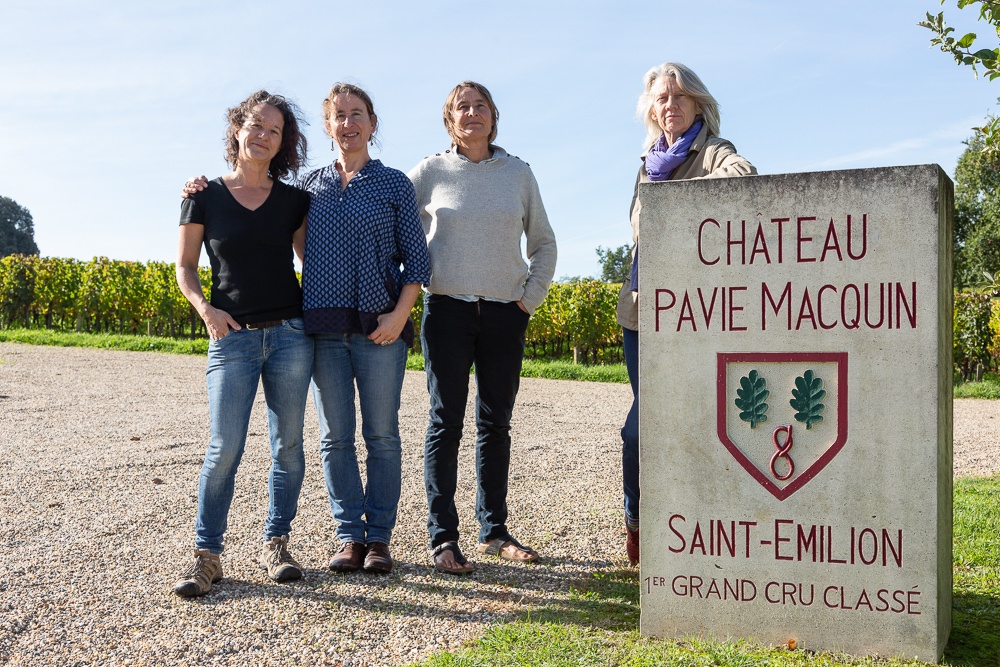
Visiting Pavie-Macquin with Agnès and Cécile Corre was a moving experience. The vineyard setting and backdrop are not only noble but familiar and accessible on a human-scale. The pioneering heritage of Albert Macquin shines through to this day with an eminence and humility right down to the crest that is their logo: two oaks leaves in honor of the hundred-year-old oaks on the property and a hangman’s noose in reminder of the dangers of excess. (Agnès told me that an earlier version displaying three nooses and one oak leaf was modified by her grandmother who found the triple noose much too sinister!)
Wine labels for Château Pavie Macquin, Saint Emilion.
My tale ends with five of us at L’Envers du Décor (appropriately, Behind the Scenes) around a bottle of Château Pavie-Macquin 1er Grand Cru Classé and a bottle of Three Feathers Oregon Pinot Noir. If you have ever had the chance to taste the former, you will know that it is an unforgettable experience from beginning to end. A deep and complex nose, fruity and robust on the palate, long in the finish. Having recuperated from the emotion of that
bottle and commentary subsided, I served a round of Three Feathers Pinot Noir and waited in silence.
Primarily Bordeaux Pavie-Macquin drinkers, Agnès and Cécile raised their eyebrows and Agnès smiled. She said that the wine had really evolved well since the 2016 vintage but felt that it needed to open up more in the glass. I served her some more. Cécile drank her taste more quickly and said that it didn’t quite have the depth of a Bordeaux, but that it merited coming back to. I served her some more and she did. The conversation continued about our wine and I felt myself relaxing. Where there is fire (conversation), there is a flame (spark) and if our Oregon Pinot Noir was good enough to set off a positive and constructive discussion with Pavie-Macquin drinkers, I could feel proud.
Elise Prudhomme with a bottle of 2017 Three Feathers Pinot Noir at L’Envers du Decor, Saint-Emilion.
Agnès Corre grabbing a few bottles of wine at Château Pavie Macquin.
While Pavie-Macquin and Three Feathers are like apples and oranges, a common point can be found in the passion transmitted when talking about our wines and the constant search of solutions to extract the best for our vineyards from the climate and the best juice for our wines from the terroir: rich, elegant and unique.
Vineyards and century oaks of Château Pavie Macquin, Saint-Émilion, Bordeaux, Gironde, France.
Looking down on the Place du Marche, in the town of Saint-Emilion, Bordeaux, Gironde, France.
View of the Fongaban Valley from the ancient Brunet Gate, Saint-Emilion, Gironde, France.
Topping off stainless steel tanks at Wine Estate Chateau Pavie-Macquin, Saint-Emilion, Bordeaux, France.
Vineyards in the Bordeaux wine region of Saint Emilion, Bordeaux, Gironde, France
Tasting room inside Château Pavie Macquin overlooking the town of Saint Emilion, Bordeaux, France
Admiring the century old oak trees at the Wine Estate Chateau Pavie-Macquin, Saint-Emilion, Bordeaux
The town of Saint-Emilion seen from the King’s Tower, Bordeaux region, Gironde, France.
Wooden shipping boxes in stock for delivery at Wine Estate Château Pavie-Macquin, Saint-Emilion, France.
Large flock of grey herons flying in V formation over the town of Saint Emilion, Gironde, France.
Group portrait next to the stele of Chateau-Pavie-Macquin, Saint-Emilion, Bordeaux, France
Group portrait next to the stele of Chateau-Pavie-Macquin, Saint-Emilion, Bordeaux region, Department of the Gironde, France.
Overview of the the rock-carved sanctuary, Place du Marche, Saint-Emilion, Gironde, France
Albert Macquin – Saint Emilion owes him the use of the grafted plant
Sunset overview of the town of Saint-Emilion as seen from the King’s Tower, Bordeaux, Gironde, France.
1995 Magnum on display in the tasting room of Château Pavie Macquin, Saint Emilion, Bordeaux.
The town of Saint-Emilion seen from the King’s Tower, Gironde, France
Albert Macquin – Saint Emilion owes him the use of the grafted plant
Collegiale Church of Saint-Emilion at sunset, Gironde, France.
Family home at The Oaks of Macquin, part of Wine Estate Chateau Pavie Macquin, Saint Emilion, Gironde, France
Sunrise over The Oaks of Macquin, part of Wine Estate Chateau Pavie Macquin, Saint Emilion, Bordeaux, Gironde, France.
A bottle of 2018 Three Feathers Estate Blanc de Noirs at Chateau Pavie Macquin
A bottle of Three Feathers Estate Pinot Noir perched on a vineyard wall Saint-Emilion, Bordeaux, France
Elise Prudhomme with a bottle of 2017 Three Feathers Pinot Noir
Older and newer wines labels of Wine Estate Chateau Pavie Macquin
Tractor and leftover pressed grapes at The Oaks of Macquin
Century old oak trees at the Wine Estate Chateau Pavie Macquin, Saint-Emilion, Bordeaux, France
A clay-limestone bordering wall in the vineyards of Wine Estate Chateau Pavie-Macquin, Saint-Emilion, France
Century old oak trees at the Wine Estate Chateau Pavie Macquin, Saint-Emilion, Bordeaux, Gironde, France.
Barrel chai of Château Pavie Macquin, Saint-Émilion, Bordeaux, Gironde, France.
Century old oak trees at the Wine Estate Chateau Pavie Macquin, Saint-Emilion, Bordeaux, Gironde, France.
Century old oak trees at the Wine Estate Chateau Pavie Macquin, Saint-Emilion, Bordeaux, Gironde, France.
Chai and vineyards at Chateau-Pavie-Macquin, Saint-Emilion, Bordeaux, Gironde, France.
Château Pavie Macquin renovated offices and tasting room, Saint-Émilion, Bordeaux, Gironde, France.
Cloister of the Eglise Collegiale in Saint-Emilion, Bordeaux region, Gironde, France.
Concrete fermentation tanks for Merlot wine, Wine Estate Chateau Pavie-Macquin, Bordeaux, Gironde, France.
Grabbing a few bottles of wine at Château Pavie Macquin, Saint-Émilion, Gironde, France.
Elise Prudhomme posing in front of the vineyards at Chateau Canon, Saint-Emilion, Bordeaux, France.
Doors and portico of the rock-carved sanctuary, Place du Marche, Saint-Emilion, Bordeaux, France.
Discussing the vines at Château Pavie Macquin, Saint-Emilion, Bordeaux, Gironde, France.
Looking out to Chateau Pavie Macquin from the ancient Brunet Gate, Saint Emilion, Gironde, France.
Large flock of grey herons flying in V formation over the town of Saint Emilion, Bordeaux, France.
View looking out over Saint-Emilion and beyond, Bordeaux region, Gironde, France.
Tasting room in the barrel chai of Château Pavie Macquin, Saint Emilion, Bordeaux, France.
Tasting room in the barrel chai of Château Pavie Macquin, Saint Emilion, Bordeaux, France.
Tasting room interior of Château Pavie Macquin overlooking the
Topping off stainless steel tanks at Wine Estate Chateau Pavie-Macquin, Saint-Emilion, Bordeaux, France.
Wooden fermentation tanks for Merlot wine, Wine Estate Chateau Pavie-Macquin, Saint-Emilion, France
Vineyards at Chateau Canon 1er Grand Cru Classe, Saint-Emilion in the Bordeaux wine region, Gironde, France.
Vineyards at Chateau Canon 1er Grand Cru Classe, Saint-Emilion in the Bordeaux wine region, Gironde, France.
View of the Fongaban Valley from the ancient Brunet Gate, Saint-Emilion, Gironde, France.
Winery and chai of Wine Estate Chateau Pavie-Macquin, Saint Emilion, Gironde, France.
Resveratrol has been studied and touted as powerful antioxidant since the 1970s. In the 1990s, when scientists tried to explain how the French were able to eat rich, fatty foods like foie gras without suffering high incidences of cardiovascular disease (“The French Paradox”), resveratrol-rich red wine was thought to be the key.
Elise Prudhomme perched on the wall of Château Canon 1er Grand Cru Classé (Saint Emilion, France) holding a bottle of Three Feathers 2017 Pinot Noir.
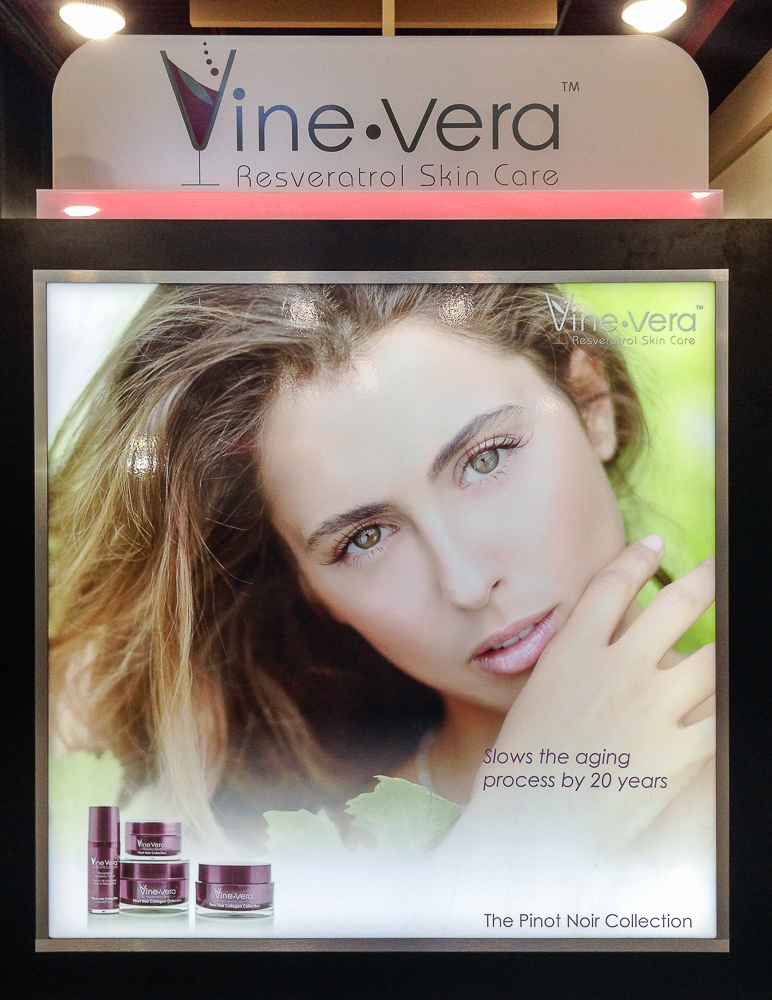
During a shopping expedition in downtown Las Vegas, we came upon a beauty stand promoting skin products made with resveratrol. This particular company has gone so far as to create a collection of beauty products based on different red grapes such as Merlot, Cabernet and Pinot Noir. We had yet to cross the barrier of trans-dermal application in our continuing education of this popular phenomenon.
Vine Vera – The Pinot Noir Collection – “slows the aging process by 20 years”!
Following a recent study report in Frontiers
in Physiology, we now learn that humans traveling to Mars might benefit from a daily moderate supplementation of resveratrol to mitigate muscle impairment. When a Vietnamese acupuncturist told me that the Chinese often dip herbal plants in red wine before drying them for use in phytotherapy, I was prompted to publish an article on this passionate topic.
Resveratrol is a plant compound in the class of phytoalexins, and a stilbenoid or natural phenol, that is synthesized by plants such as grape vines, peanut plants, cocoa bushes, and berry producing shrubs from the Vaccinium family including blueberries, raspberries, mulberries and cranberries. When infected with bacteria or fungi, or harmed by cutting, crushing, or ultraviolet radiation, this compound is produced by the plant. Since red wine is fermented with crushed grapes, it is particularly high in resveratrol.
Remains of crushed red grapes after wine production
Not all antioxidants are created equal. Resveratrol is unique because it can cross the blood-brain barrier, or the membrane that helps protects the brain and nervous system, as an active inhibitor of both inflammation and oxidative stress. Diverse studies over the past 30 years have suggested resveratrol as a blood pressure reducer, lipid oxidation minimizer and preventer (increasing the good levels of HDL and reducing the bad levels of LDL), brain protector (particularly Alzheimer’s) and anticancer agent (by increasing glutathione levels, preventing cancer cells from replicating and spreading).
It has been said that supplementation by extraction of resveratrol from the plant is a more efficient method of absorption than eating red grapes and drinking red wine; however, scientific studies on the therapeutic impact of resveratrol supplements remain, so far, inconclusive.
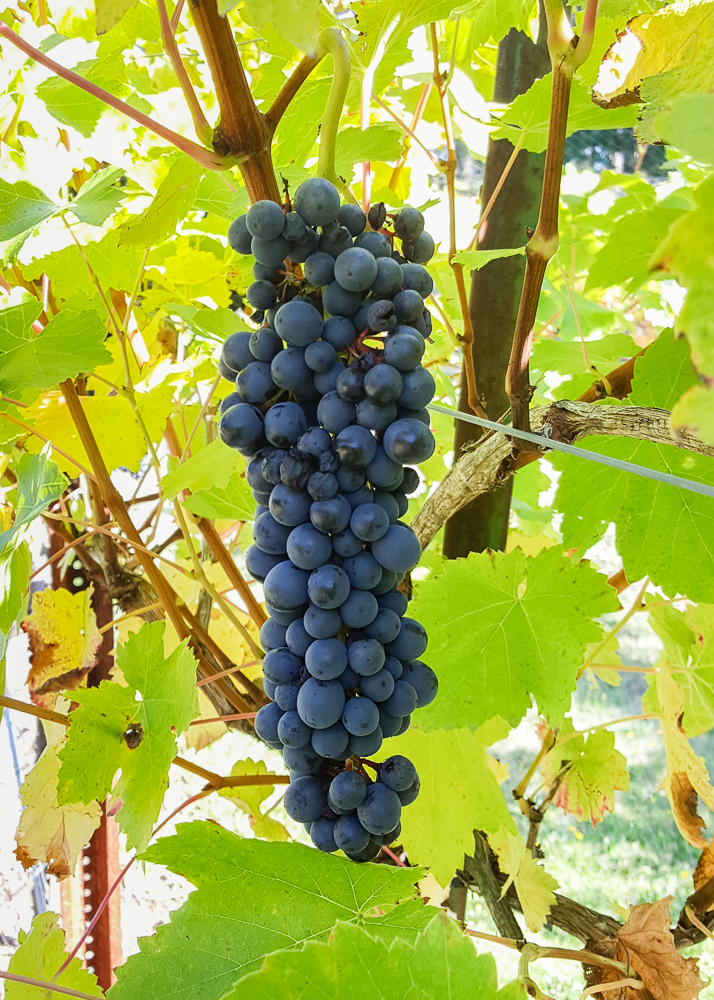
Pinot Noir table grapes ripening at Three Feathers
In the meantime, we do know for a fact that wines such as Malbec, Petite Syrah, St. Laurent and Pinot Noir have the highest resveratrol content. For those who enjoy red wine or red grapes, the palatable prospect of a drinking glass of red or a munching on a fresh cluster of Pinot Noir grapes combined with potential health benefits outweighs swallowing a gelatin covered pill. I’ll drink to that!
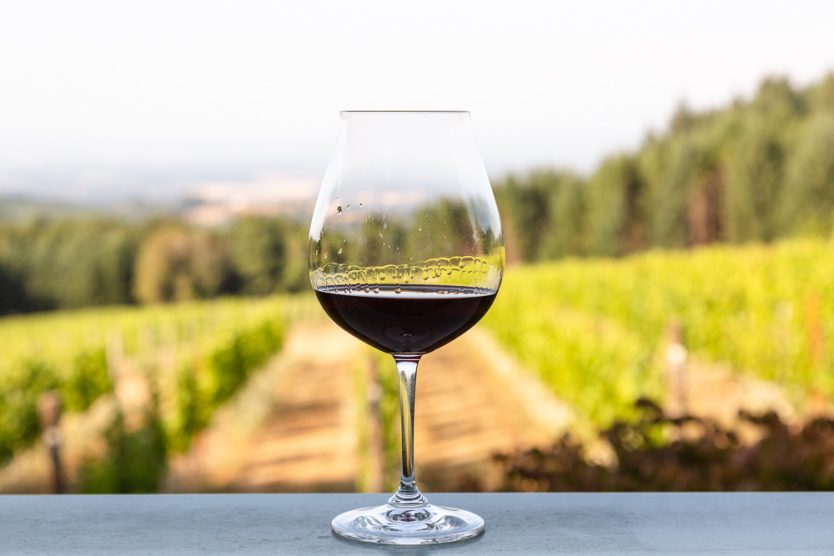
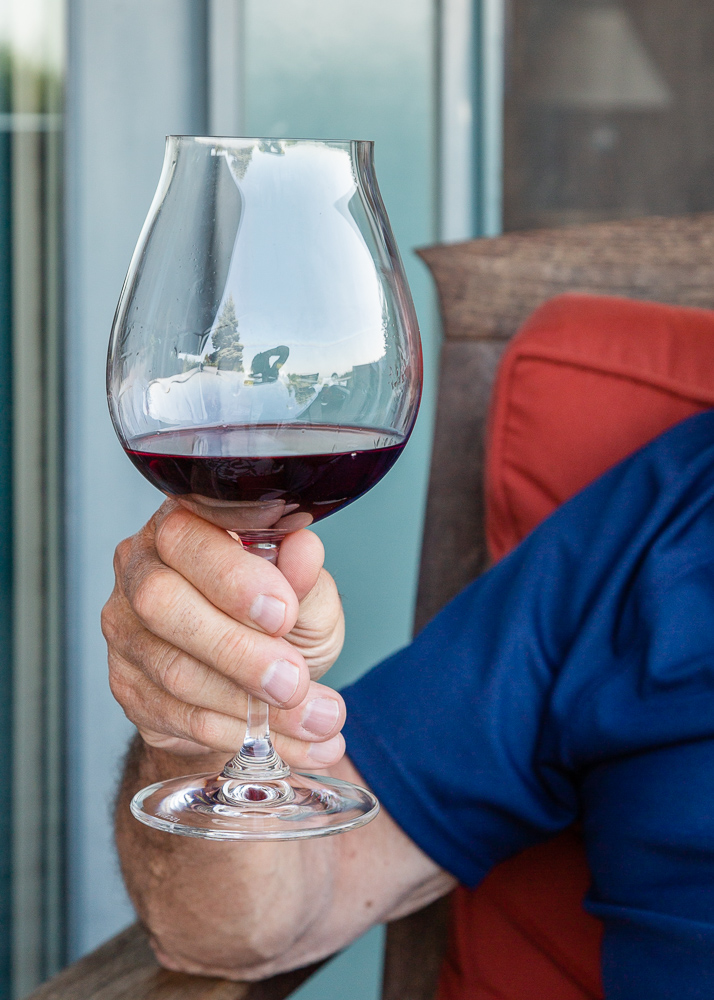
Enjoying a glass of Three Feathers 2017 Pinot Noir
Friday, March 13th | 3 – 9 pm Saturday, March 14th | 11 am – 8 pm Sunday, March 15th | 12 – 5 pm
Three Feathers Estate – BOOTH 144 Tasting fee $4
Three Feathers is thrilled to participate for a second year in the 27th annual McMinnville Wine & Food Classic – SIP! at Evergreen Aviation & Space Museum. We will be offering tastings of all of Pinot Noirs, including :
This event is a rare opportunity to sample delicious Burgundy and to taste and purchase our wines which are exclusively available online. We look forward to sharing our production with you!
Their menu features Dinner Specials Thursday – Brisket done “just right”, Thanksgiving every Friday and a fabulous slab of Prime Rib every Saturday Night.
Three Feathers at Taste of Temple 2020 | Thanks to All – Purchase Reminder
Three Feathers was thrilled to participate in Taste of Temple 2020 in downtown Portland yesterday! We extend our Thanks to Congregation Beth Israel for inviting us to participate and to all of you who stopped by our table to taste.
Attendees and ticket holders have until Thursday, February 23rd to call of visit the Taste of Temple website to order our wine.
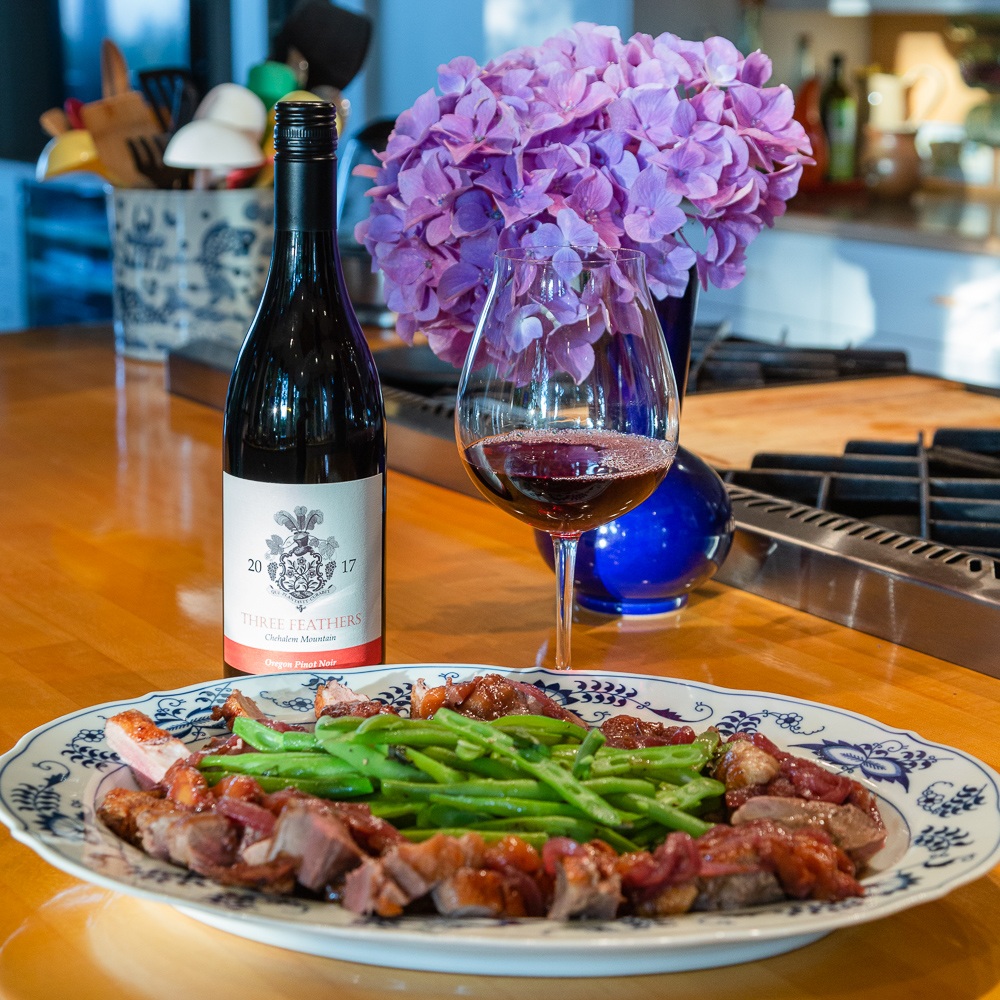
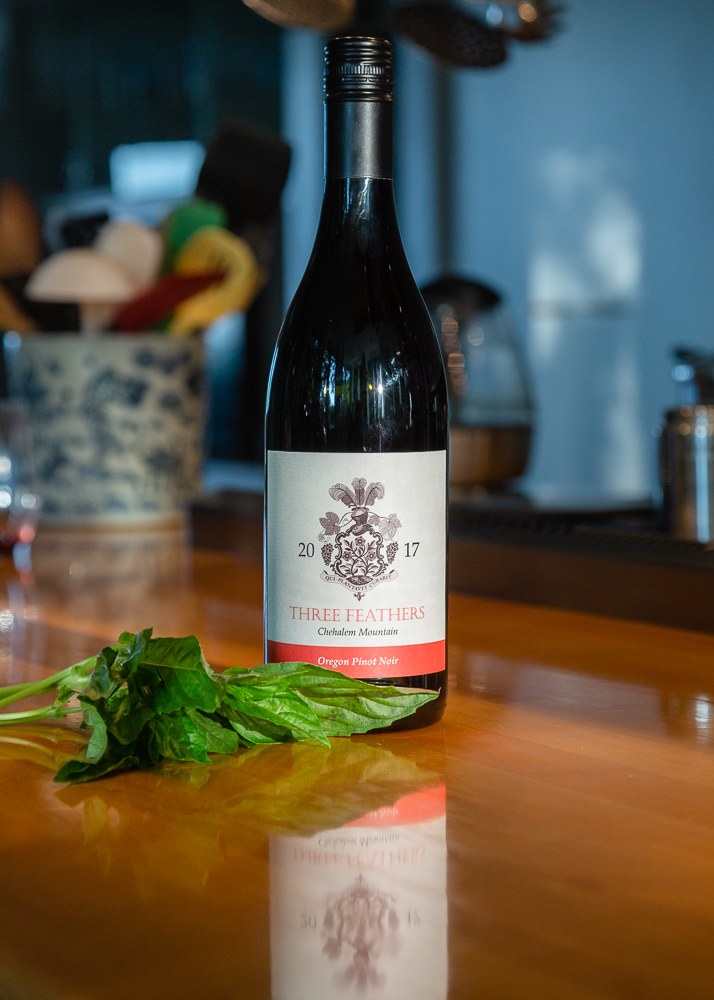
Duck breasts are a favorite poultry alternative to chicken in our family, so we are always on the lookout for them at the butcher. Farm-raised duck is more tender than wild duck and can be eaten medium rare like lamb. When our cherry tree is ripe with fruit, it is a good time to pull out this recipe which pairs beautifully with our 2017 Pinot Noir or 2017 Cuvée Virginia.
Seared Duck Breast with Cherry Pinot Noir Sauce and French-cut Green Beans
Ingredients
4 duck breast halves, with skin about 1 1/2 pounds
2 tablespoons olive oil
1/3 cup finely chopped shallots or onions
1 garlic clove, peeled and finely chopped
1/3 cup red wine vinegar
2 cups of Pinot Noir wine
2 cups of cherries (fresh or frozen)
1 tablespoons salted butter
1 pound French-cut green beans
Salt and ground black pepper
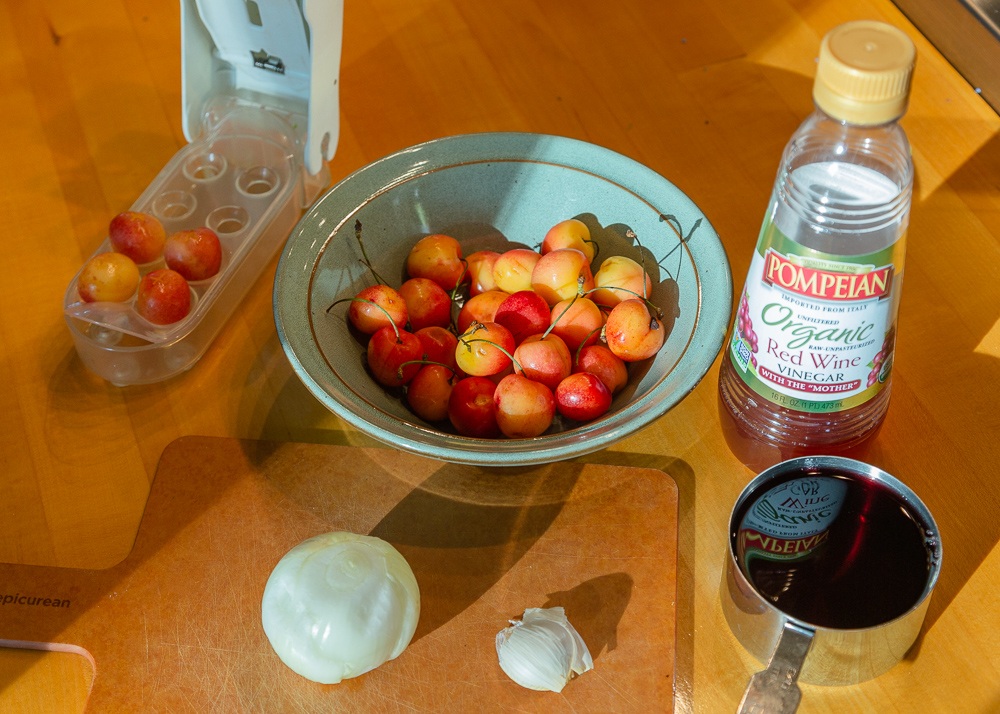
Ingredients for the Cherry Pinot Noir sauce
Prepare the Cherry Pinot
Noir Sauce
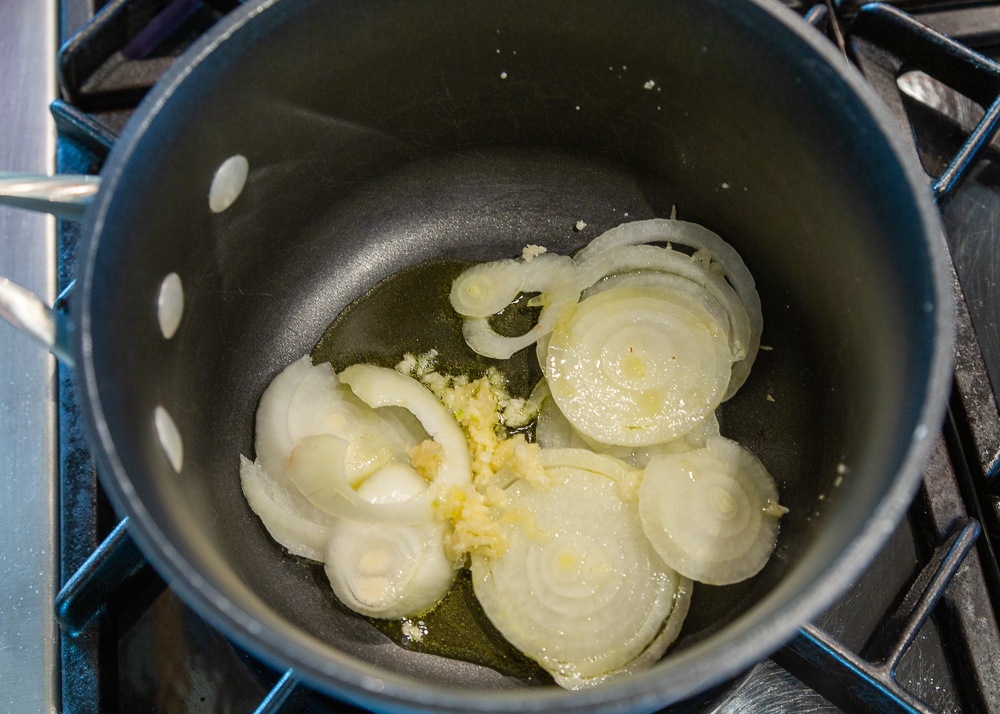
In a small saucepan heat olive oil over medium heat. Add shallot and sauté until softened, about 3-4 minutes. Add garlic and sauté a minute more, being careful not to burn.
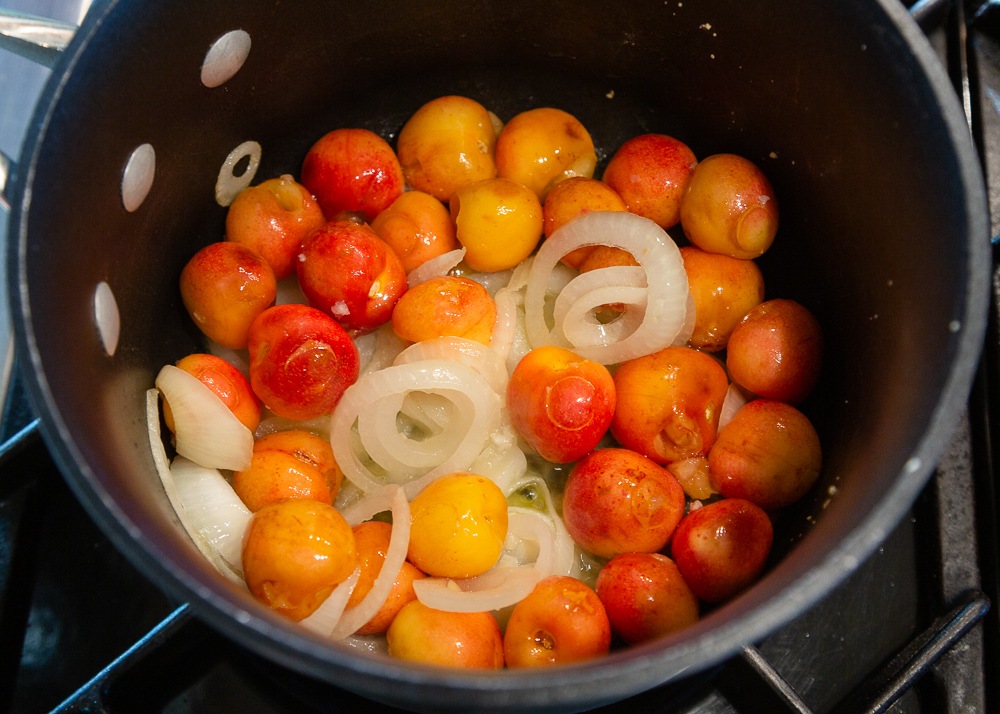
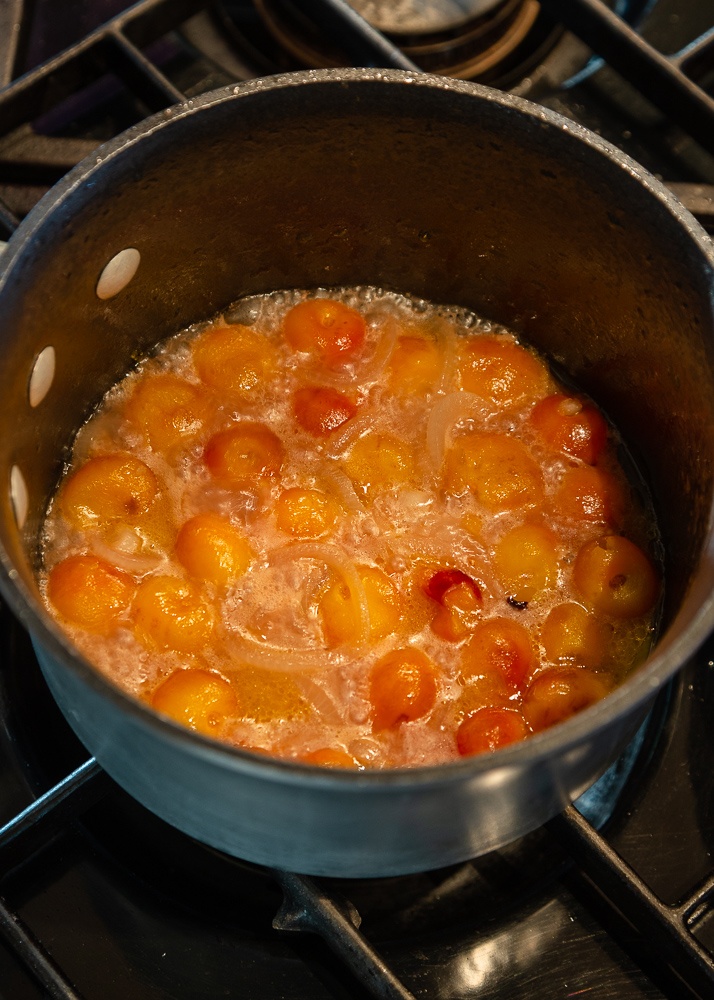
Add the cherries and simmer over medium heat until mixture reduces by half and cherries are softened.
Raise heat to medium-high and pour the vinegar into the saucepan.
Bring to a low boil and cook for 5 minutes to reduce the liquid and
thicken it slightly.
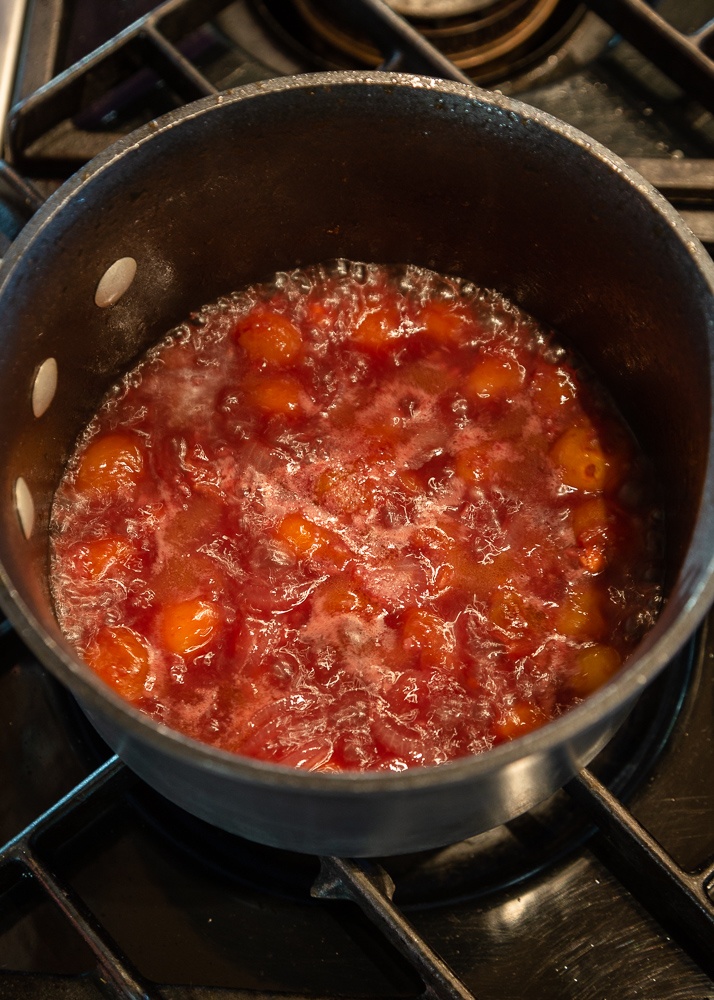
Add the Pinot Noir wine and cook again for 8 minutes. Season with salt and pepper to taste.
Prepare the French-cut Green Beans
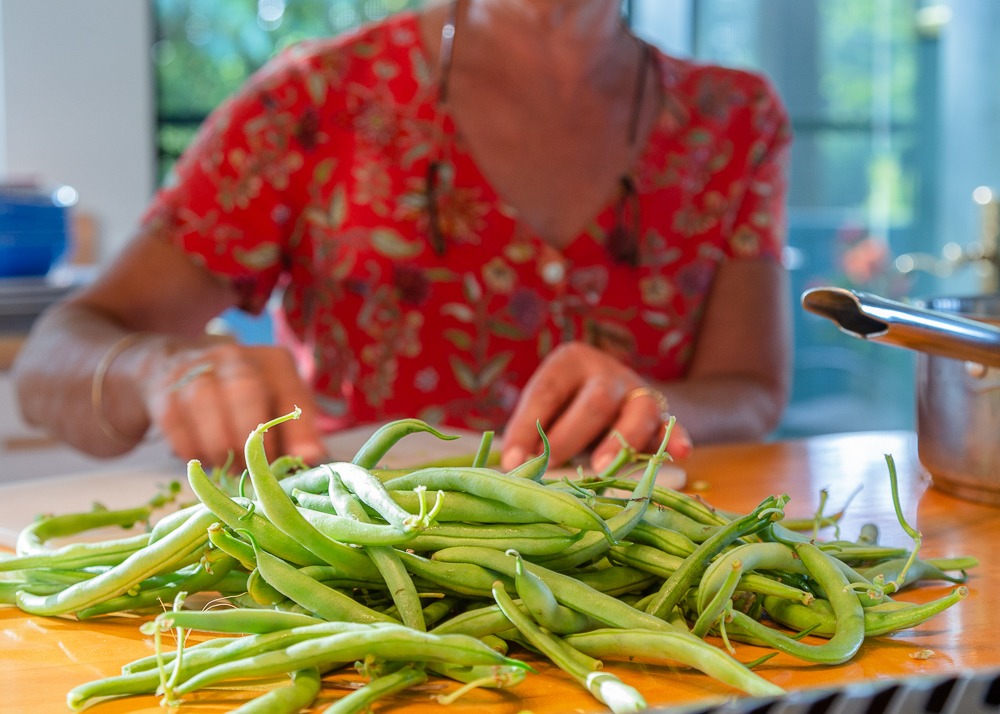
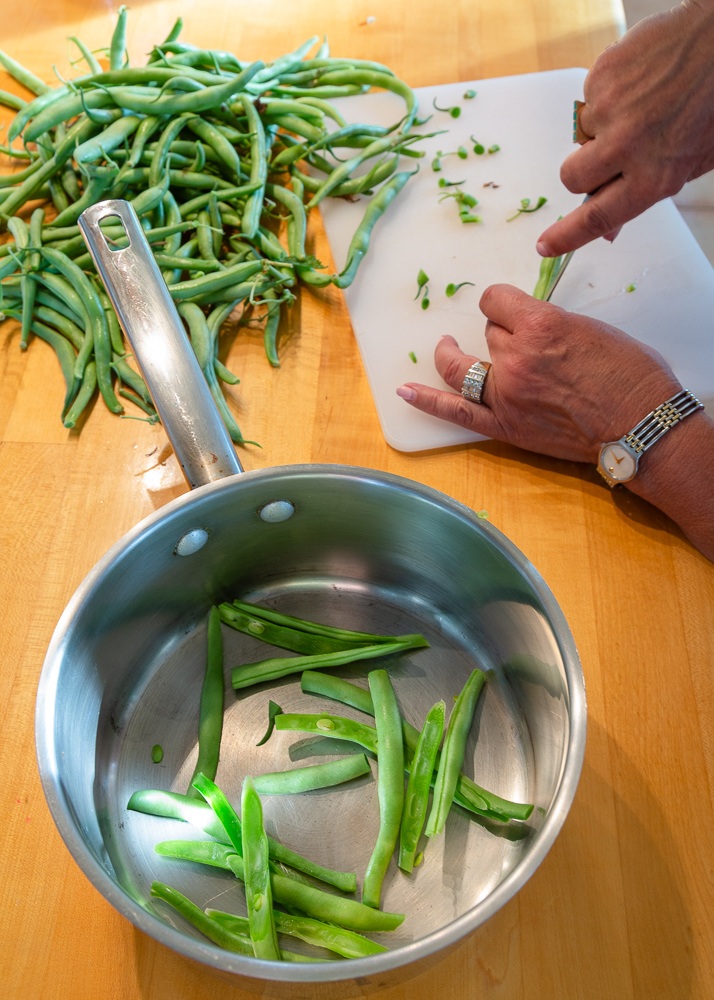
Trim both ends of the beans
with a paring knife, or snap off. Carefully split each bean in half lengthwise
with a paring knife.
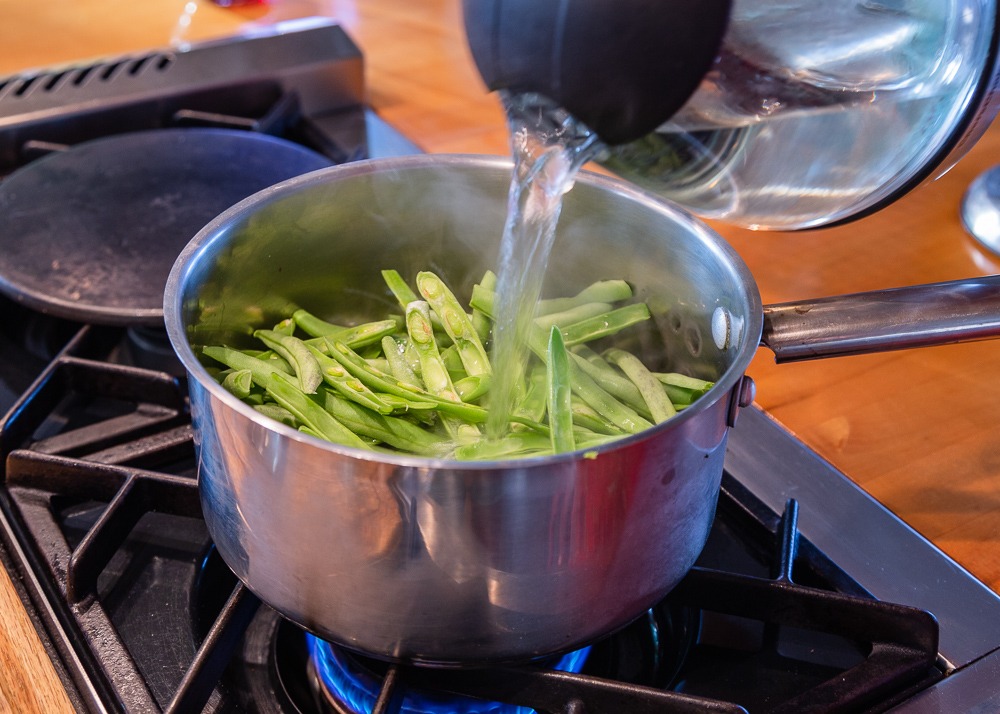
Boil water and pour over
beans to cover. Blanch for about 2 to 3
minutes, or until the beans are still a little bit crunchy. Strain the beans.
Toss with the tablespoon of butter. Season with salt and pepper. Serve warm.
Sear the Duck Breasts
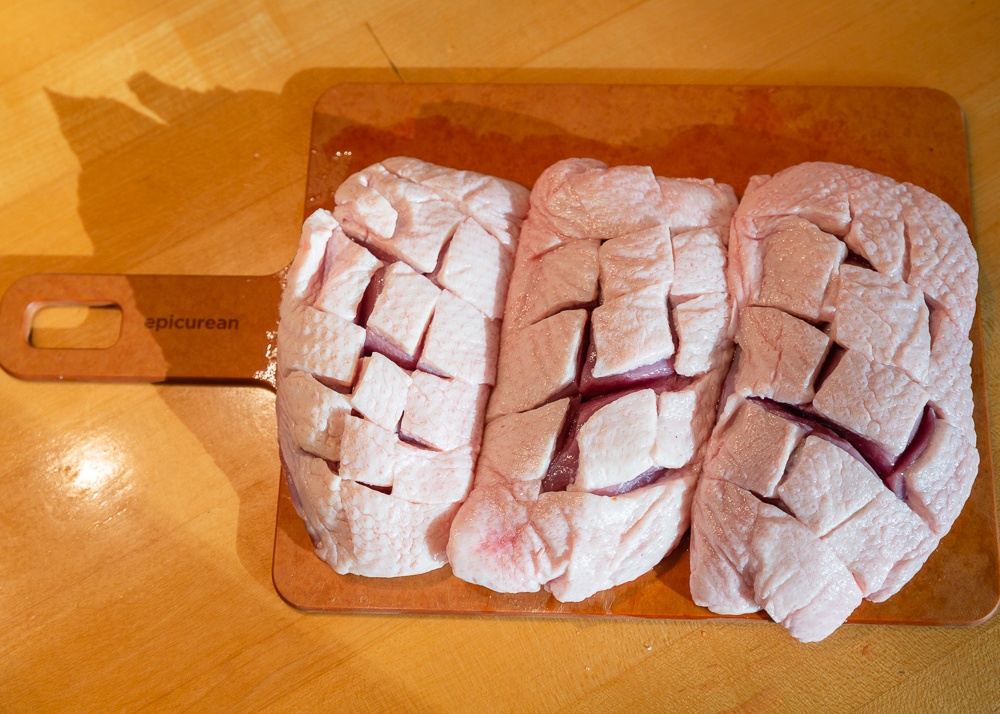
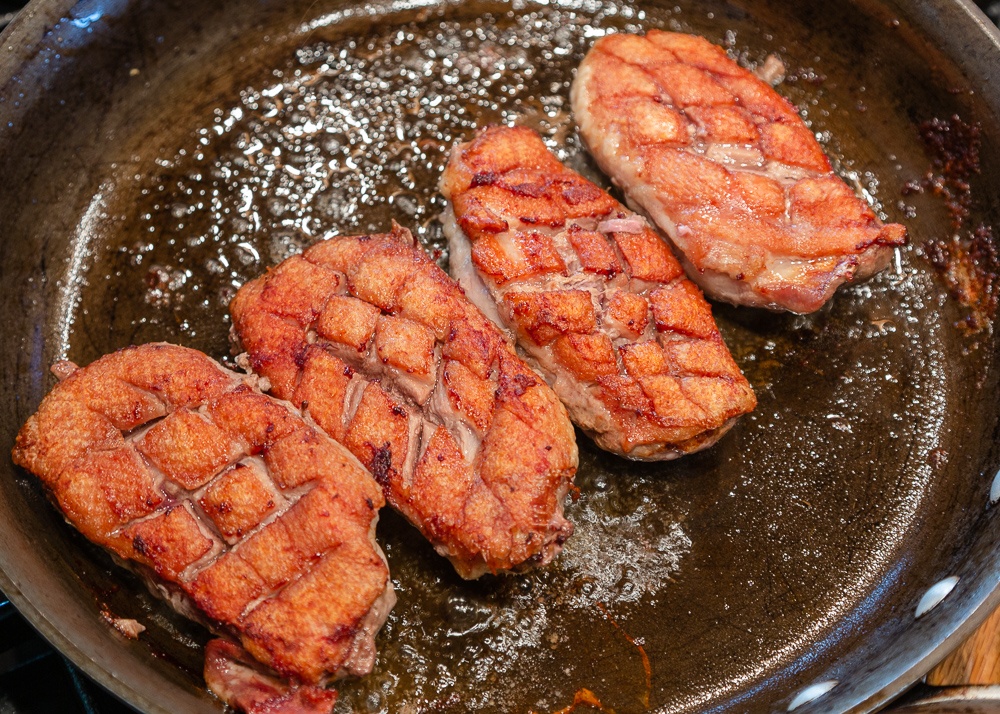
With a sharp knife, score the skin of each duck breast in a crosshatch pattern, taking care to not cut into the flesh. Season the duck with 1/4 teaspoon of the salt and a dash of pepper.
Heat a large nonstick skillet over medium heat.
Place the breasts, skin-side down, in the skillet and cook for 8 minutes; the skin should be deep golden brown.
Turn the breasts and cook for 3 minutes (for medium rare), or longer.
Transfer the breasts to a heatproof dish and place in the oven to keep warm.
Remove duck breasts from the oven and cut on a diagonal into 1/2-inch (1.25 cm) slices. Arrange the duck slices around the beans and spoon the cherry sauce over and around the duck.
Serve with your favorite bottle of Three Feathers Pinot Noir (white or red)!