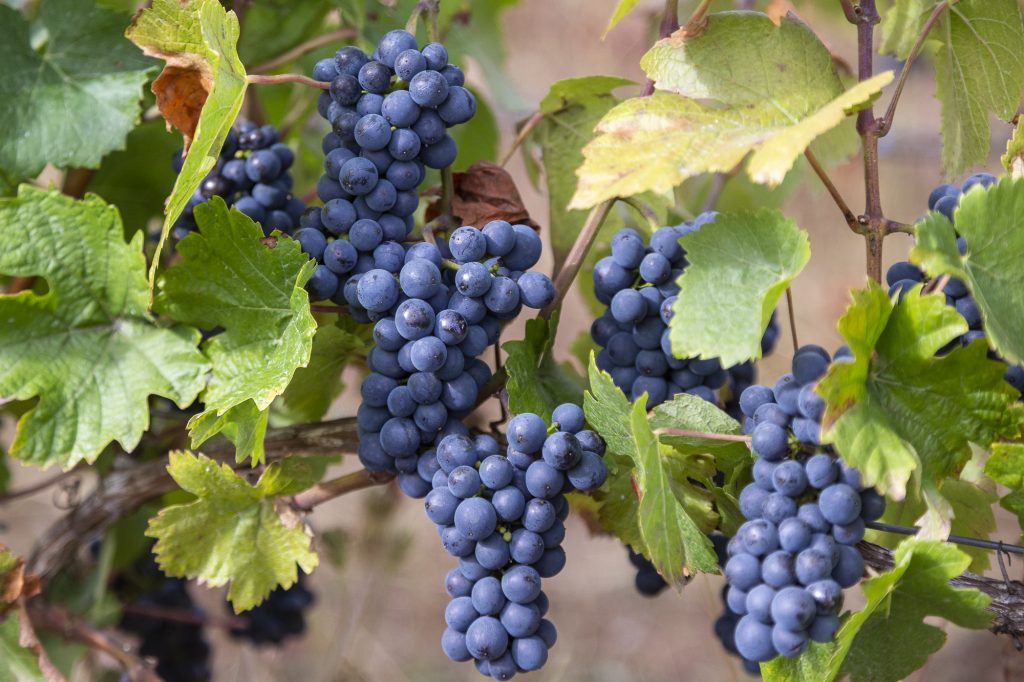
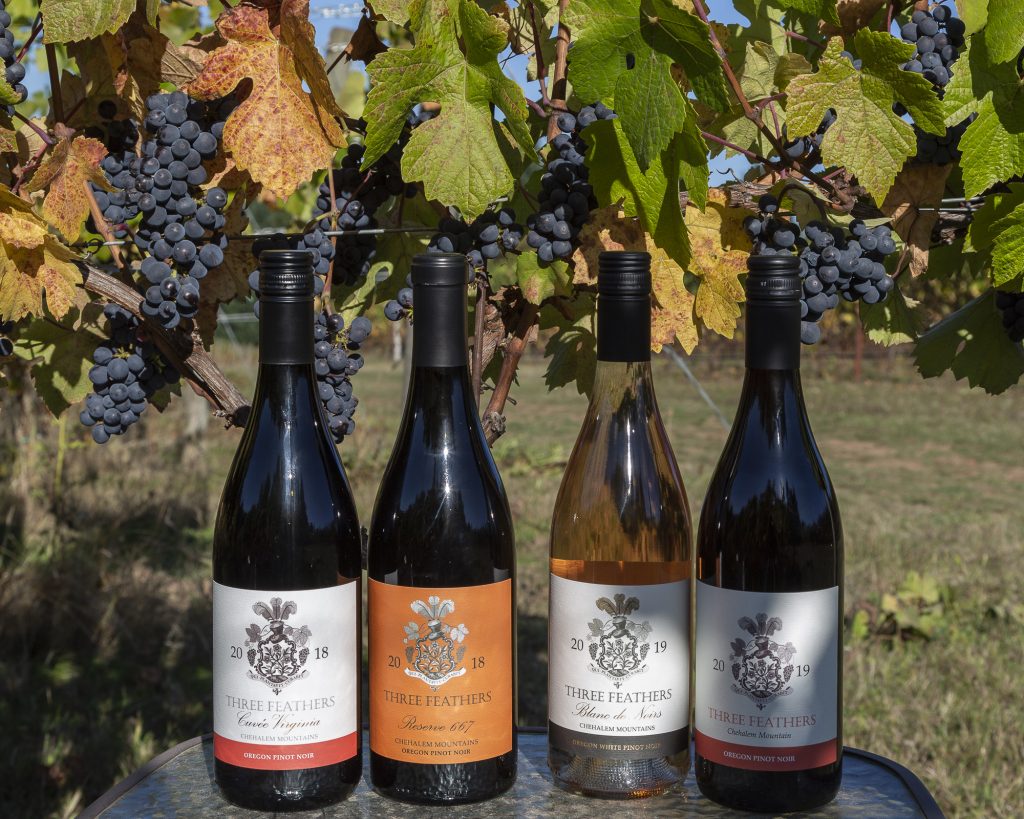
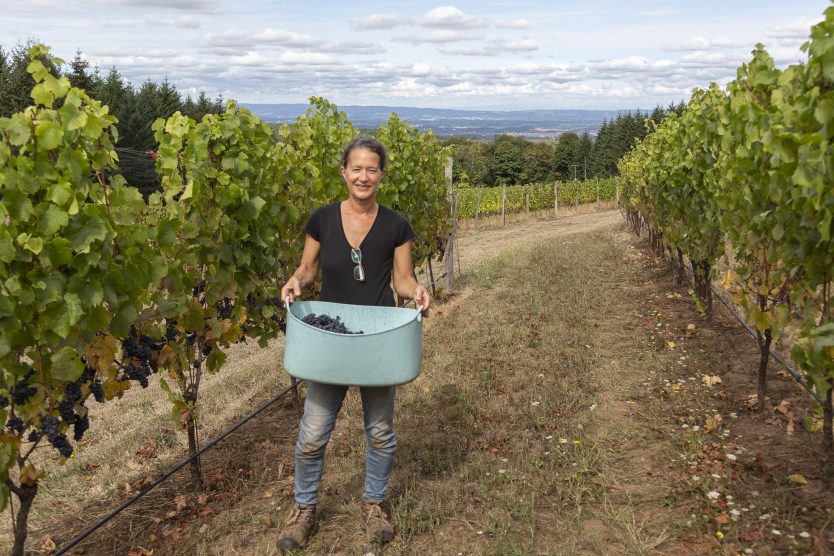
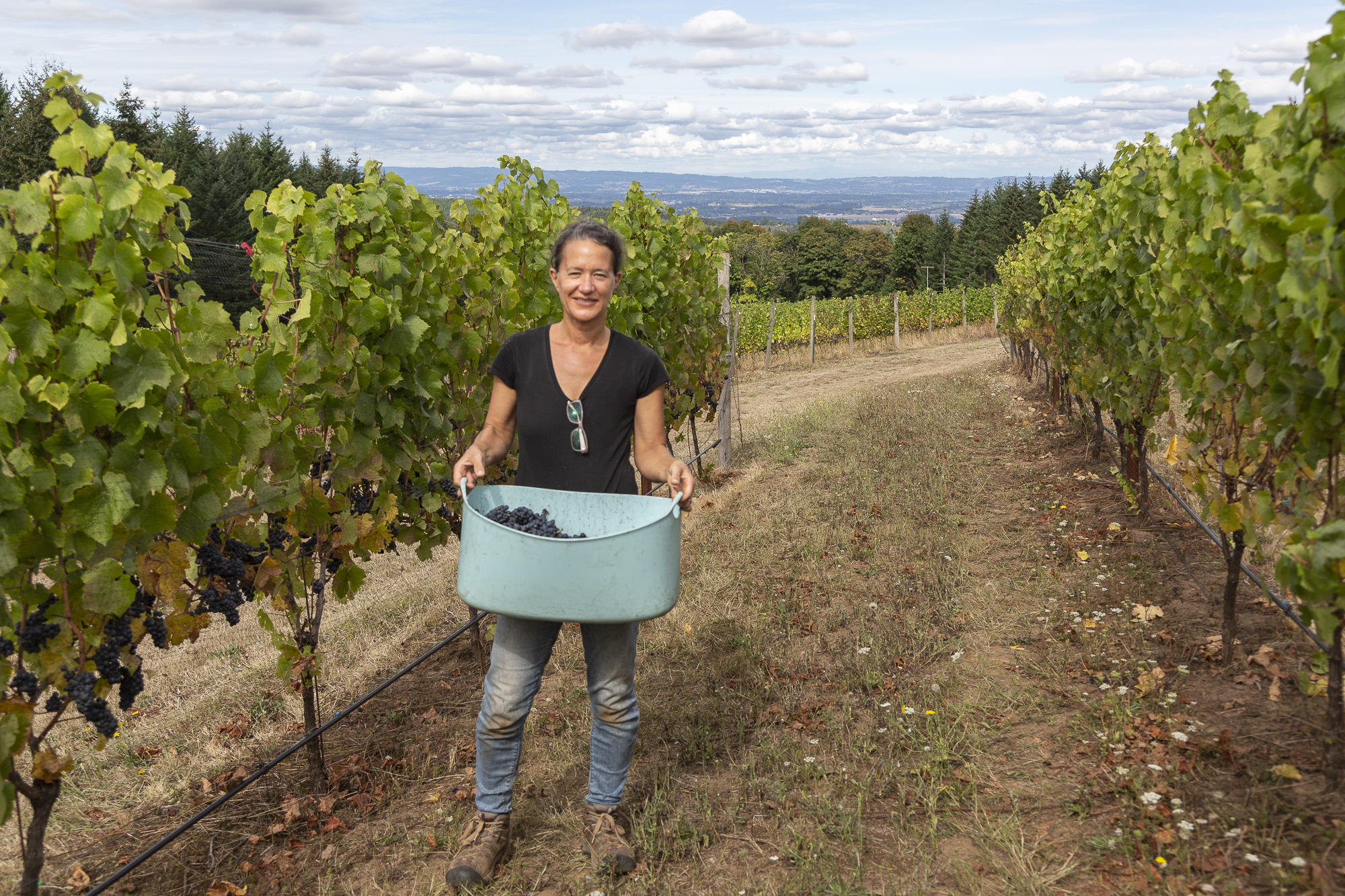
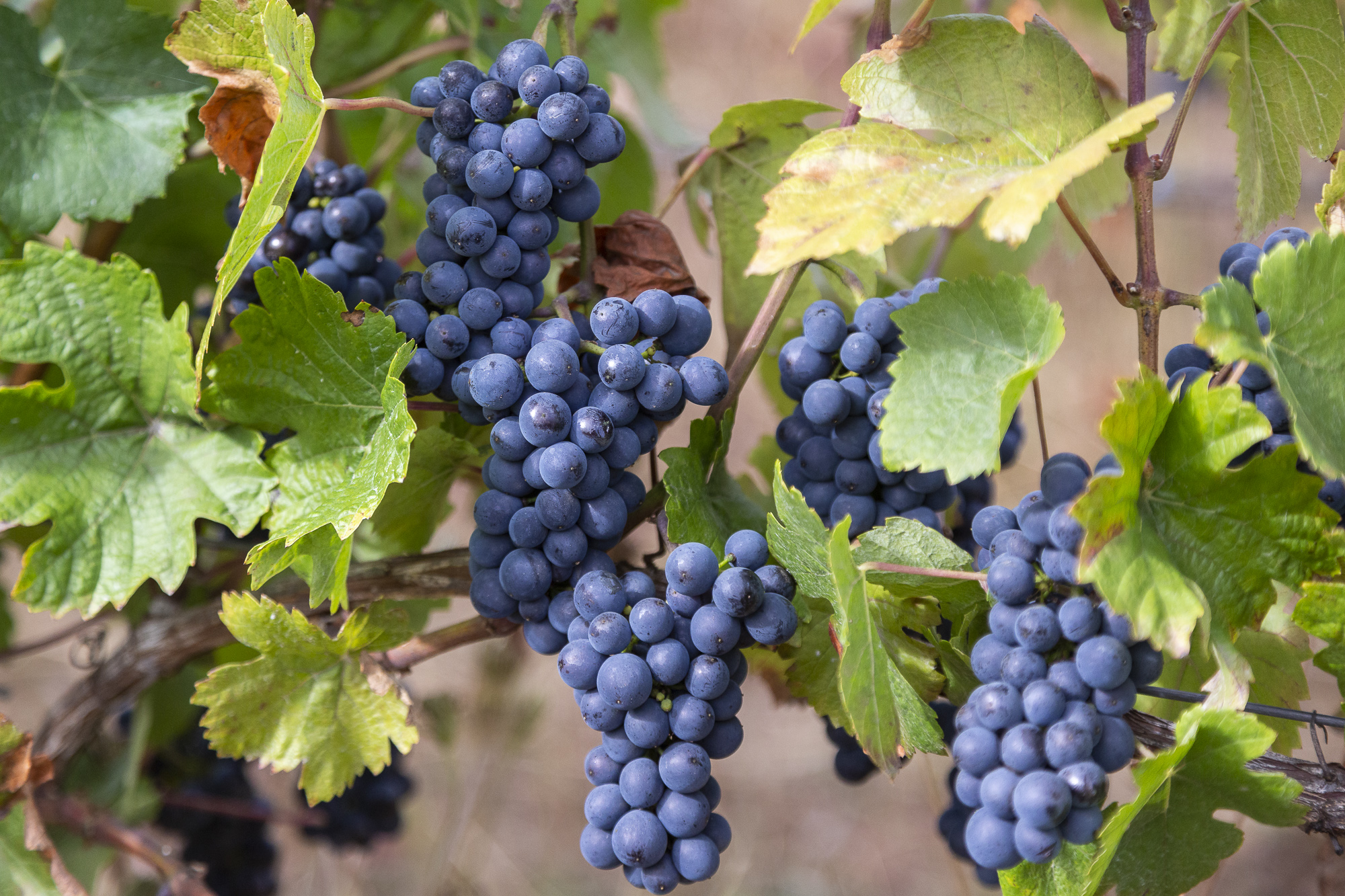
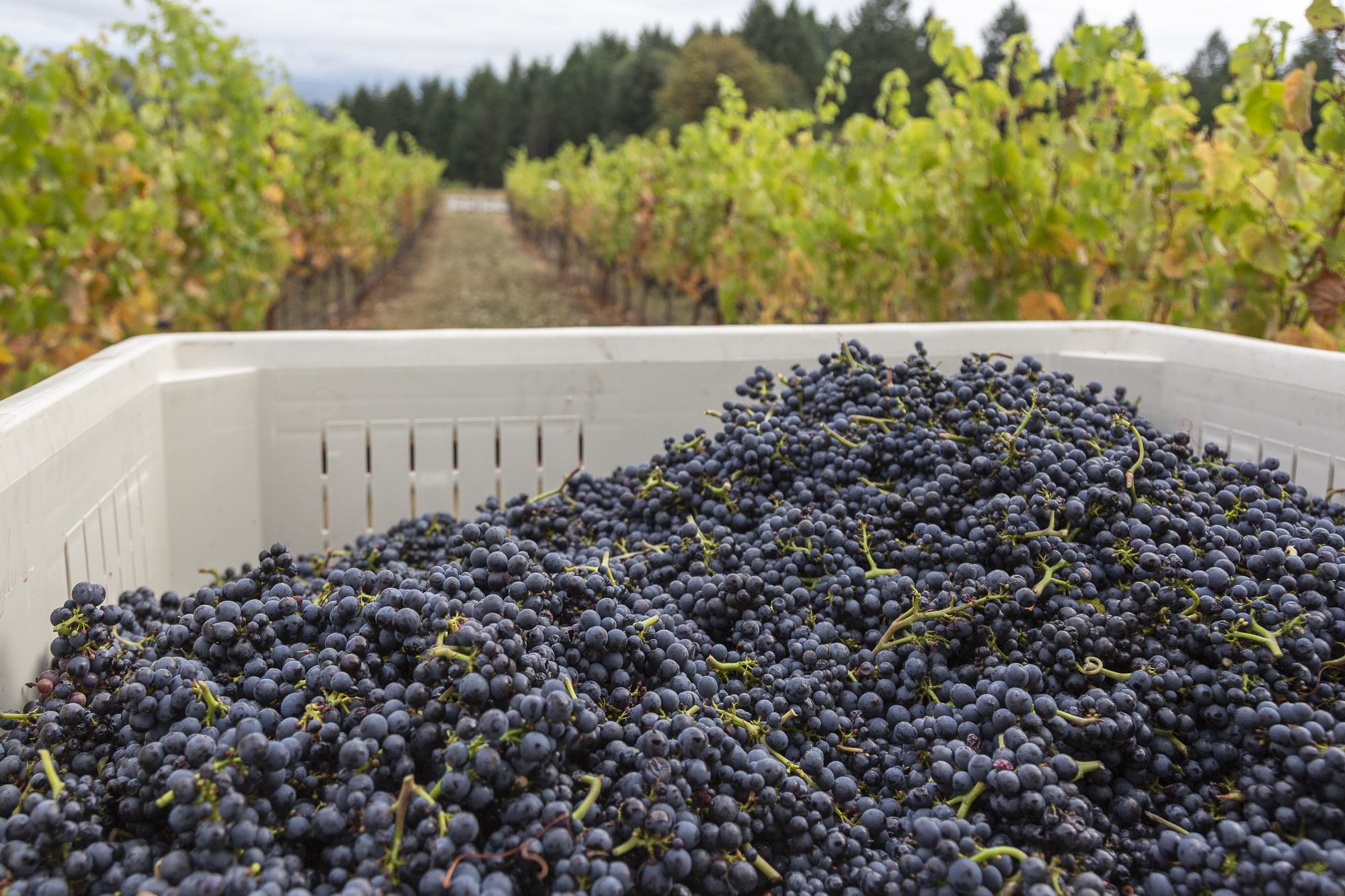
Harvested 667 and 115 Pinot Noir grapes from Three Feathers Estate 2021
Three Feathers Record Harvest after a beautiful 2021 Vineyard Season
Three Feathers Record Harvest after a beautiful 2021 Vineyard Season! What a season we had this year! Our vineyard bore large luscious and plentiful clusters of Pinot Noir and Pinot Gris, despite several weather scares and lack of rain.
After the disastrous fires of 2020, every one in the Willamette Valley was nervous about their vineyards. Spring of 2021 was dryer than normal which added to the anxiety. When we did finally get some rain, it coincided once again with the bloom of the vines in the valley. Subsequently, we experienced a short but extreme heat wave that burned exposed clusters. Thanks to our high-elevation sites on Chehalem Mountains, we avoided issues with bloom and heat.
Our vines powered on through it all.
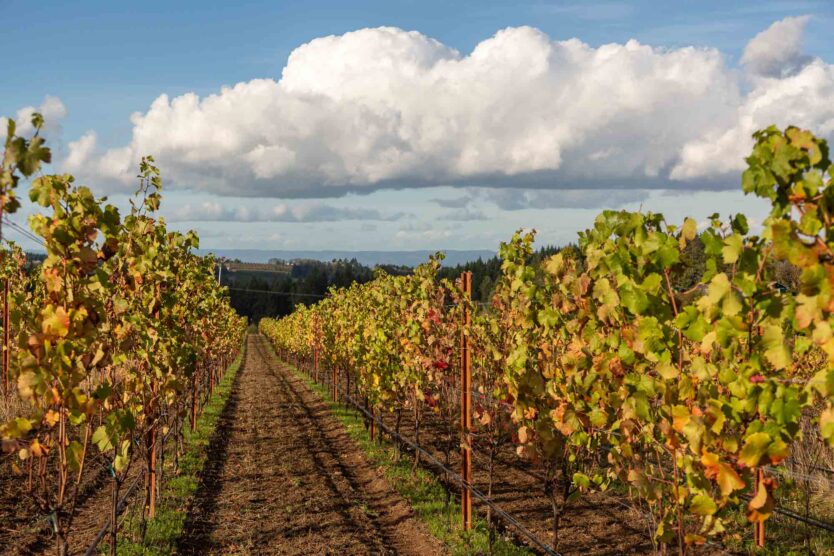
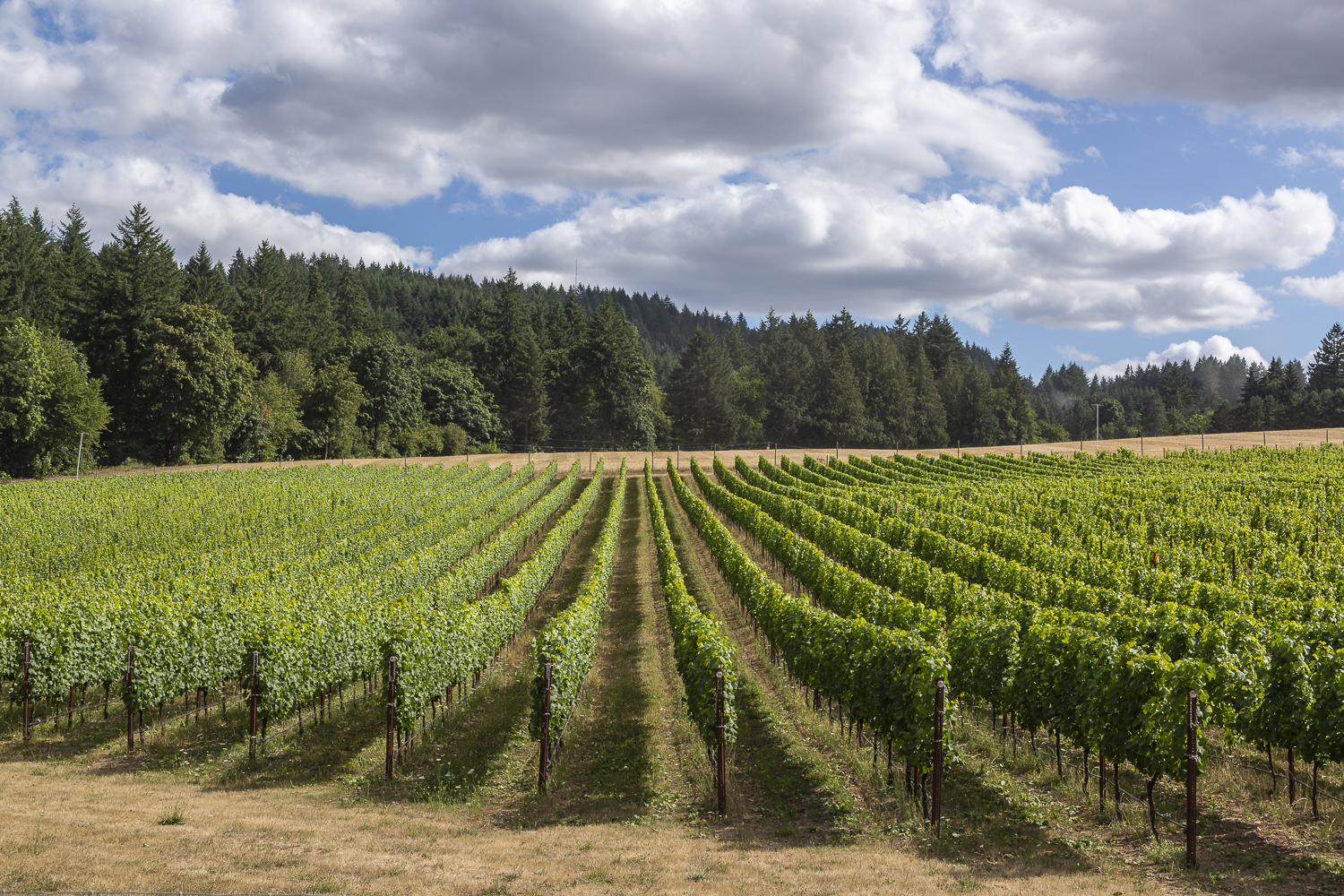
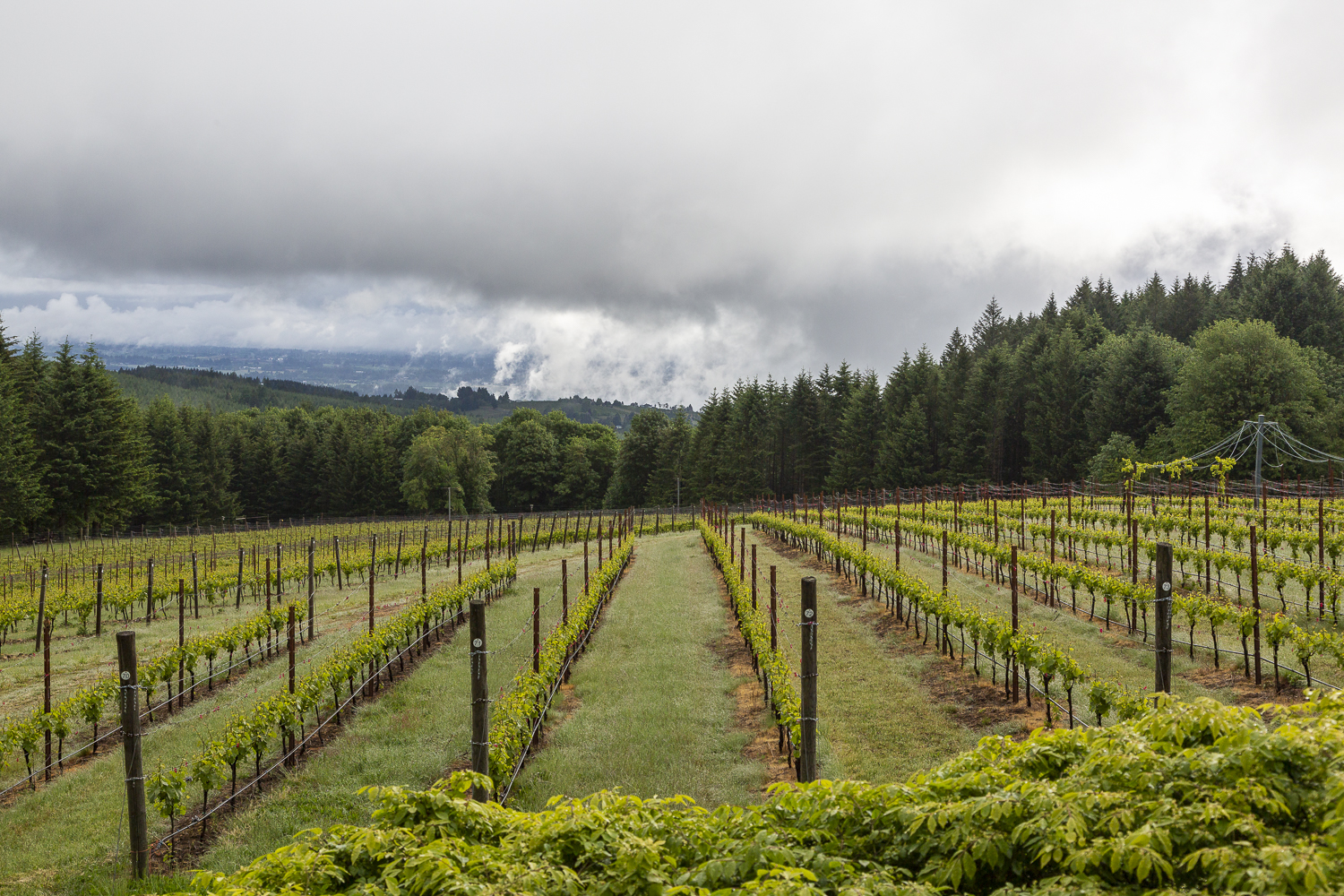
Torio Vineyard view, Pommard and Dijon clones
The oldest vines, planted 10 years ago at Torio Vineyard, are reaching full maturity and production. Their roots are deep and find water even in the driest year. They are on the north facing slope so they get cool winds.
Précoce Block at Torio Vineyard
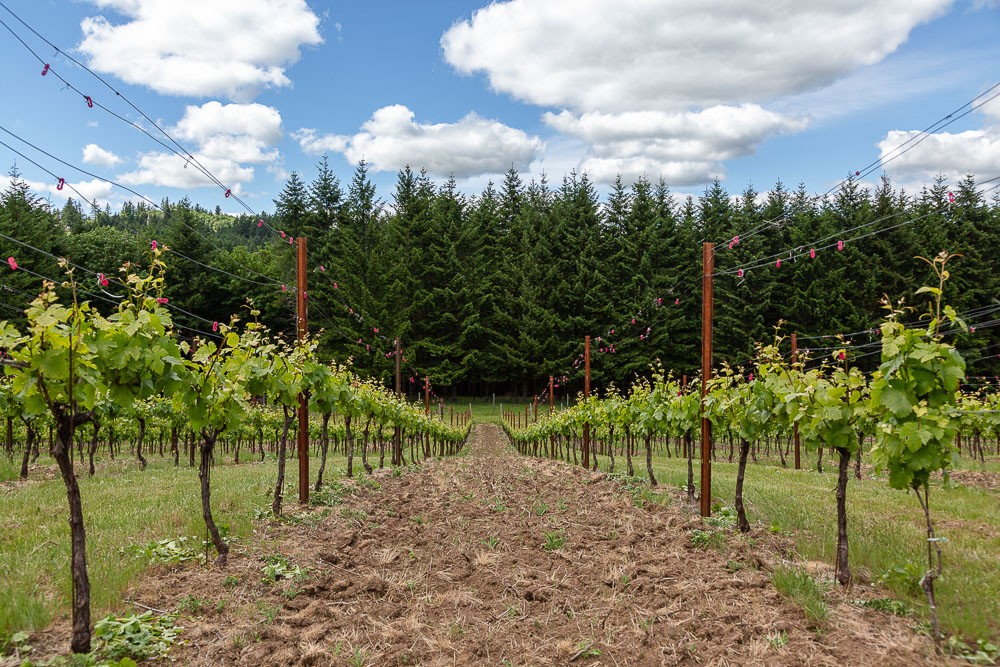
Our youngest plants, the Précoce, Pinot Gris and 115 Pinot Noir at the Three Feathers site are all catching up and producing nicely. Although some blocks are not yet at full production, every block produced fruit, making a significant contribution to the harvest.
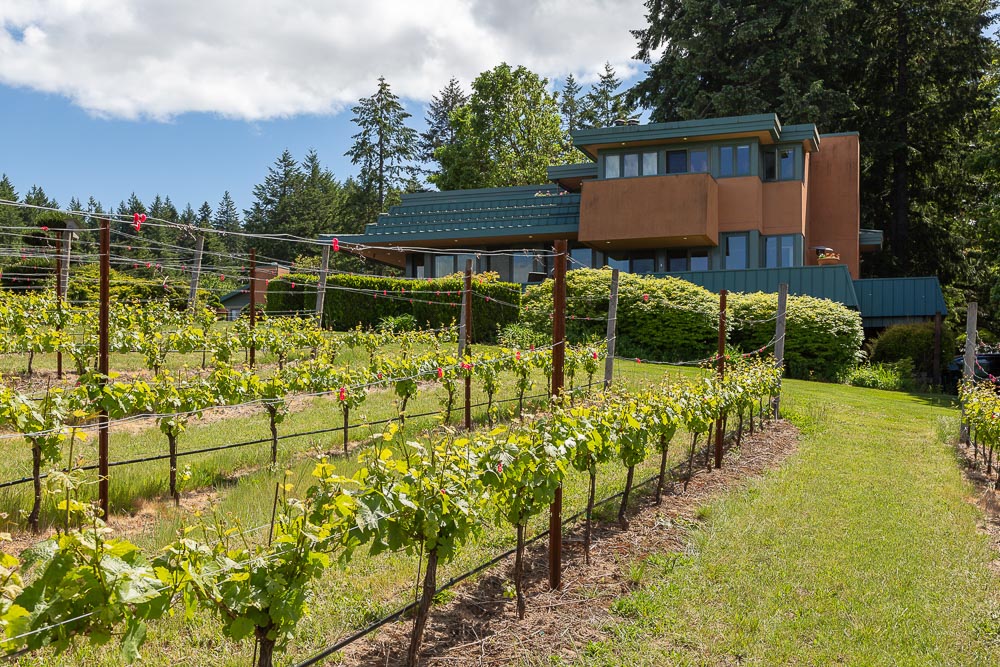
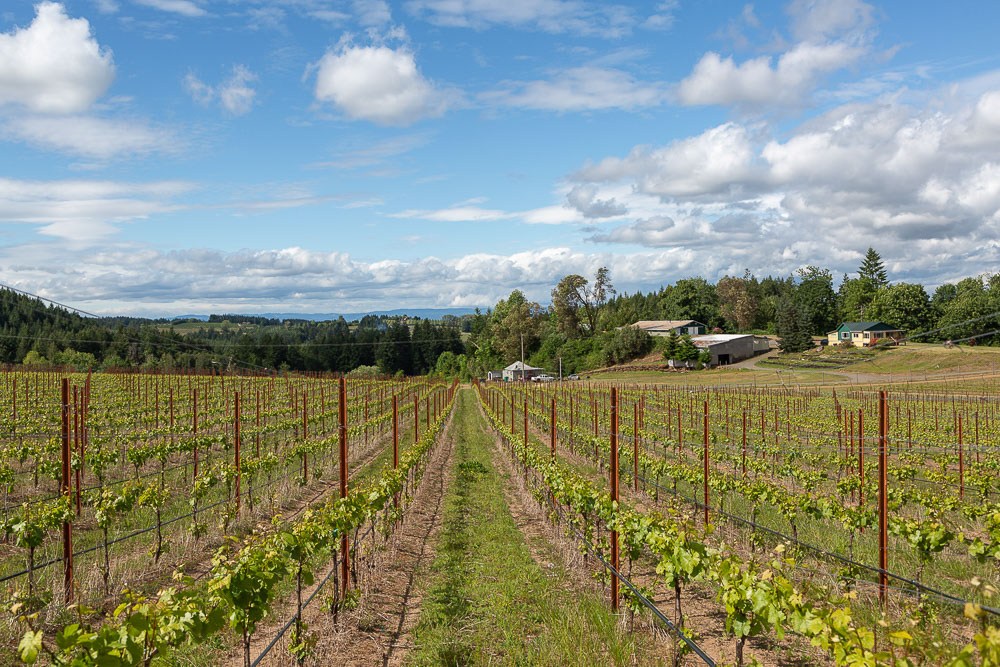
View of Block 2 Three Feathers in May 2021.
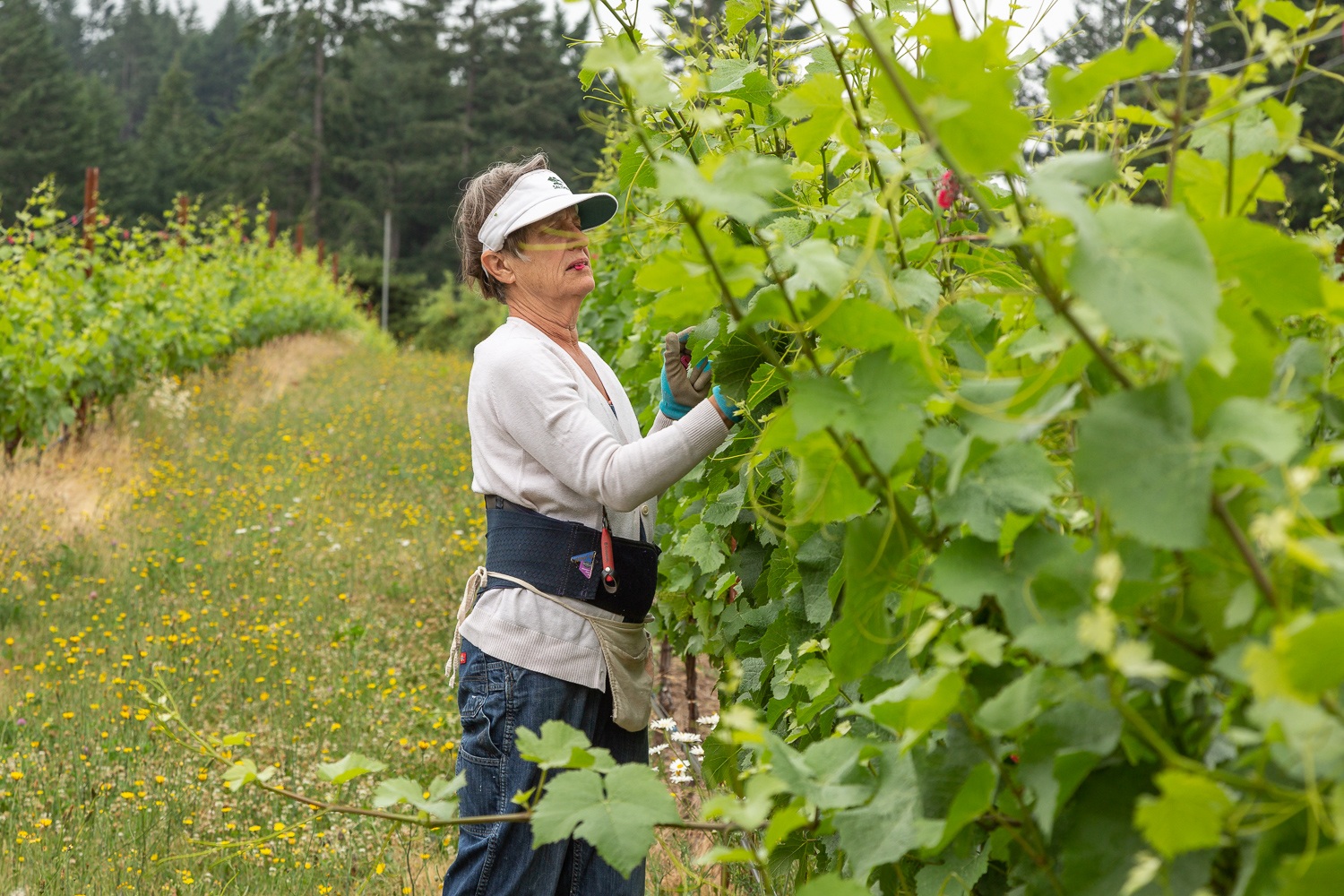
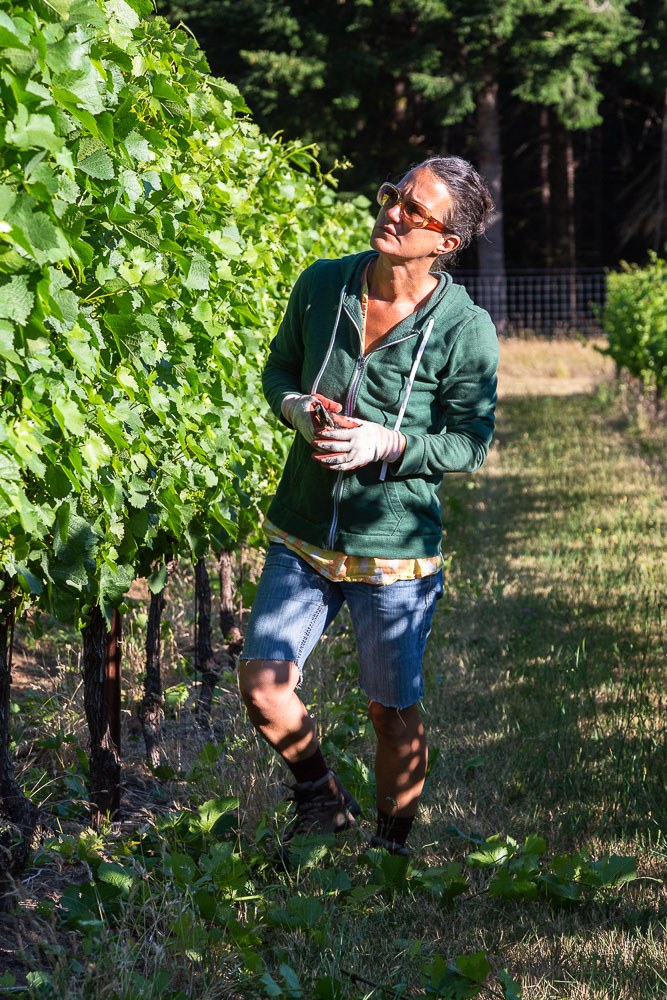
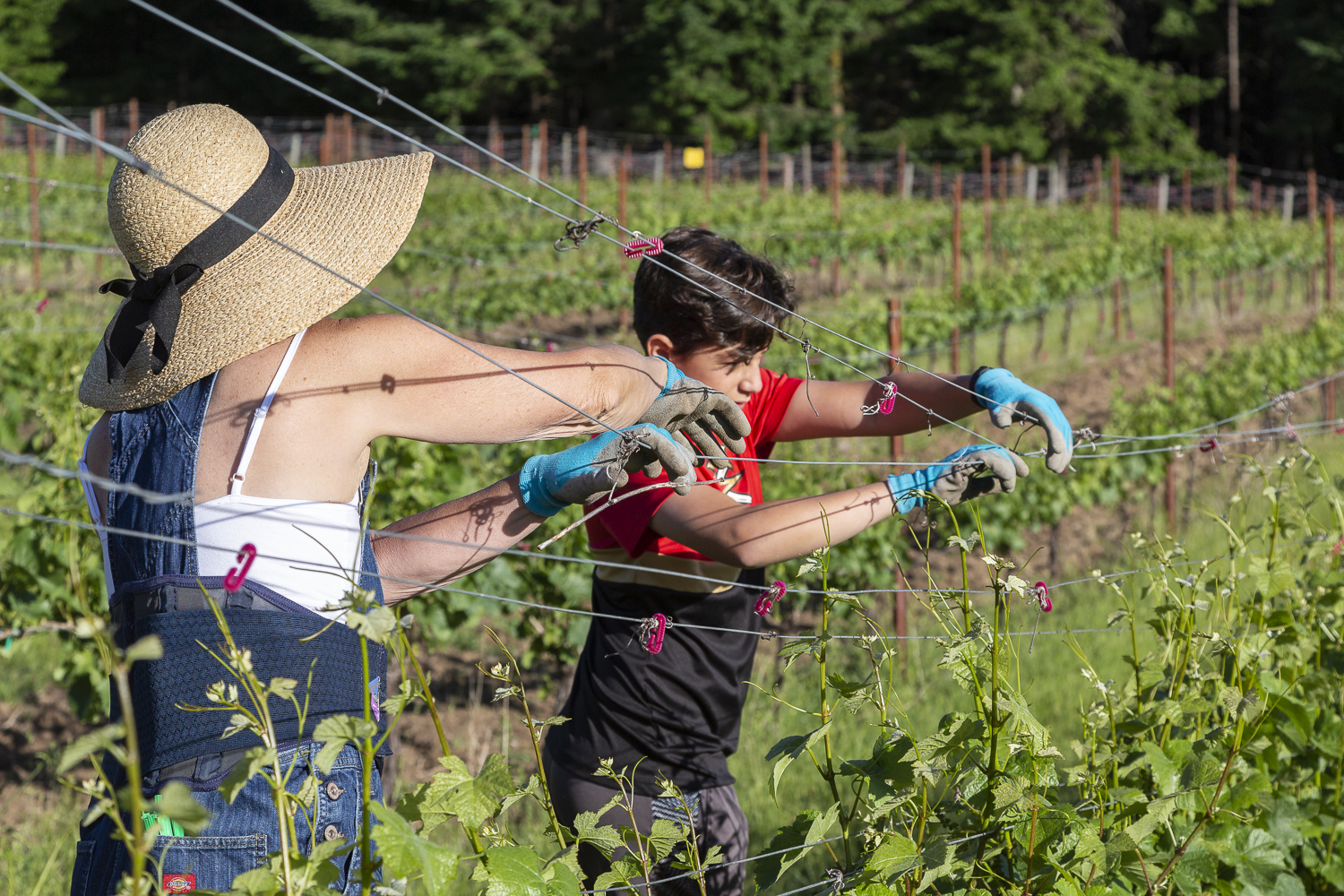
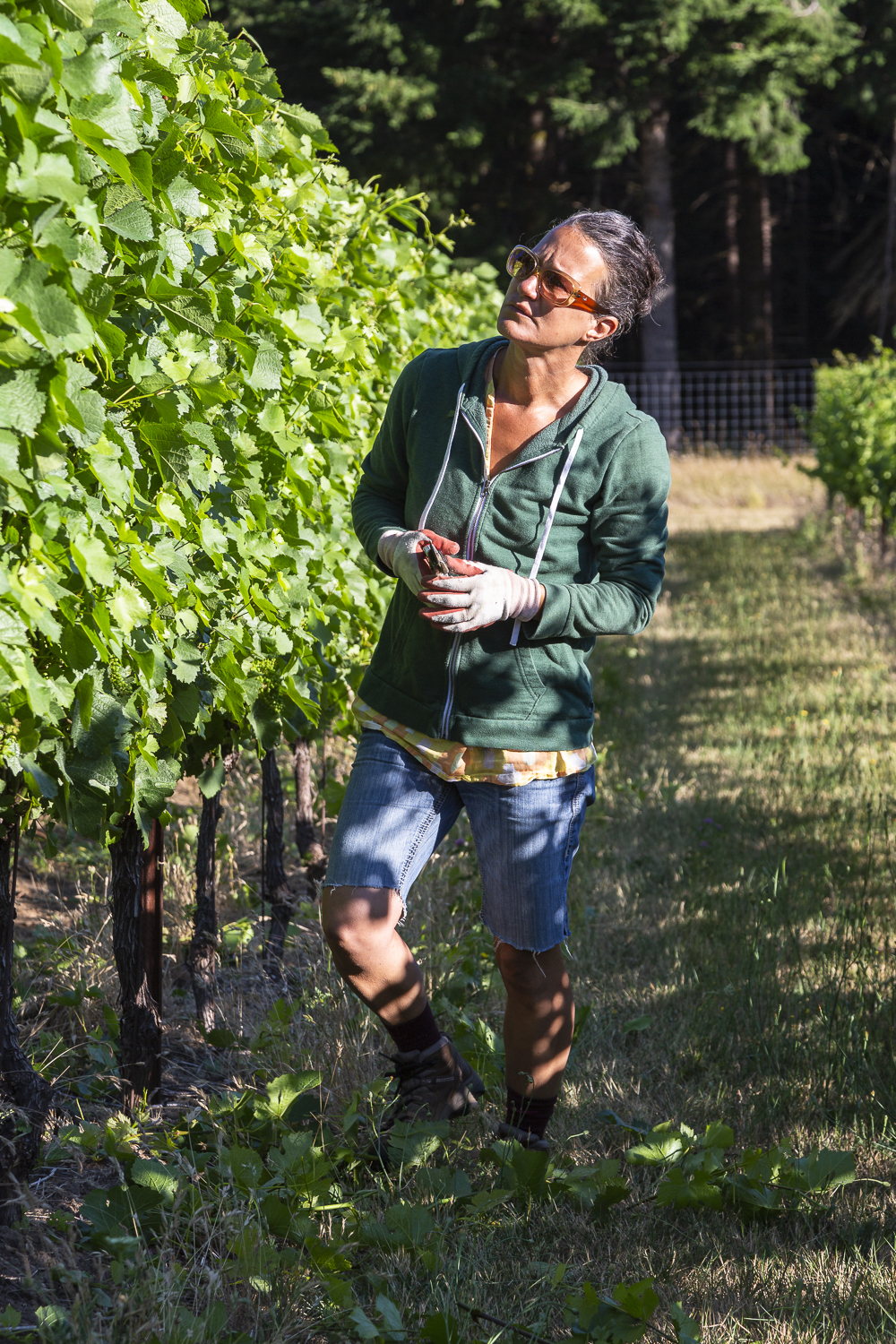
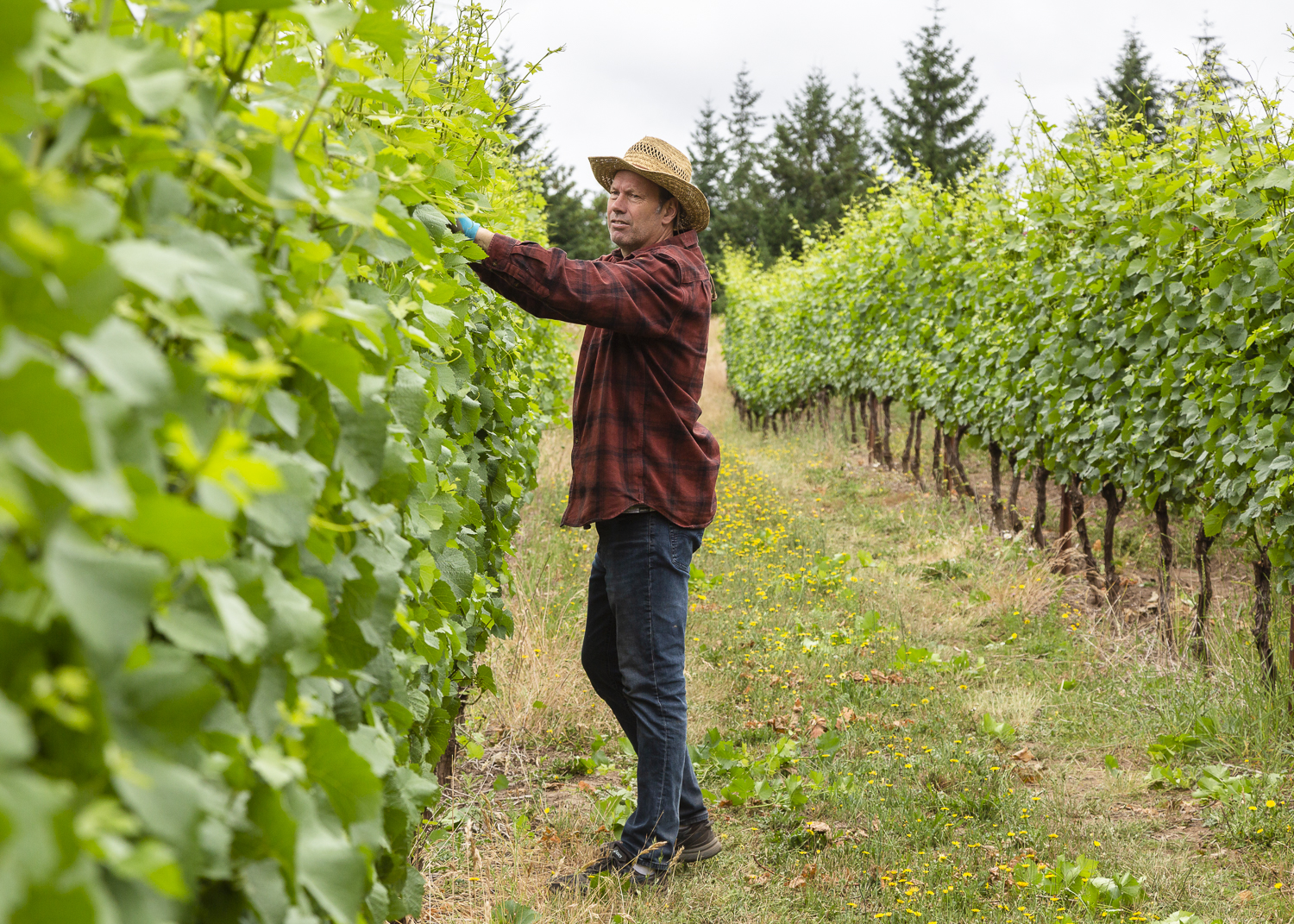
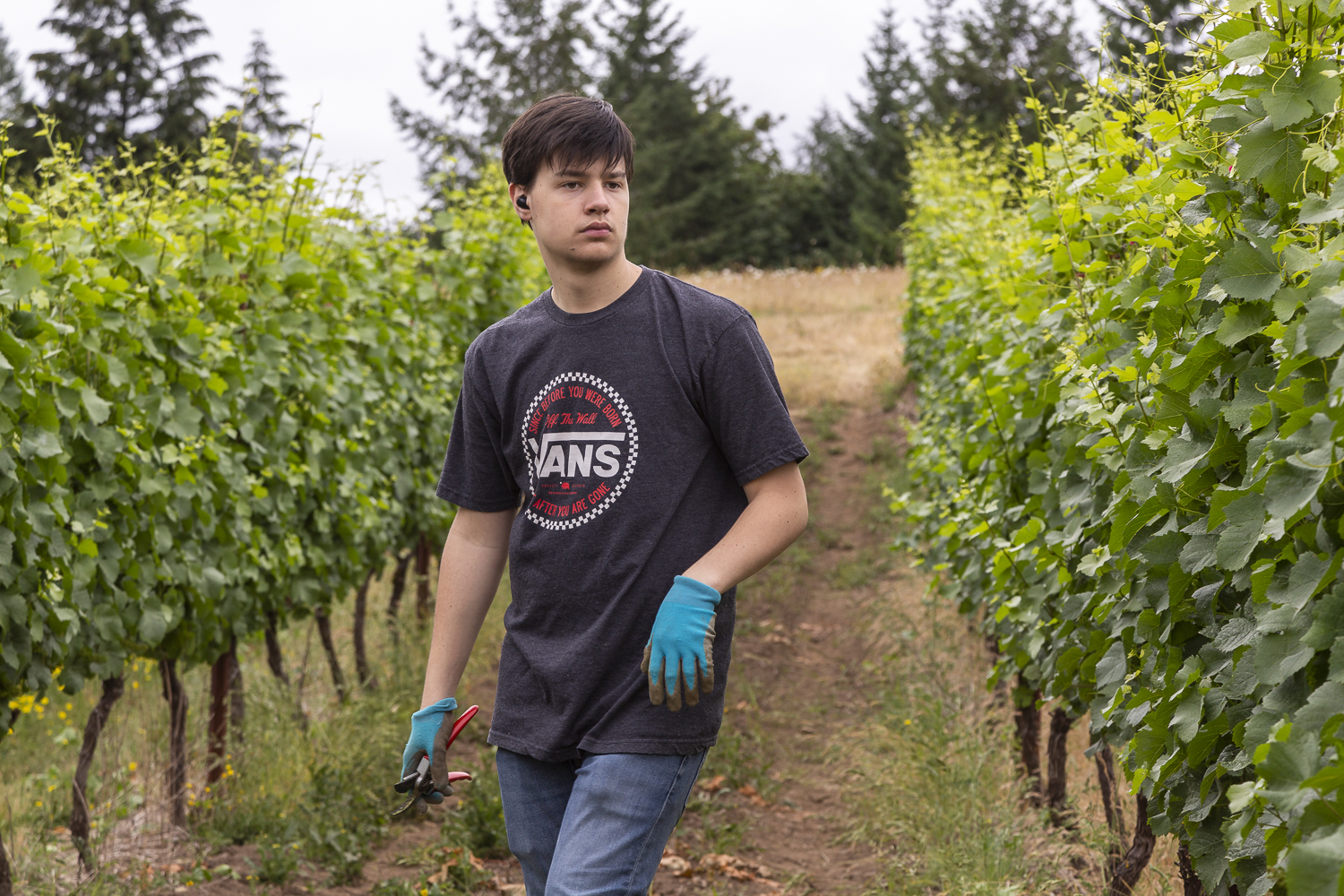
We benefited from the help of a crew at Three Feathers making it possible for us to concentrate our energy at Torio Vineyard. Elise, Francois, Felix and Torio all came to help in May, June and July and we worked throughout that time (watch video) with only a few breaks.
2021 Harvest Highlights
Harvest started a few weeks earlier than in the past. Our first pick took place on September 16th of the Précoce (Pinot Madeleine) block at Torio Vineyard. These early ripening grapes made a fabulous wine in 2020 – our first single-clone vintage from this block – and they really surpassed our expectations this year. We were pleased to have an even bigger yield in 2021 (2 tons) to make our 2021 single-clone Madeleine wine.
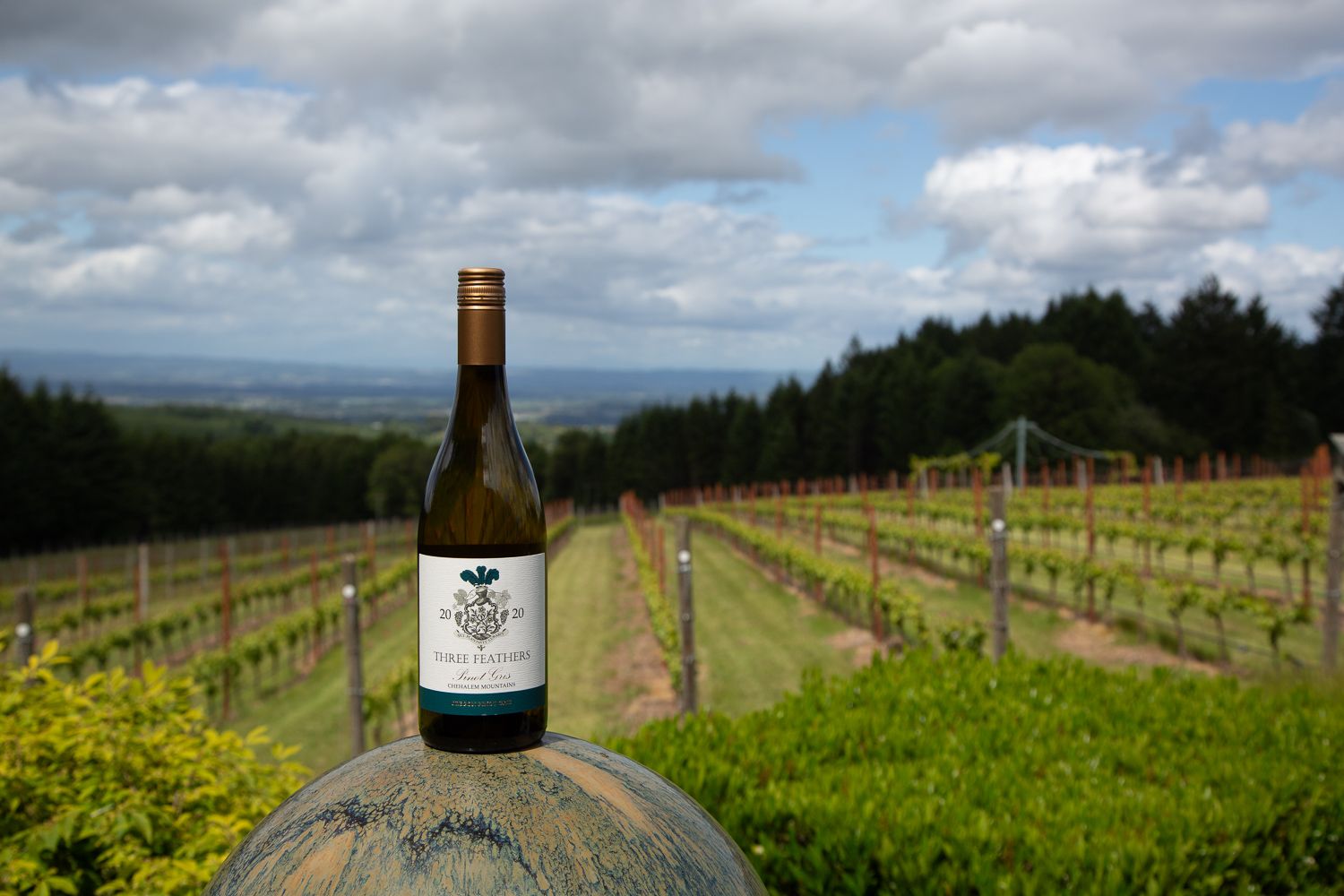
Our next pick was the Pinot Gris on September 24th. There was a last season burst of heat that the day, reminding us of summer. We harvested 3.4 tons of Pinot Gris; a nice addition to our cellar of this very popular wine (purchase our 2021 vintage Pinot Gris here).
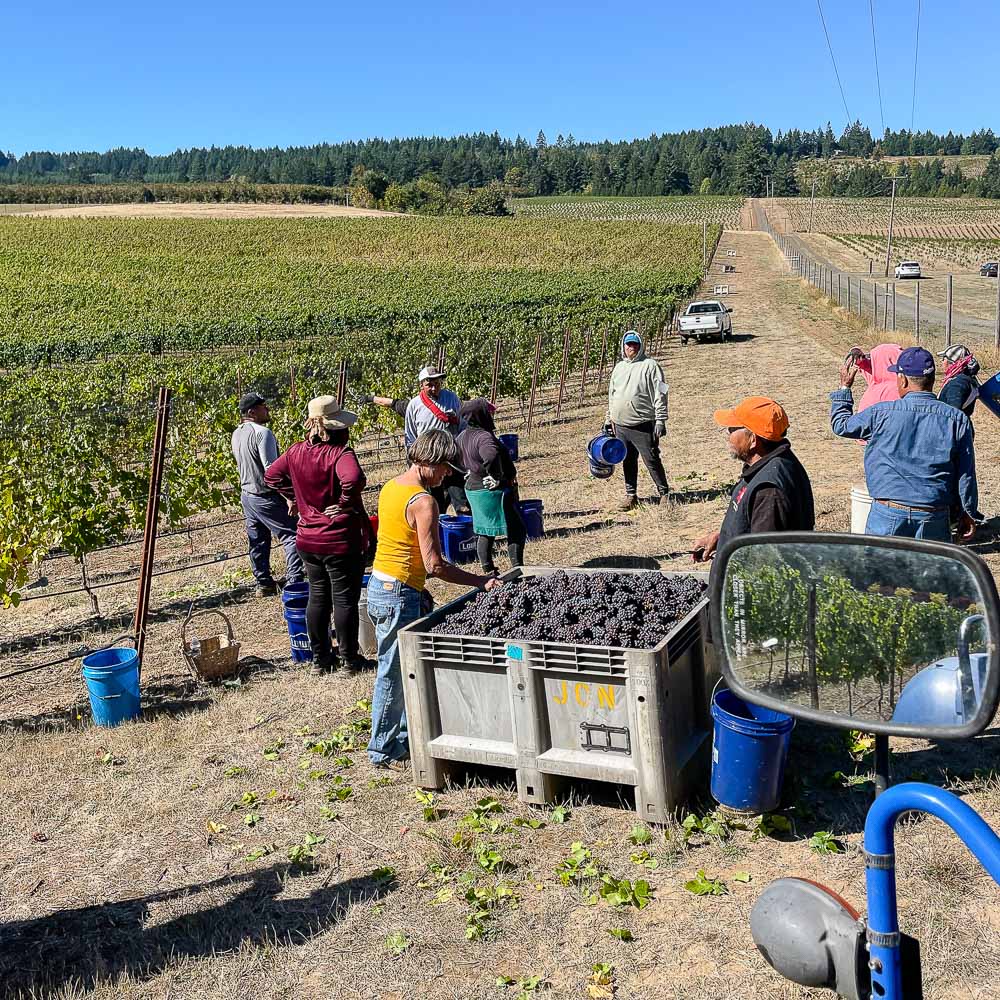
Christine and Victor harvesting Pinot Gris at Three Feathers Block 3
Christine and Victor harvesting Pinot Gris at Three Feathers Block 3Three Feathers 2020 Pinot Gris – 90 point score from JamesSuckling.com
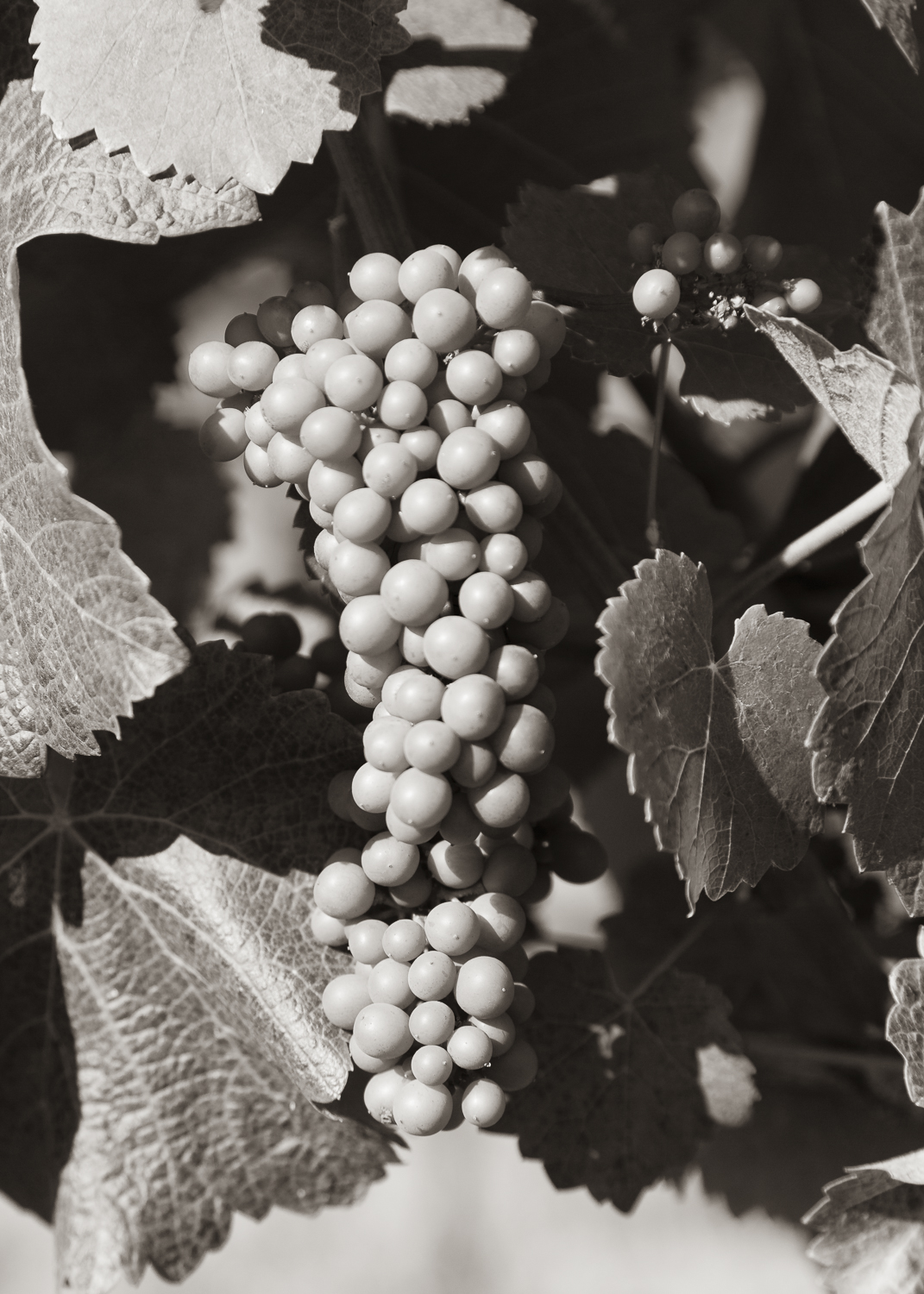
The last pick for our wine production was a small amount of 667 and 115 clones of Pinot Noir combined that we will blend to create a new Pinot Noir flavor combination, adding to our exploration of the possibilities of this grape and our site at Three Feathers. Clusters were exceptionally large and succulent.
The balance of the 37 tons harvested went to buyers.
Although summer is now a distant memory, and fall seems shortened by steady rains and wind blowing the fall colors to the ground, our hearts are warmed by thoughts of the successful vineyard season, prospects of excellent wines to come and continuing relationships with all of you who made this possible.
Many thanks to all who contributed to this vineyard season. 2021 is history!
Three Feathers Celebrates Harvest with a Wine Tasting Event
Three Feathers Celebrates Harvest with a Wine Tasting Event on Sunday, October 17, 2020 from 12 noon to 5 pm | Tasting fee $20.
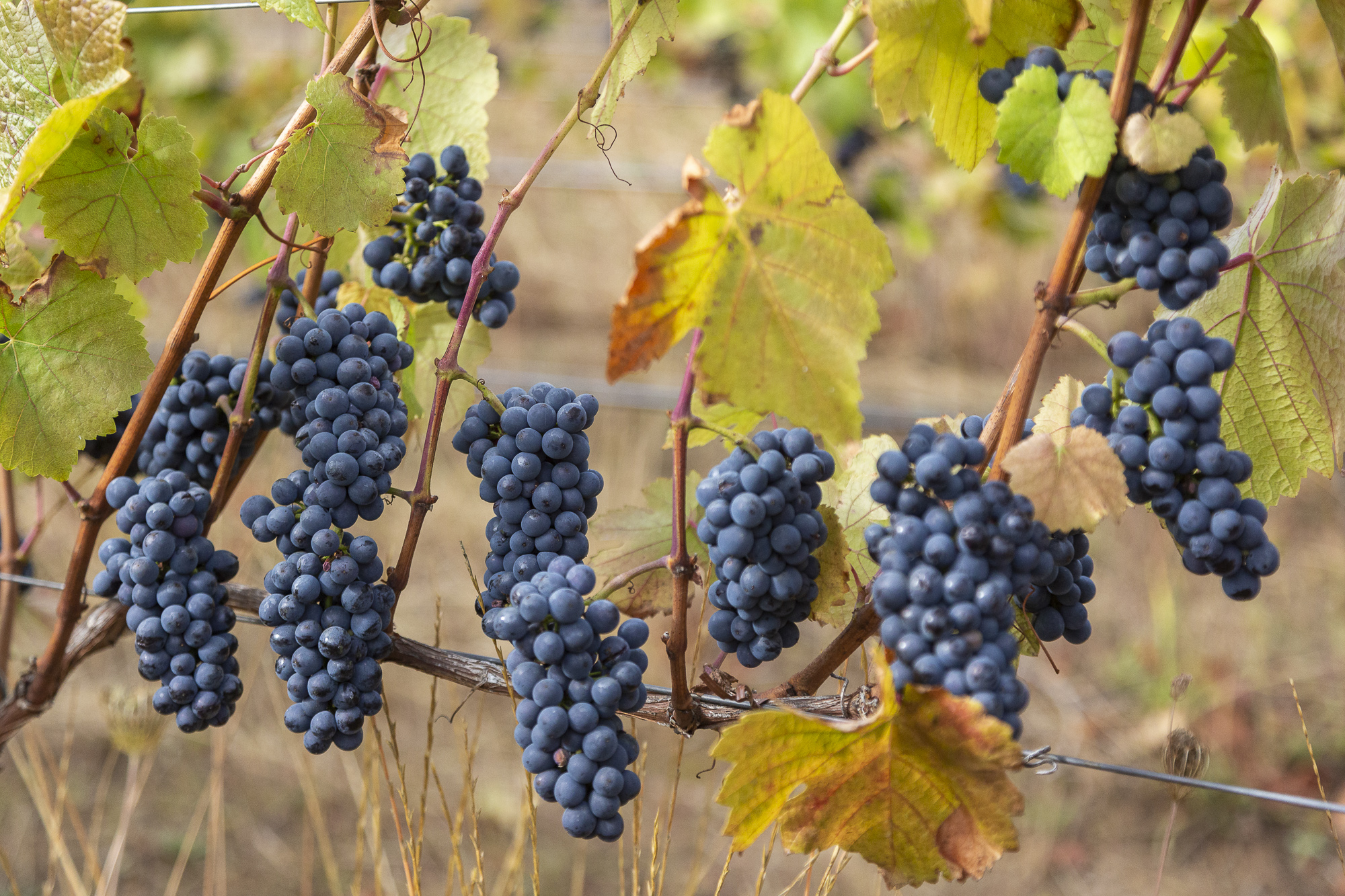
Pinot Noir Précoce varietal at Three Feathers Estate just before harvesting.
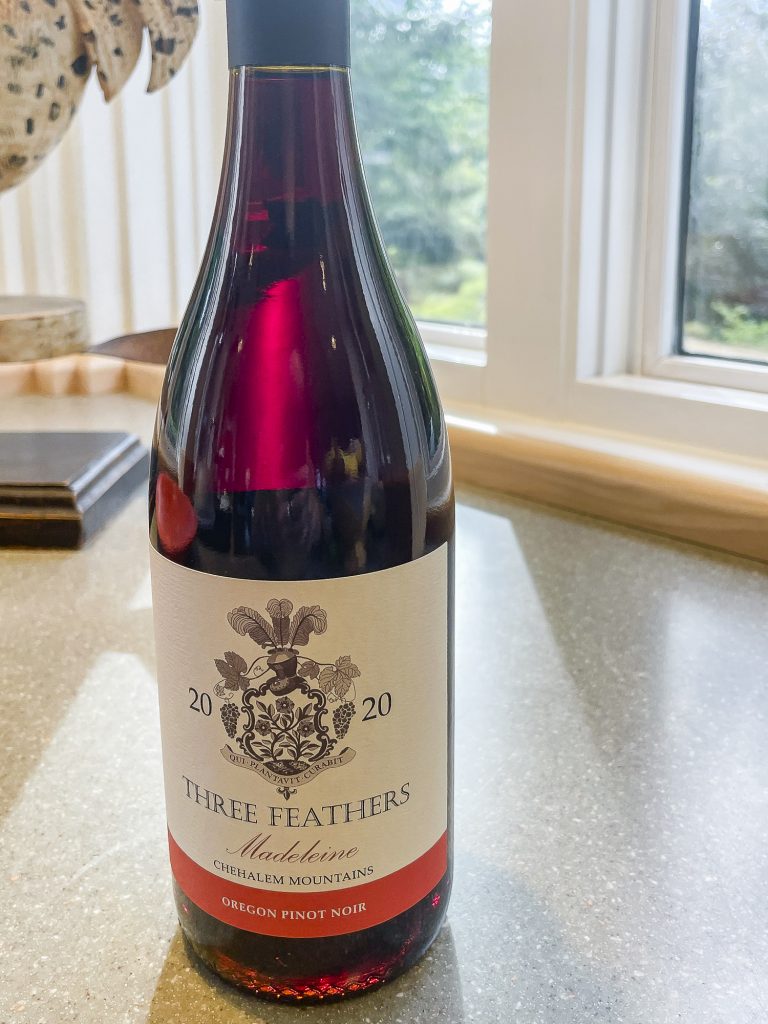
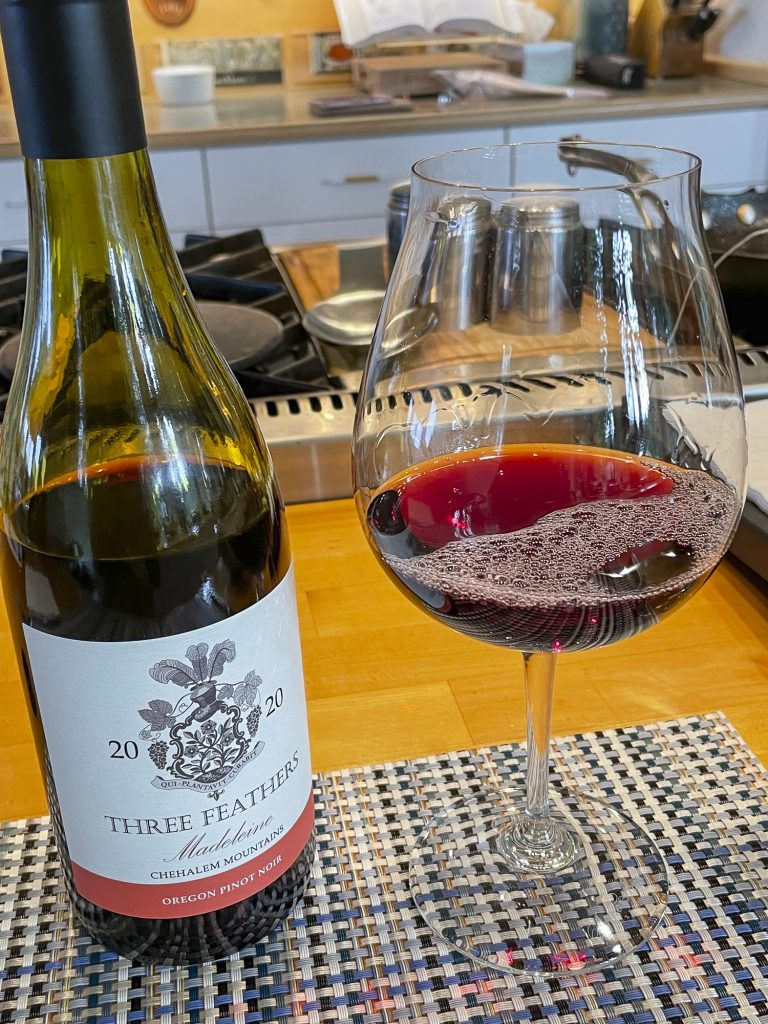
This fall we are introducing the first vintage of our rare Pinot Noir Madeleine. A ruby colored wine with light tannins and a strong finish, we picked these grapes almost a year ago. They were pressed with 25% whole cluster and aged in neutral French oak for 10 months. See our blog article about Précoce (aka Pinot Madeleine or Frühburgunder). We believe we are among the very few in Oregon to have this grape.
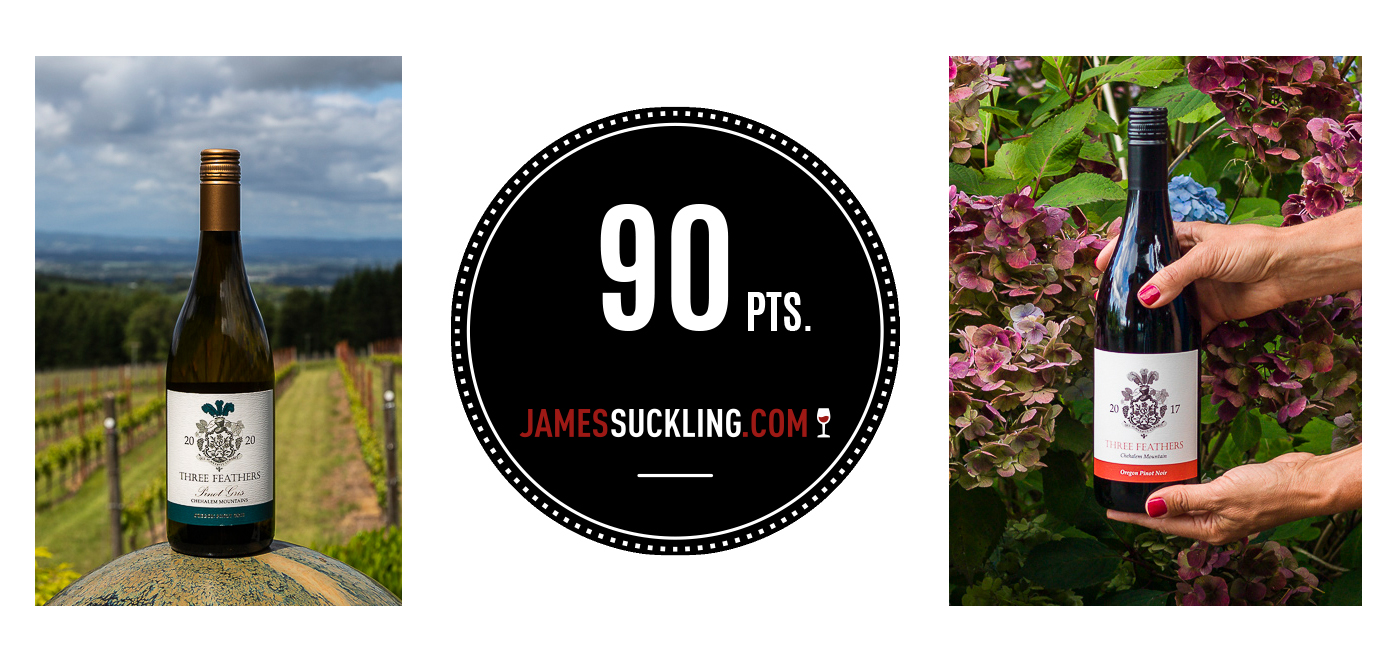
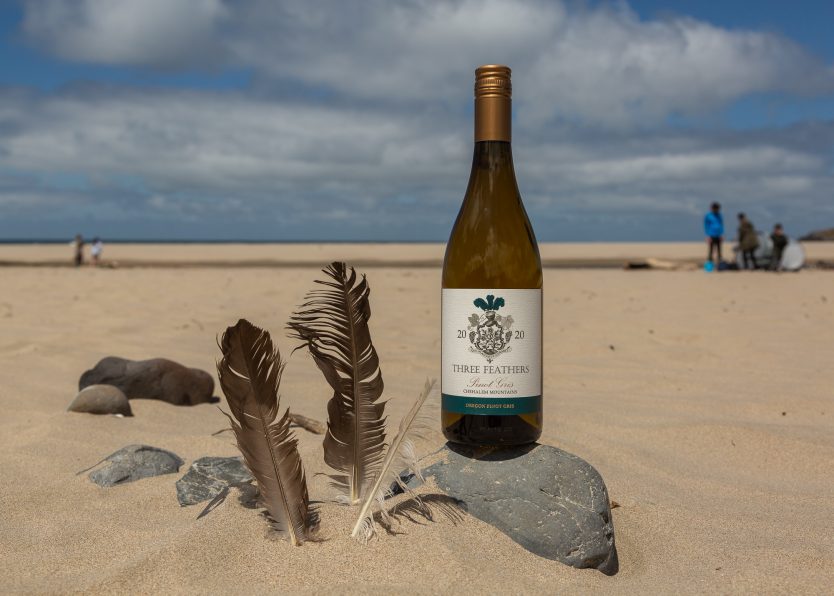
In addition, our 2020 Pinot Gris was honored by James Suckling with a 90 point rating, as was our library wine, the 2017 Pinot Noir, of which there are only 7 cases remaining.
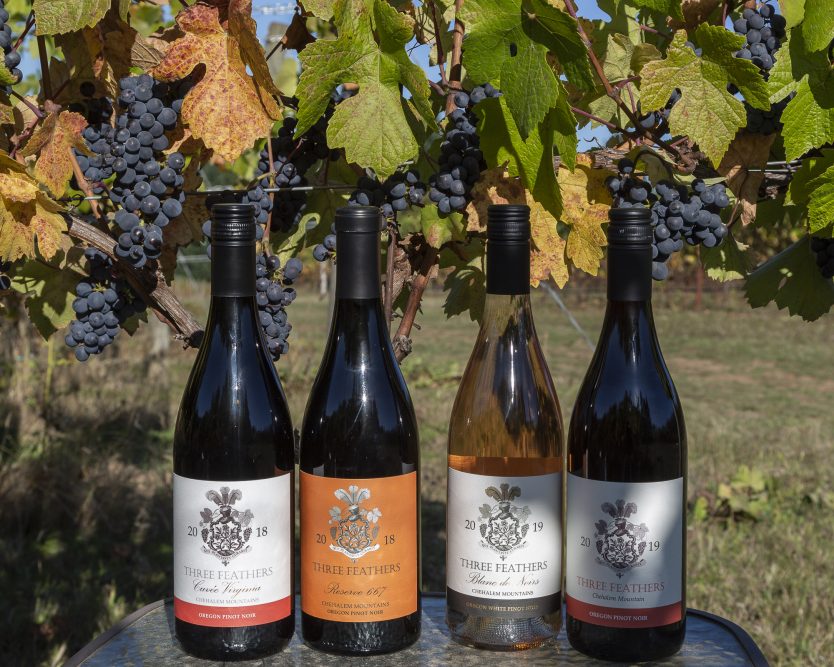
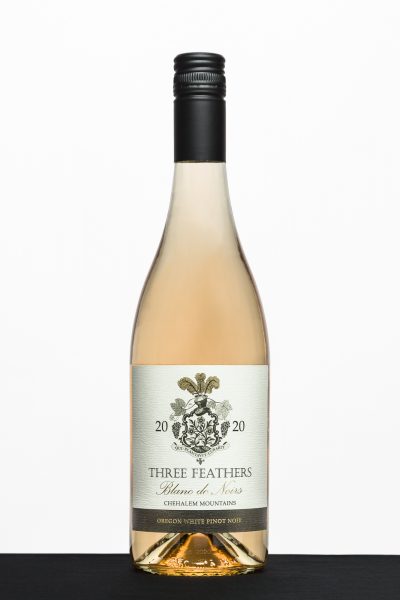
Our 2019 wines are also availablThe 2018 Blanc de Noirs is also almost sold out, so if you enjoy that Blush now is the time. Alternatively, the 2020 Blanc de Noirs is a lovely edition to our white wines and a very different version of our “Whites from Red”.
Three Feathers Blanc de Noirs 2020
Our Harvest Party is a rare opportunity to sample delicious Burgundy-style Pinot Noir and to taste and purchase our wines which are exclusively available online. We look forward to sharing our production with you!
Three Feathers wines are the product of our unique location, soil, elevation and micro climate. These elements combined make our wines different from any other. Every vine is nurtured on wind blown soil high in the Chehalem Mountains.
Precious Précoce | Introducing Three Feathers Pinot Madeleine 2020
Precious Précoce, as the name implies, has a unique attribute that it blooms almost two weeks earlier than other Pinot Noir and, as a consequence, the grapes are ripe two weeks earlier. This is a plus at our high elevation when the harvest can coincide with fall rains and cooling temperatures. When we planted 1 acre of Pinot Noir Précoce on our Torio Vineyard site in 2013, it was an experiment to see whether these attributes could enhance our wine production….
Elise Prudhomme harvesting Pinot Noir Précoce at Torio Vineyard in 2020.
Pinot Noir Précoce : Variety or Clone?
We did some research on the Précoce clone and found interesting information about this fascinating “spontaneous mutuation” of Pinot Noir, officially recognized in Germany as a grape variety.
Known plantings in Germany (about 647 acres) – notably in the Ahr Valley, England, the Puget Sound and now the Willamette Valley (Three Feathers) give us additional insight into this elegant grape whose small dark berries with a greater skin to pulp ratio yield a dense, velvety Pinot with rich aromatics.
Pinot Noir Précoce varietal at Three Feathers Estate just before harvesting.
Pinot Noir Précoce, otherwise known as Pinot Madeleine, or Früburgunder, was introduced to Foundation Plant Service at UC Davis by the Canadian Food Inspection Agency on Vancouver Island, BC. According to Nancy L. Sweet in her article Pinot: A Treasure House of Clonal Riches, the plants originated in France and were given the variety name Pinot Précoce FPS 01 to distinguish from standard Pinot Noir.
When we applied for a certificate of label approval (COLA) to bottle our first vintage Pinot Noir Précoce, the Tobacco Tax and Trade Bureau (TTB) did not accept “Précoce” as an additional term for Pinot Noir. Nor did they recognize “Pommard” as a term for Pinot Noir, for that matter. We ended up calling our first single-clone vintage Pinot Noir Précoce, “Pinot Madeleine”, instead. We concluded that this early-ripening clone from the old world, popular in Germany as Früburgunder, or “early burgundy” is not commonly grown in the United States.
Pinot Noir Précoce growing at Three Feathers
Our growing notes confirm a shorter vegetative cycle for Précoce; the leaves change color before the rest of the vineyard and fall during harvest. This variety does not require thinning, as yields tend to be low overall, and the site has to be cool to permit a long enough ripening period. The grapes quickly become overripe if not picked in the right window.
With experience behind us, it is evident that if there is not enough yield to produce its own wine, Précoce grapes cannot hold long enough to be harvested with other Pinots. In previous years, before we had enough, we used it in our blends if we could hold it long enough before it dried up. Now that we have enough to make its own wine this is less of an issue. If we want to use it in a Cuvée or blend, then we must harvest, barrel it, and blend it later.
In 2020 in view of a significant yield and beautiful fruit, we harvested this block two weeks earlier than the rest of the Pinot Noir clones at Three Feathers. Our first vintage 2020 Pinot Noir Précoce, or “Pinot Madeleine” has just been bottled; a single-clone, 25% whole cluster wine on neutral French oak.
Our 2020 vintage – smooth with a long finish – has notions of bramble-berry, elderberry and floral notes with a hint of wilderness. With slightly less acidity and tannin, and well-developed aromas, this elegant wine is round and pleasant, ready to drink now.
Our Pinot Madeleine 2020 will make it’s debut at our Harvest Party on Sunday, October 17th from 12 noon to 5 pm. We look forward to sharing our production with you!
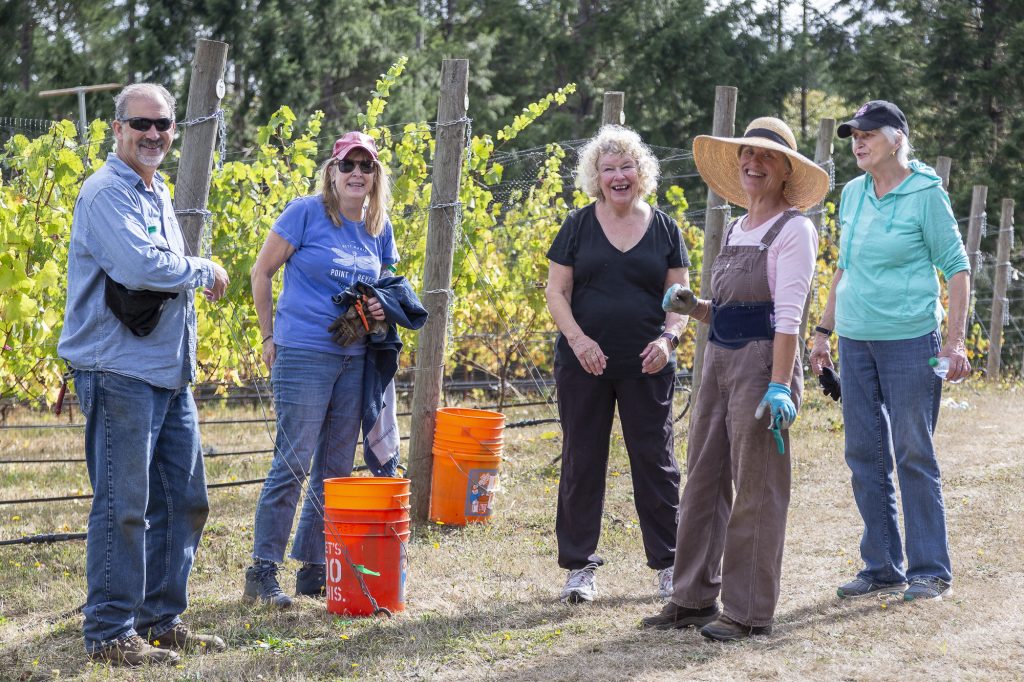
Three Feathers Flight Club Members harvesting our first vintage Pinot Noir Précoce on Chehalem Mountains / Torio Vineyard site
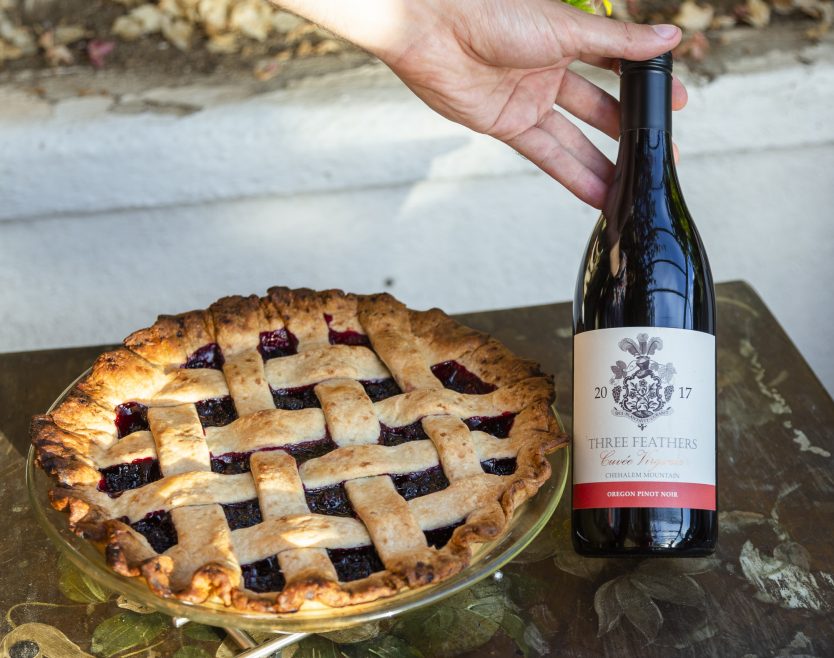
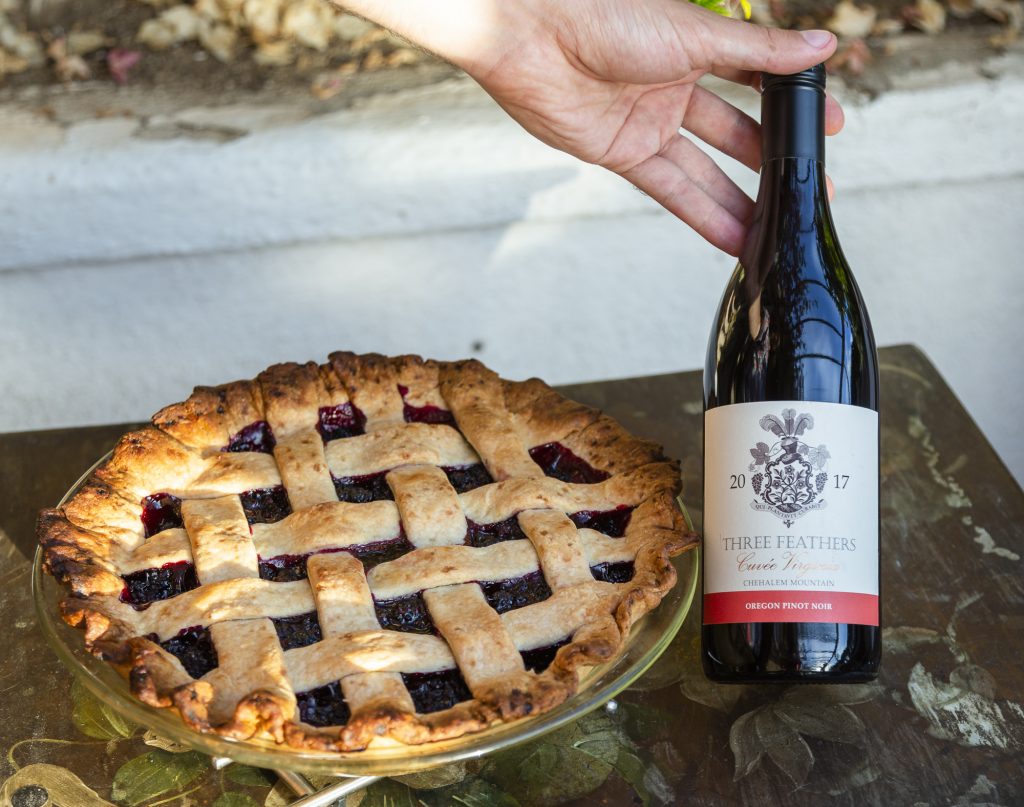
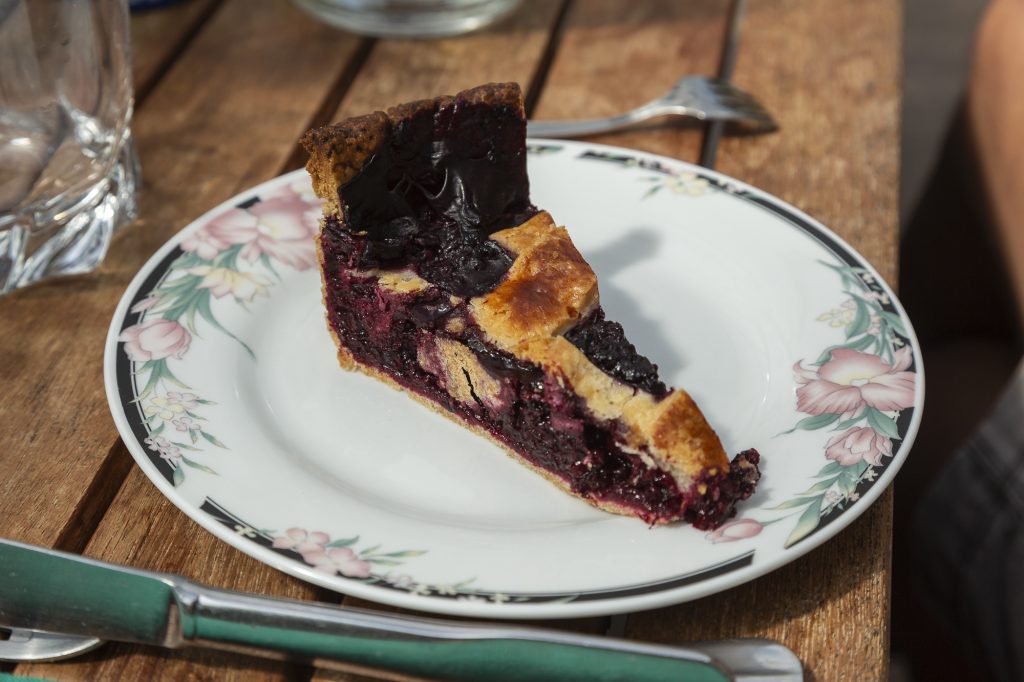
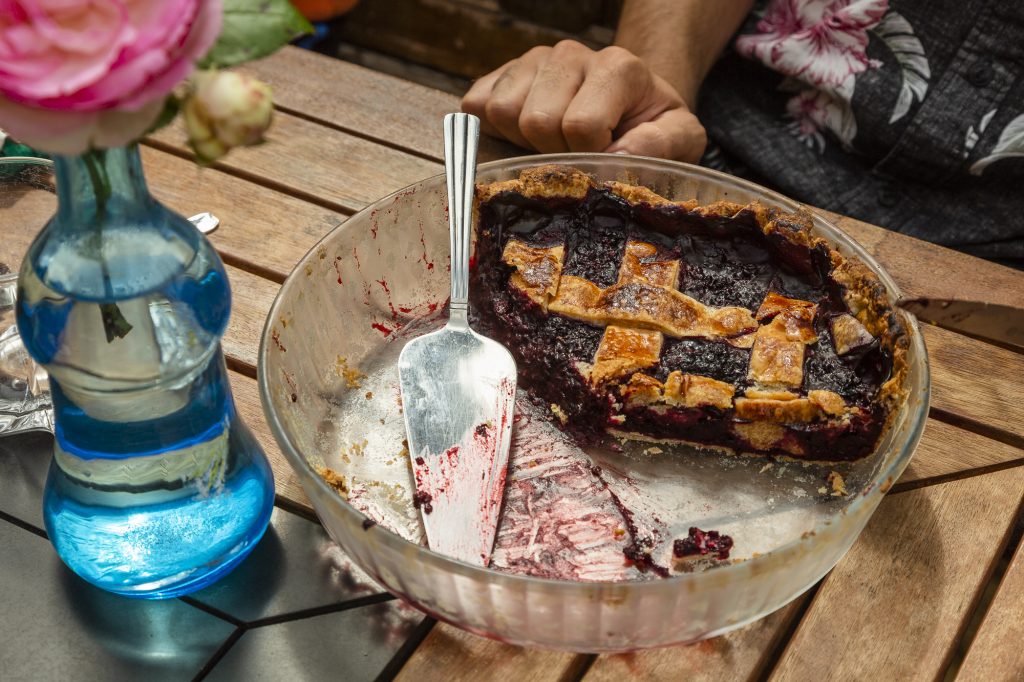
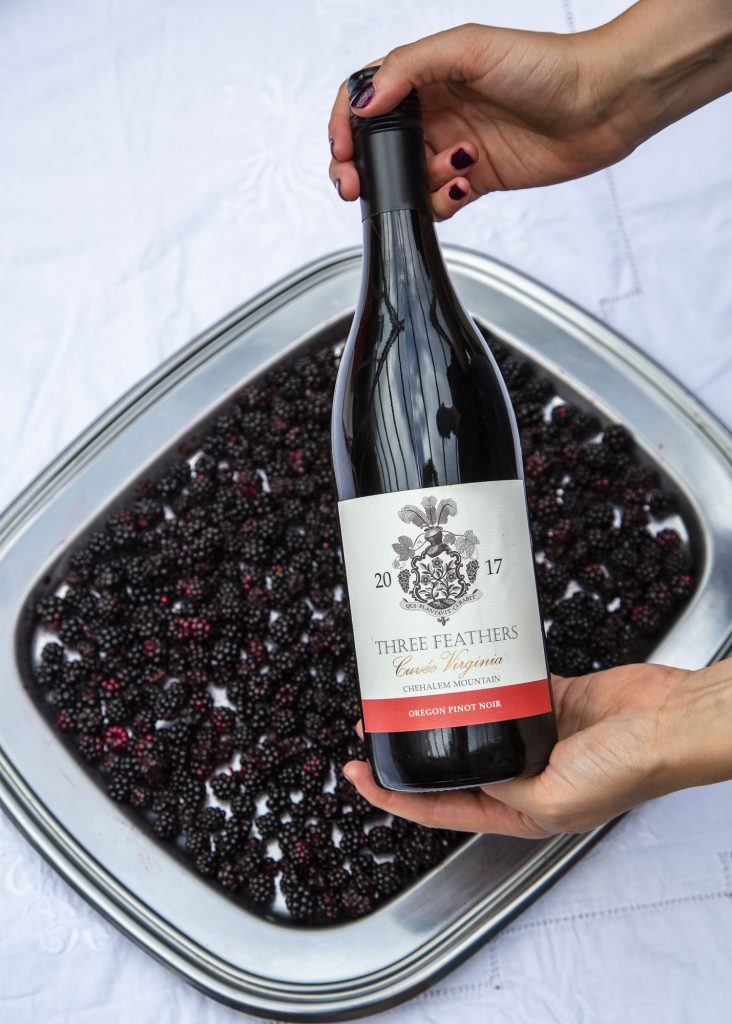
Fresh blackberry pie with a bottle of Three Feathers Cuvée Virginia 2017
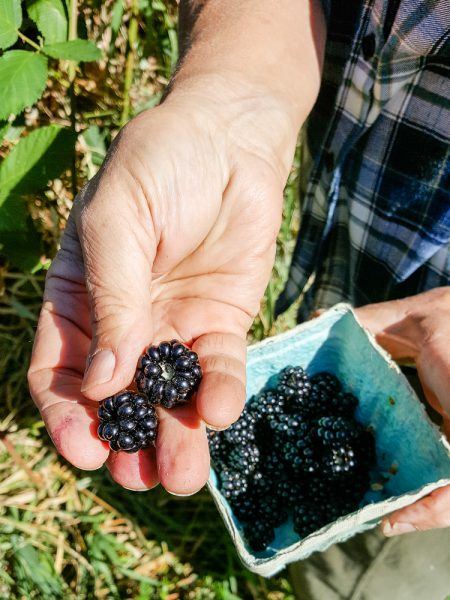
August is a favorite month for picking wild blackberries at Three Feathers. Our French family enjoys this same privilege in Normandy where blackberries are plentiful. We are always on the lookout for good recipes to make with this dark tangy fruit besides jam and jellies and this particular blackberry pie recipe, slightly modified from a Cook’s Illustrated “All-Time Best Fruit Desserts” recipe, has won the popular vote!
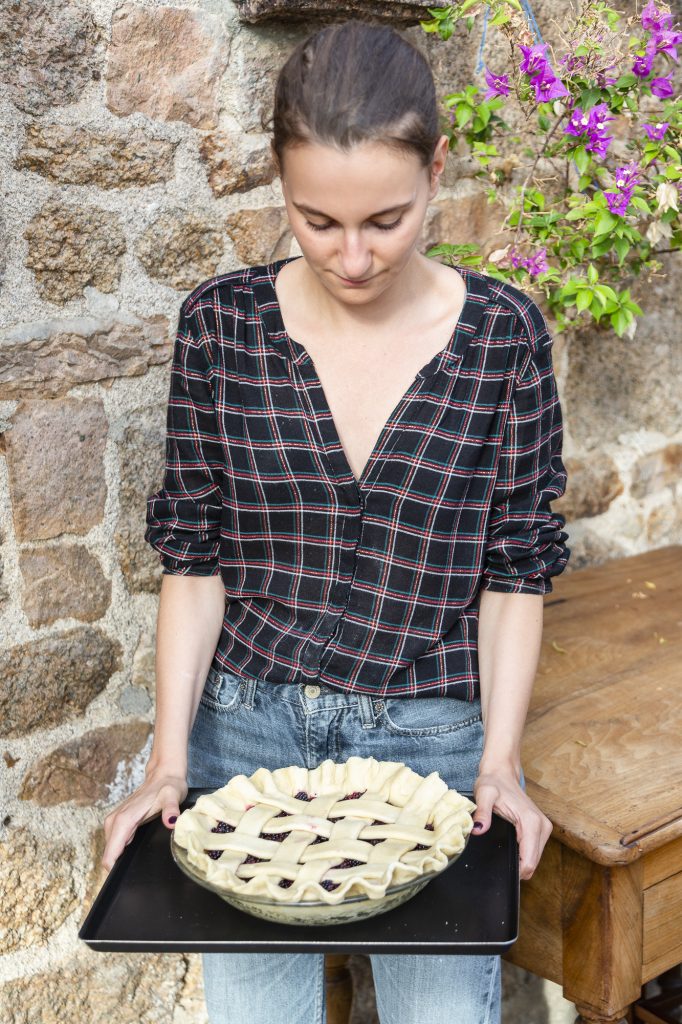
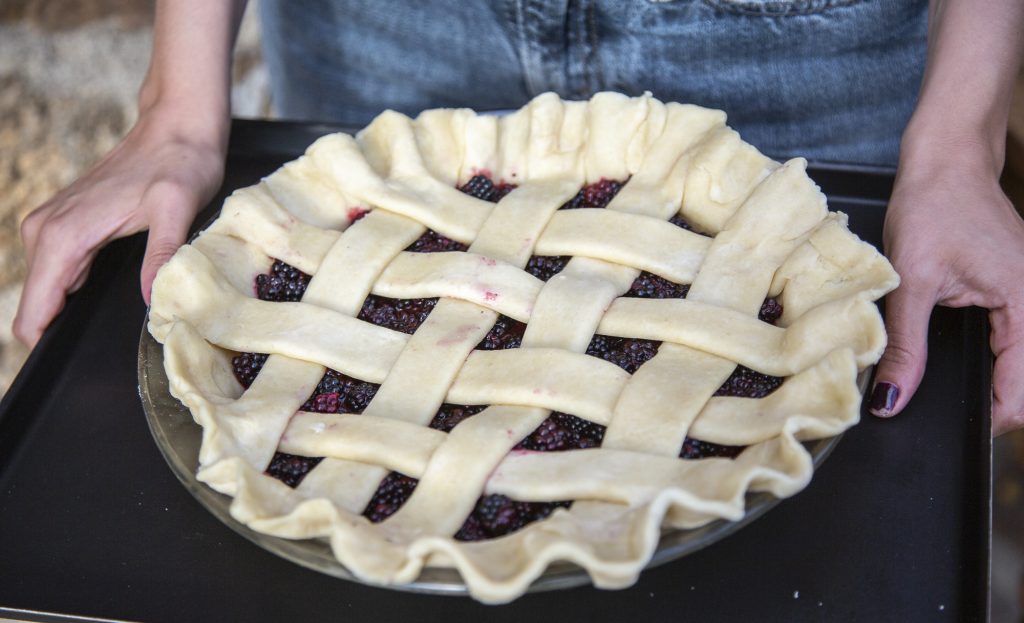
Three Feathers Summer Blackberry Pie | A deep-dish lattice pie made with fresh blackberries
We love this easy-to-make lattice crust with a twist; adding part rice flour as a substitute to 100% all-purpose flour and eliminating the sugar. For this particular pie, we use a deep-dish pie plate to get a maximum of blackberry flavor.
INGREDIENTS: 1) Pie dough 1 1/2 cups all-purpose flour, preferably bread-making flour with less gluten (T55) 1 cup of rice flour 1 teaspoon salt 3 tablespoons of coconut cream 1/3 cup ice water 16 tablespoons unsalted butter, frozen for 15 minutes
2) Blackberry filling 5 – 6 cups of fresh blackberries (do not use frozen blackberries) 3/4 cup sugar (we use coconut sugar) 6tablespoons cornstarch 1/4 teaspoon salt 2 tablespoons fresh lemon juice
3) For the lattice topping 1 egg, lightly beaten
PREPARATION:
Pie dough – food processor method
Mix ice water and coconut cream in a small bowl.
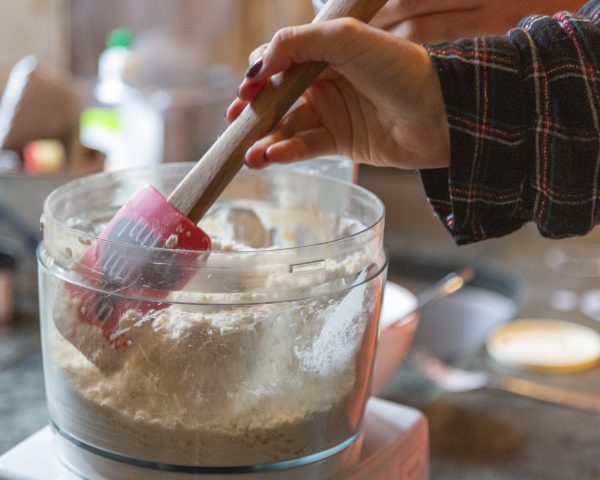
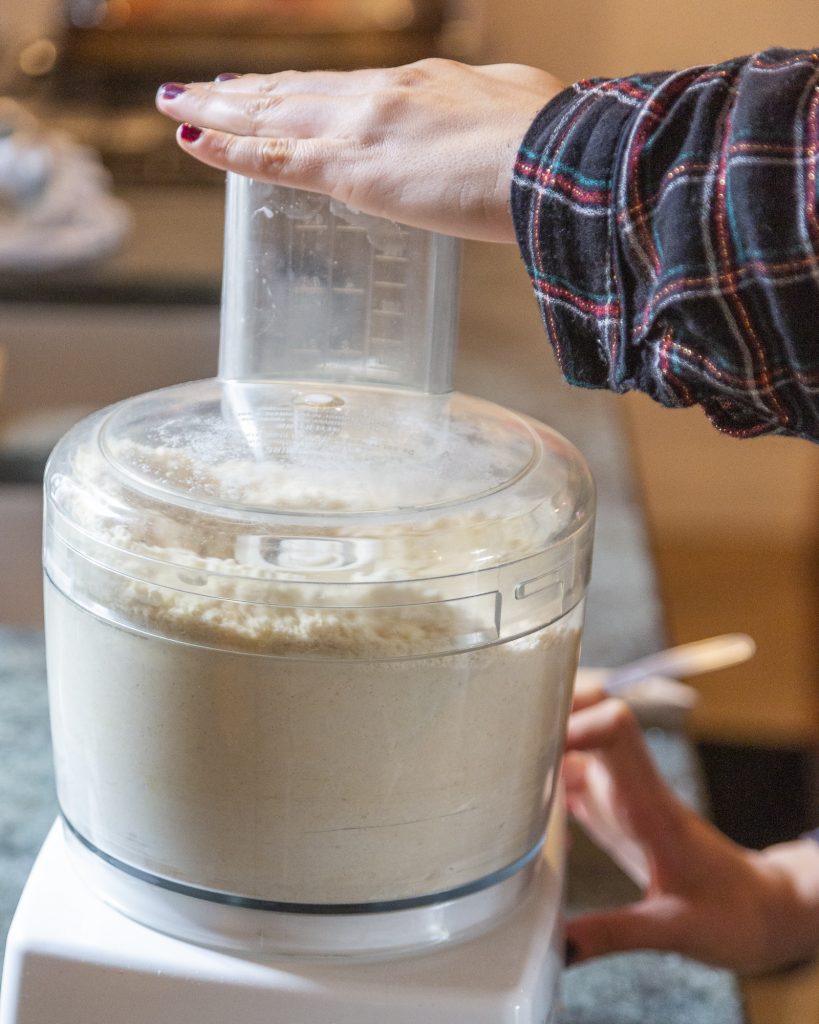
Process the flours and salt in a food processor until combined.
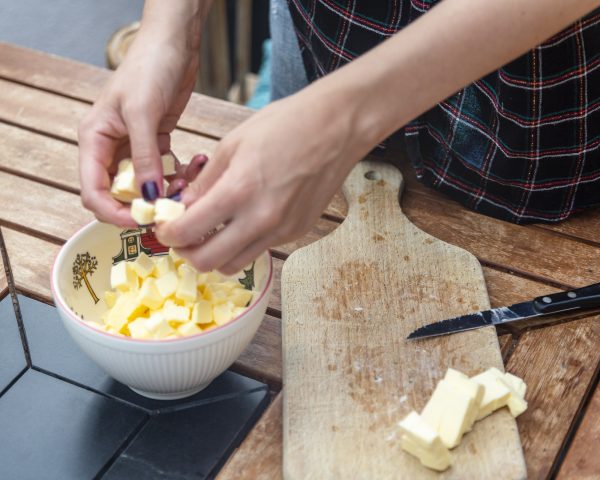
Cut the butter into 1/4 inch pieces and scatter over the top of the flour. Pulse until the butter is the size of large peas.
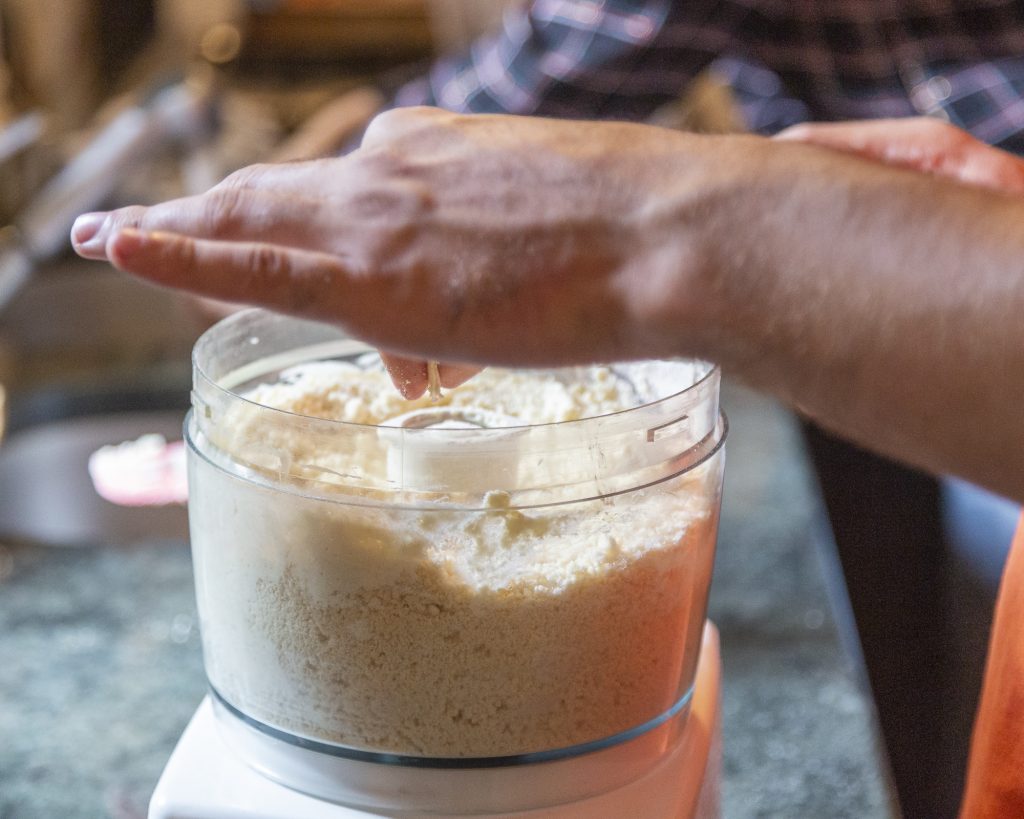
Pour half of the coconut cream / water mixture over the flour and incorporate (about 3 pulses), then scrape down the sides of the bowl.
Add the remaining liquid and pulse again (about 3 pulses)
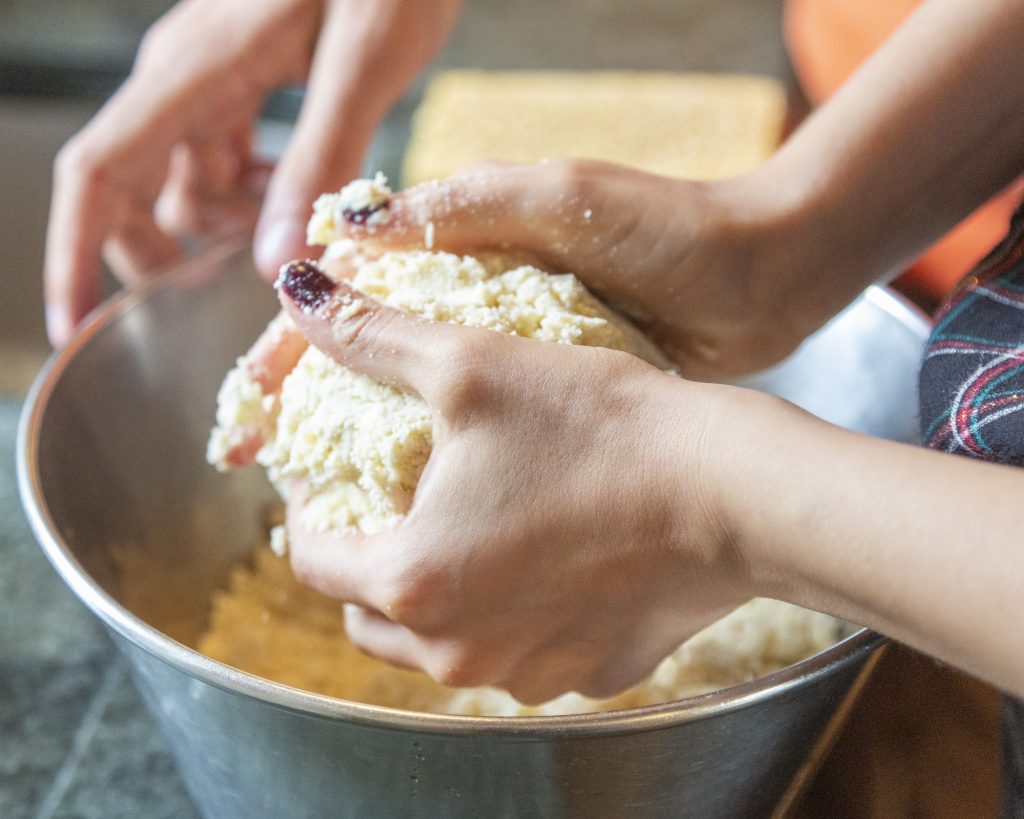
The dough should form large clumps and no dry flour should remain. If the dough does not hold together, sprinkle 1 to 2 tablespoons of ice water over the top and pulse again.
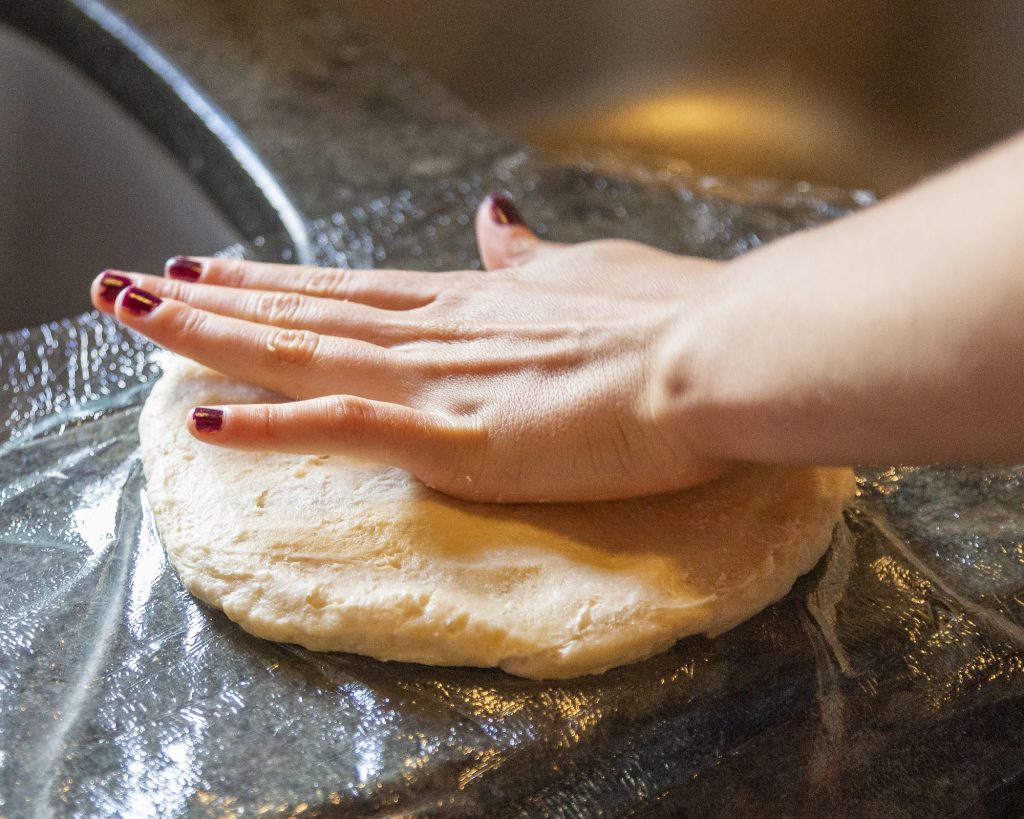
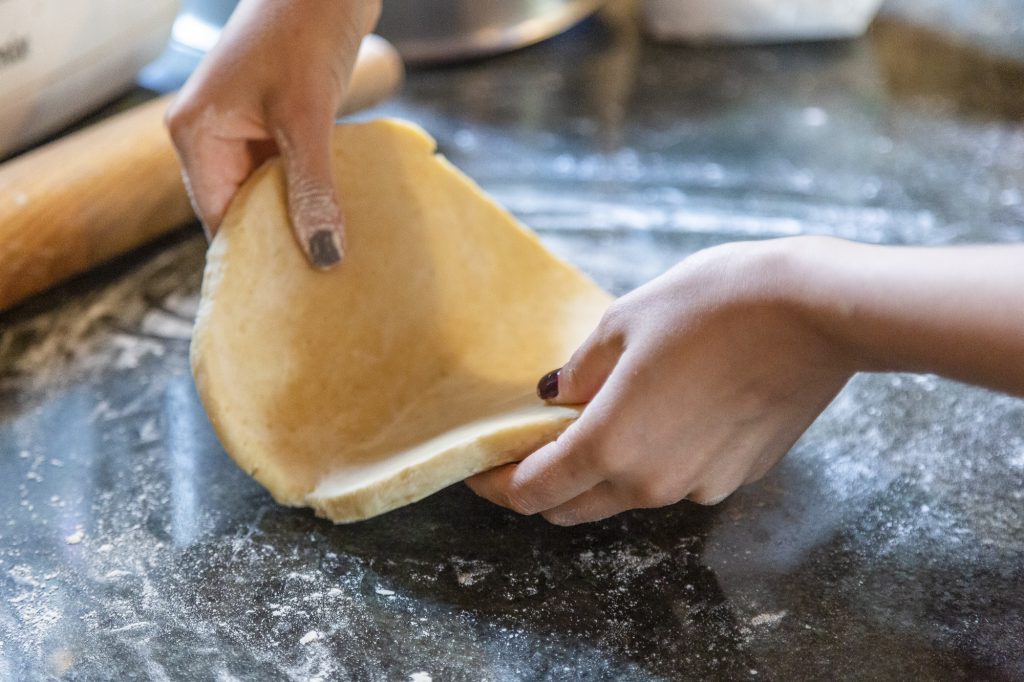
Transfer the dough to a piece of lightly floured plastic wrap or parchment paper and divide it in half (for the lattice top and bottom). Flatten both halves out into 4-inch disks and refrigerate them for 1 hour so that the butter hardens prior to rolling it out.
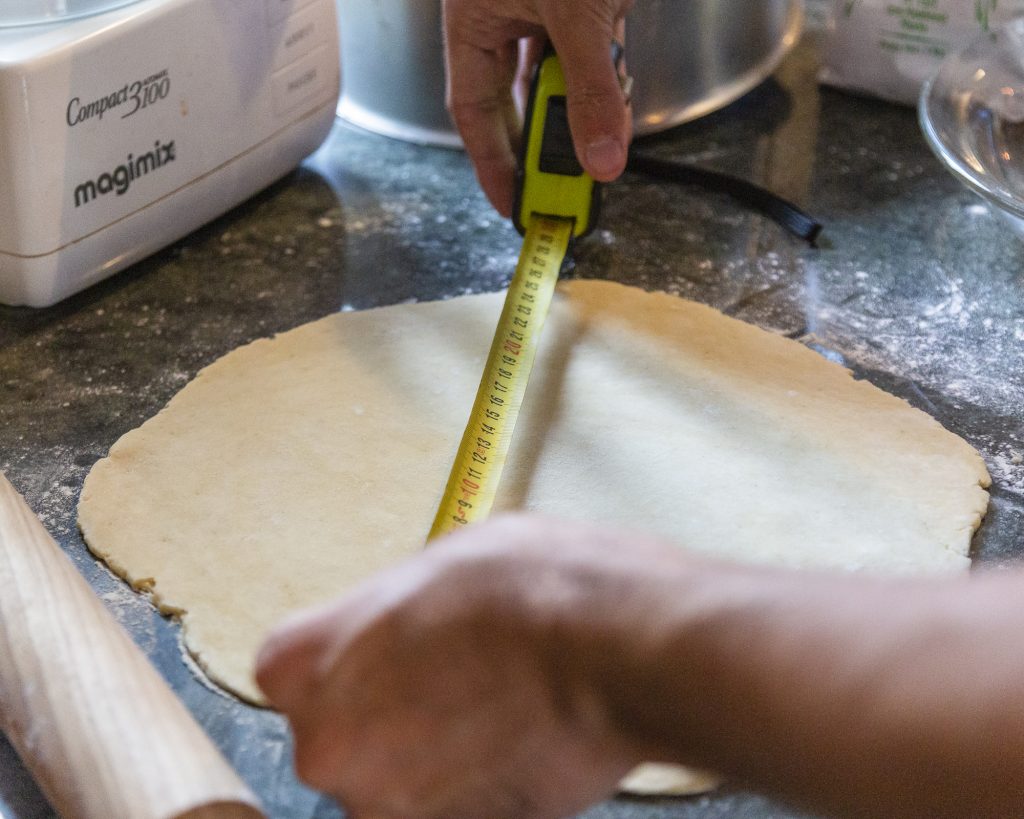
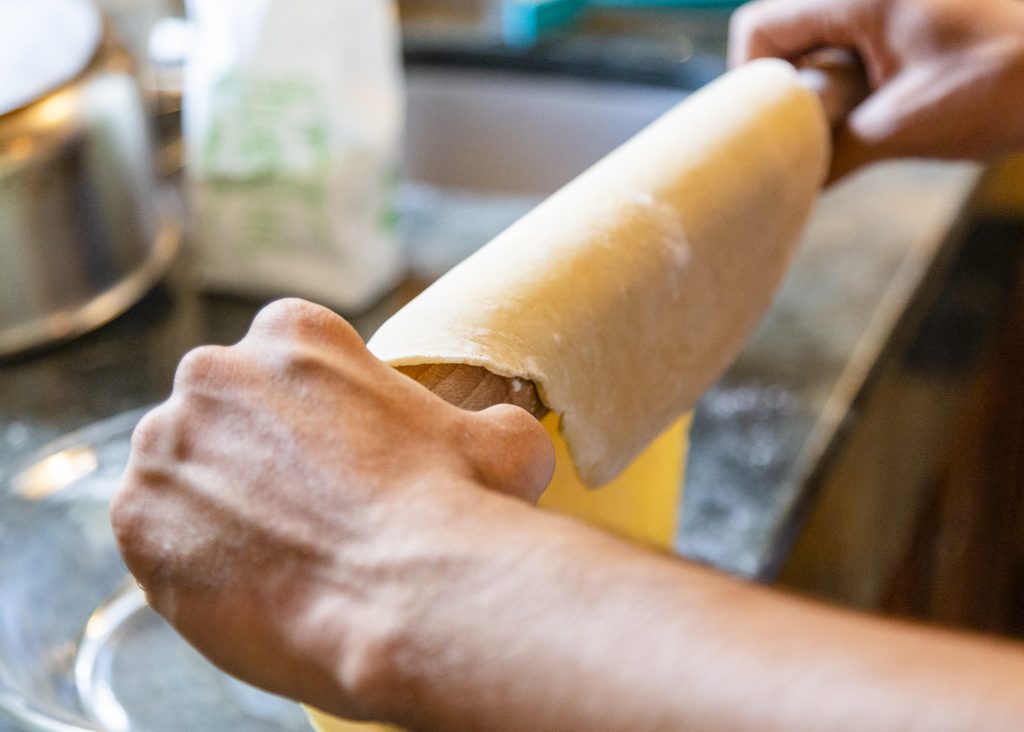
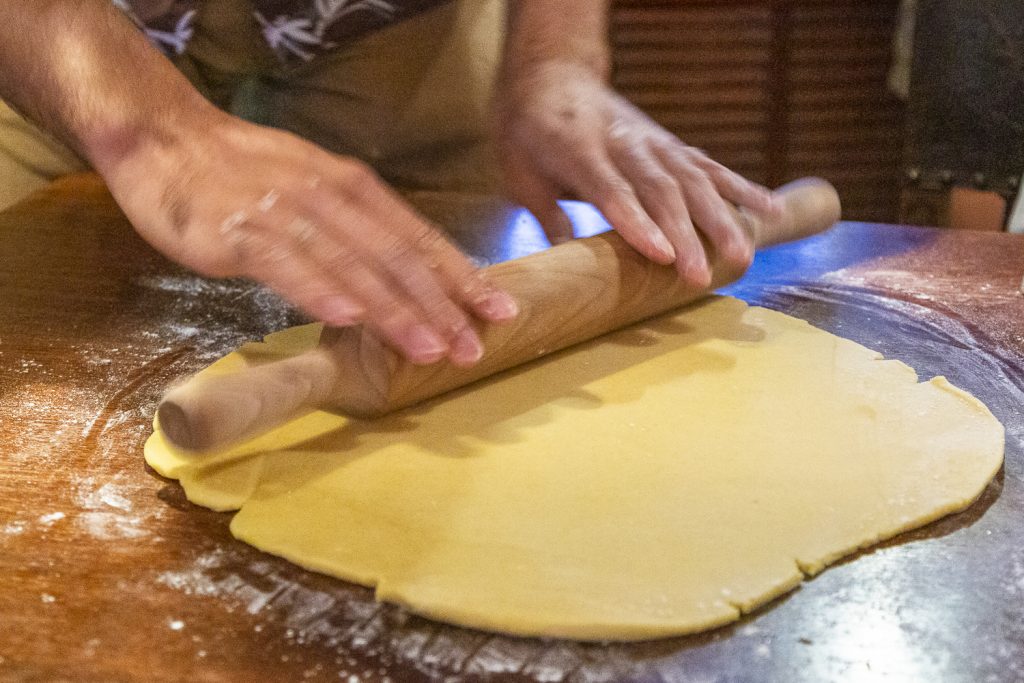
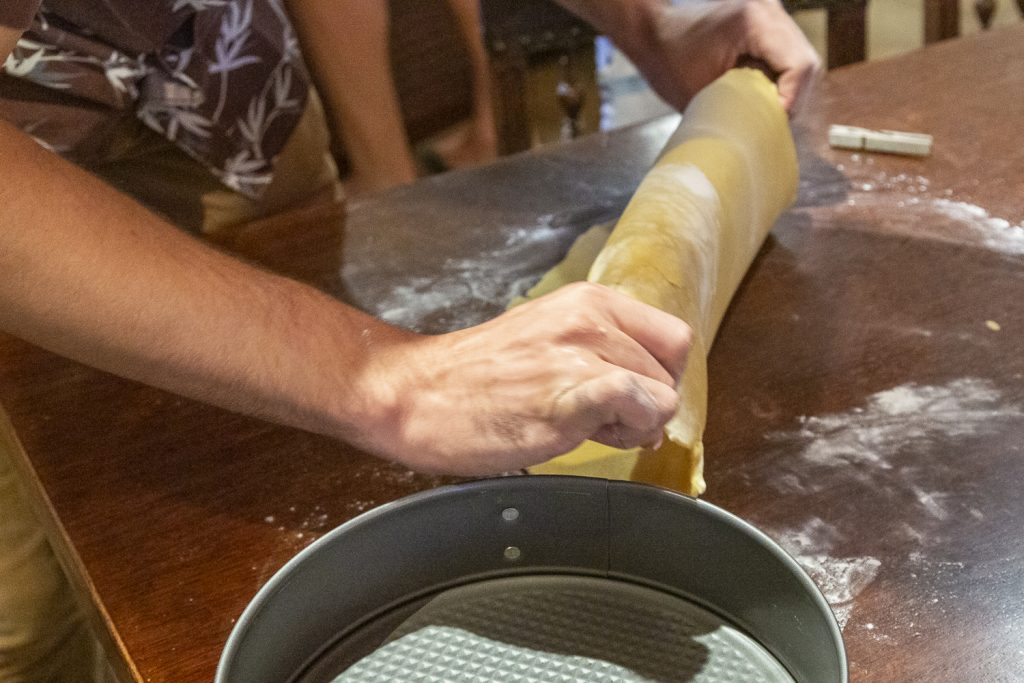
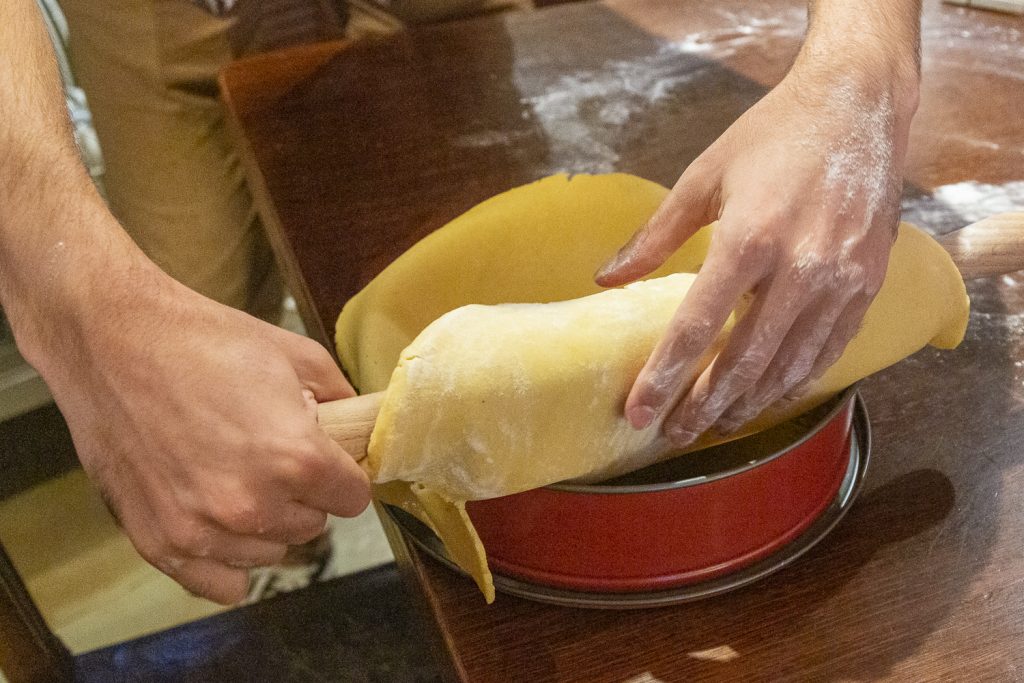
Remove the cold dough from the refrigerator and roll it out to 1/8 inch thick on a smooth and lightly floured surface. Be sure to lightly flour the rolling pin and dough itself to avoid sticking. To transfer the dough to the pie plate, roll the dough around the rolling pin, lift it off the countertop and place it in a 9″ x 1″ deep-dish pie plate.
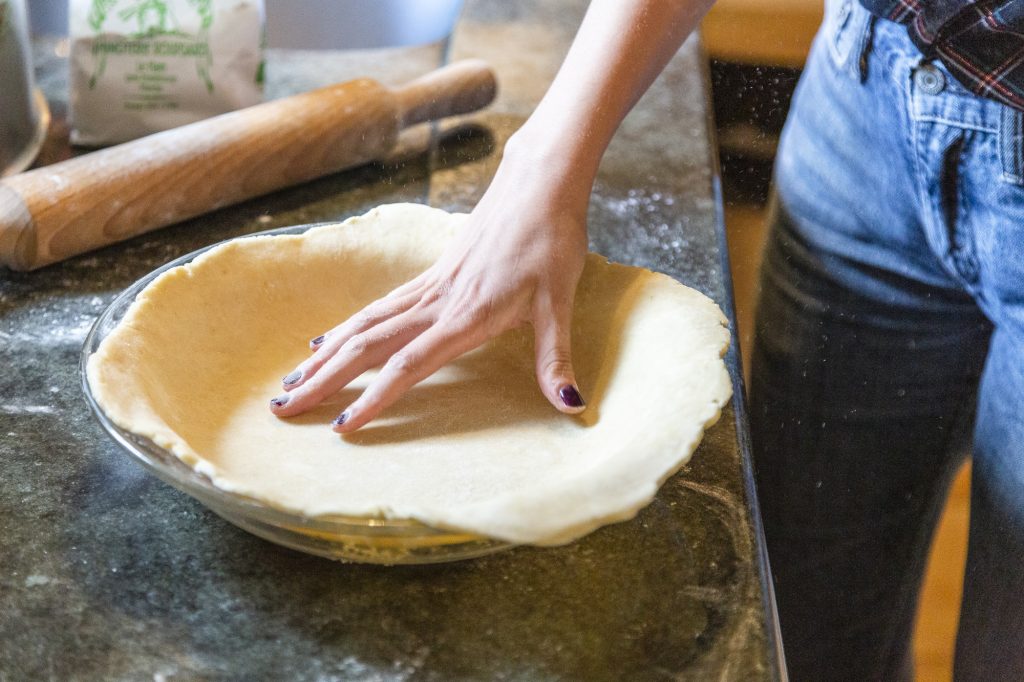
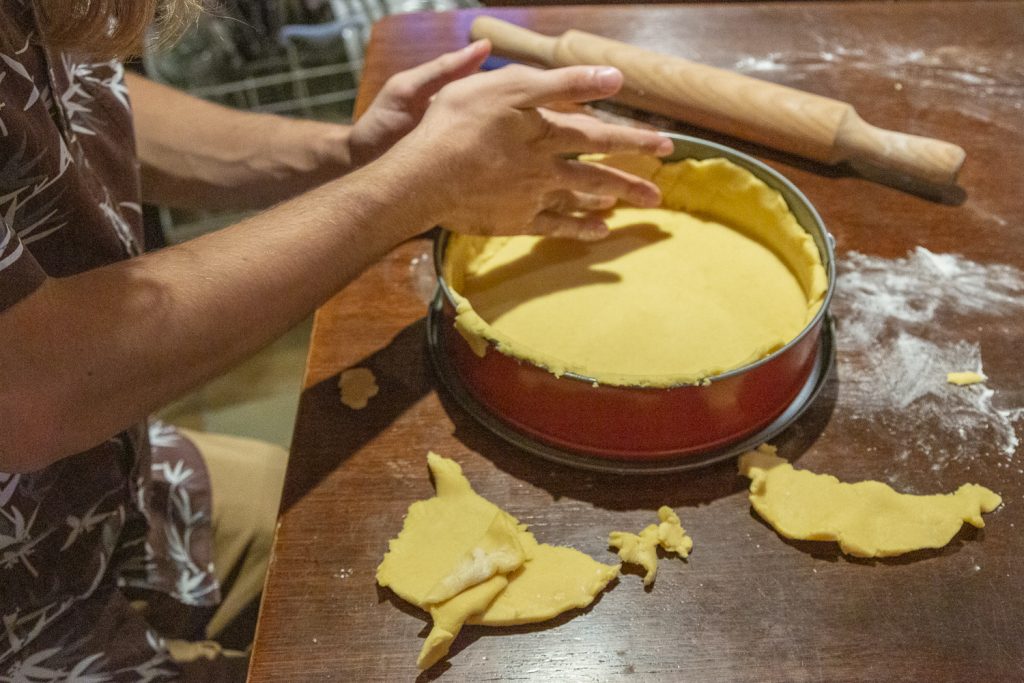
Form the dough to the pie plate and trim the excess dough hanging over the edge to 1/2-inch beyond the lip of the plate. Put the dough back in the refrigerator for 30 minutes to ensure that it will not shrink in the oven.
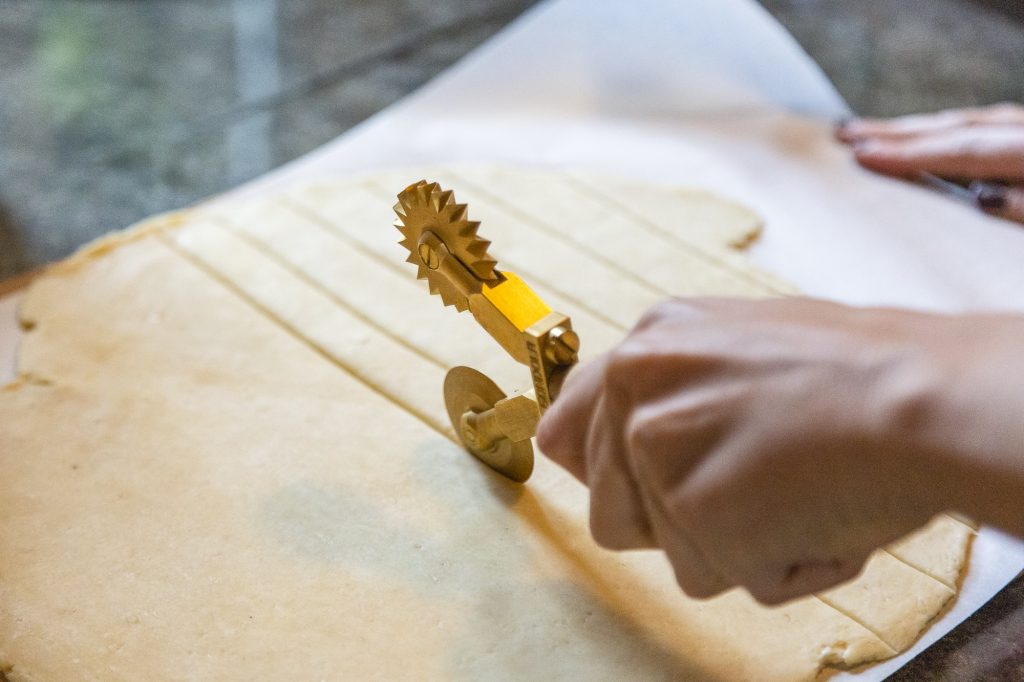
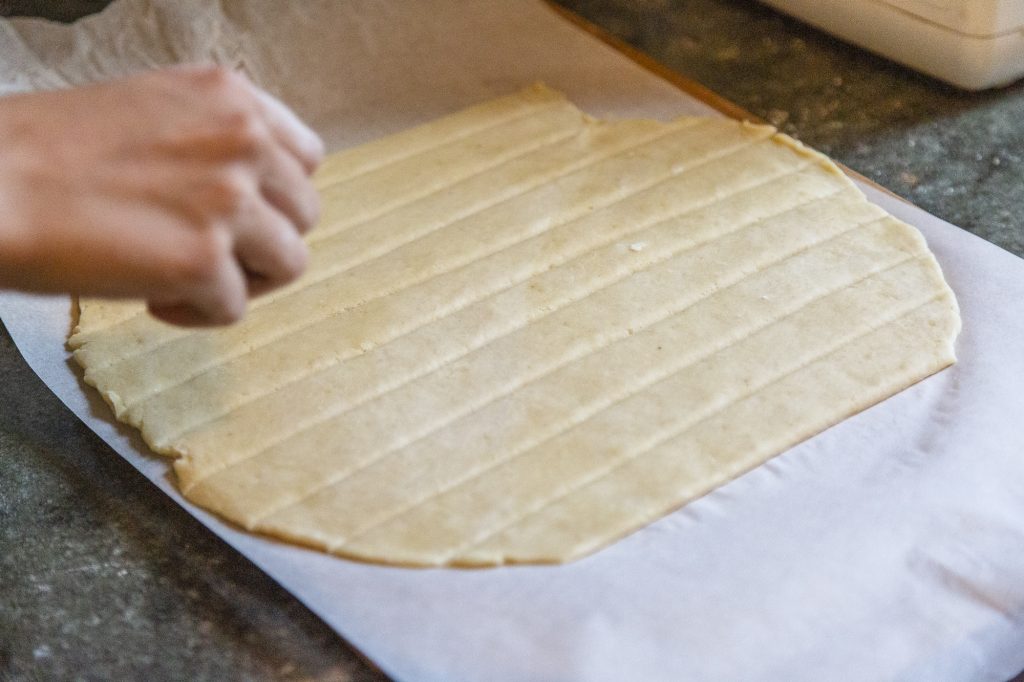
Roll out the second disk of dough into a 12-inch circle on a lightly floured parchment paper and cut the dough into 12 1-inch strips. Keep 8 out of the 12 strips and use the remaining dough for a small tart. Cover them and refrigerate for 30 minutes.
Blackberry filling
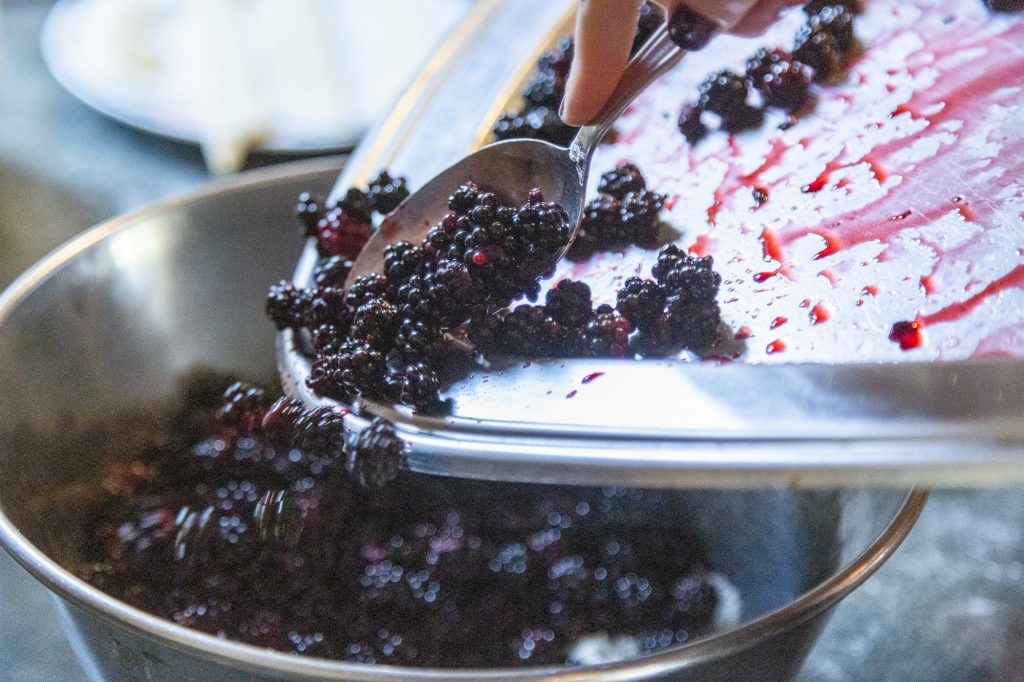
Rinse the fresh blackberries and spin them quickly in a salad spinner lined with paper towels
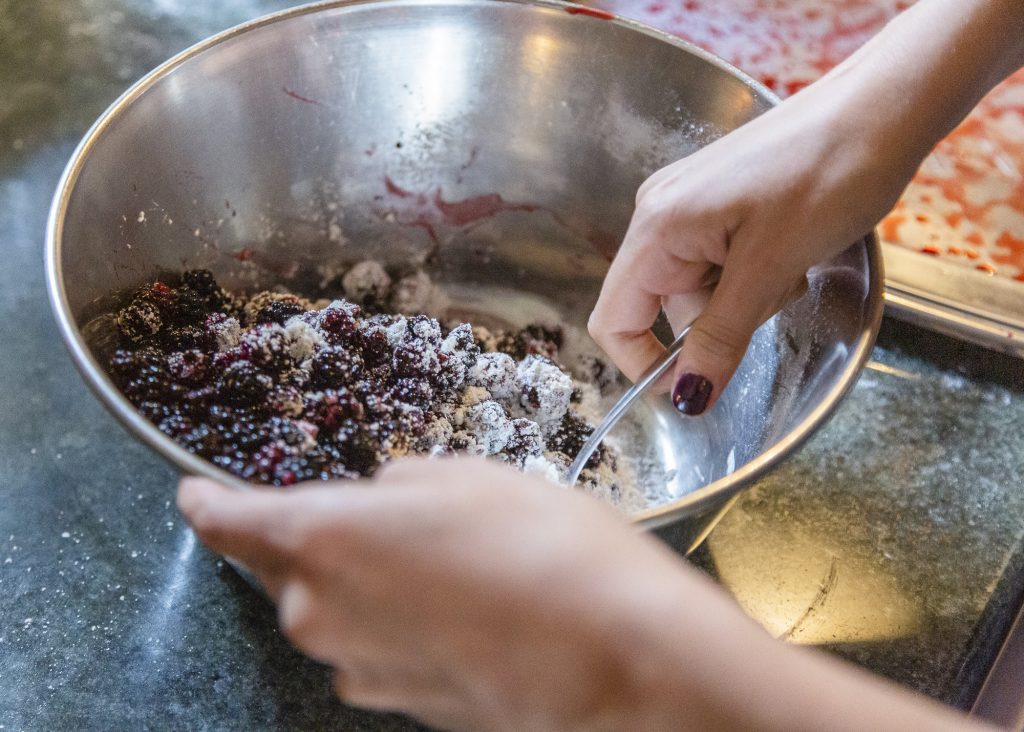
Whisk sugar, cornstarch and salt in a large bowl.
Add the blackberries and toss gently to coat.
Add lemon juice and toss until no dry sugar remains.
Pour the filling into the dough-lined pie plate.
Lattice topping
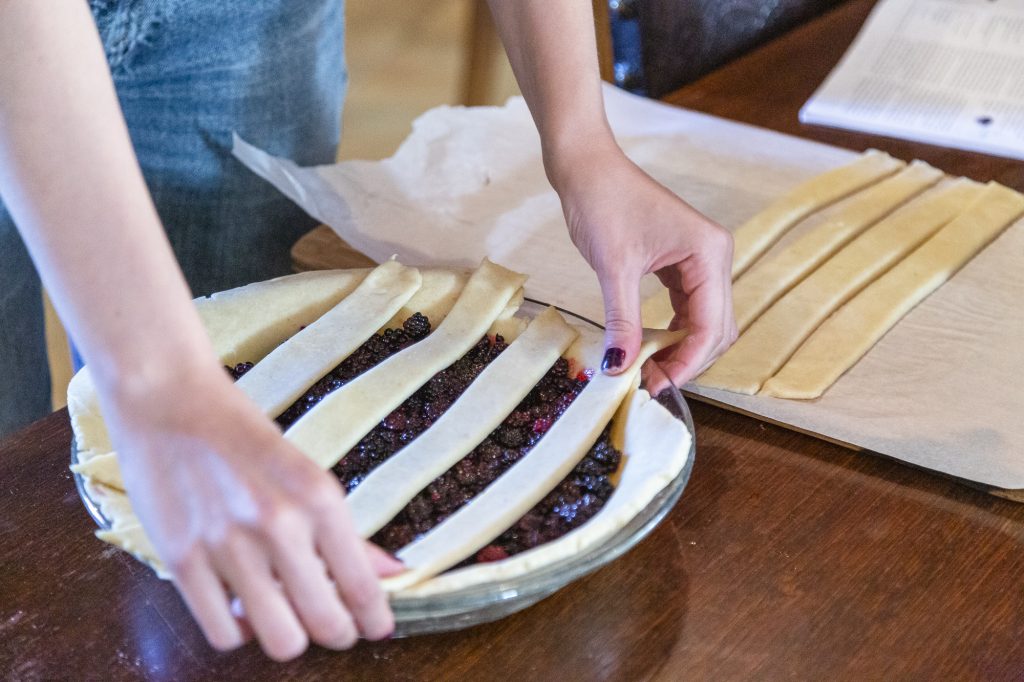
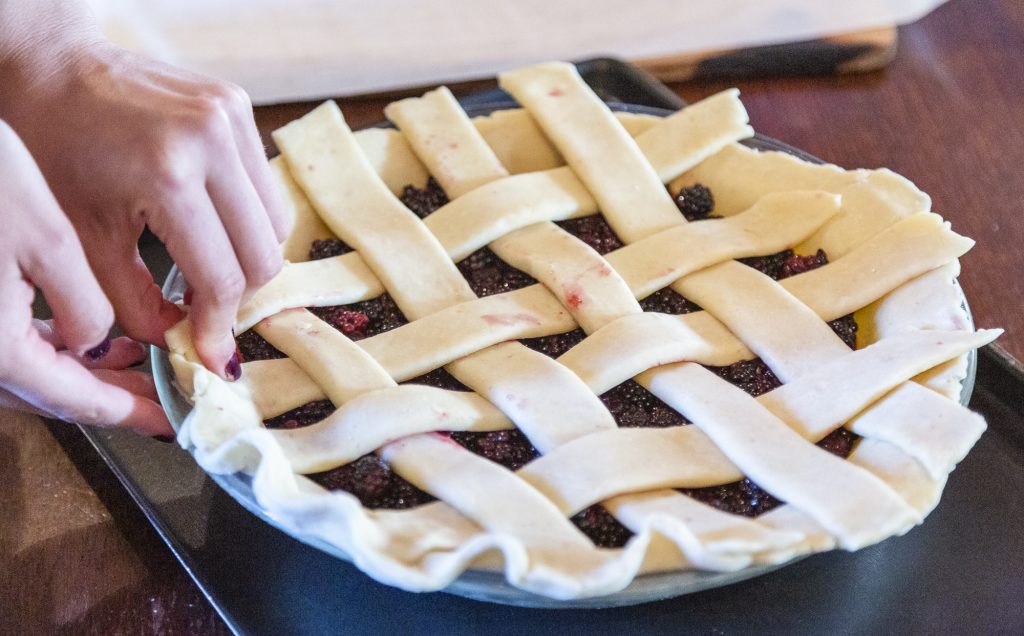
Lay 4 strips of dough parallel to each other and about 1-inch apart across the pie.
Brush the strips with the beaten egg, avoiding 1/2-inch at the ends.
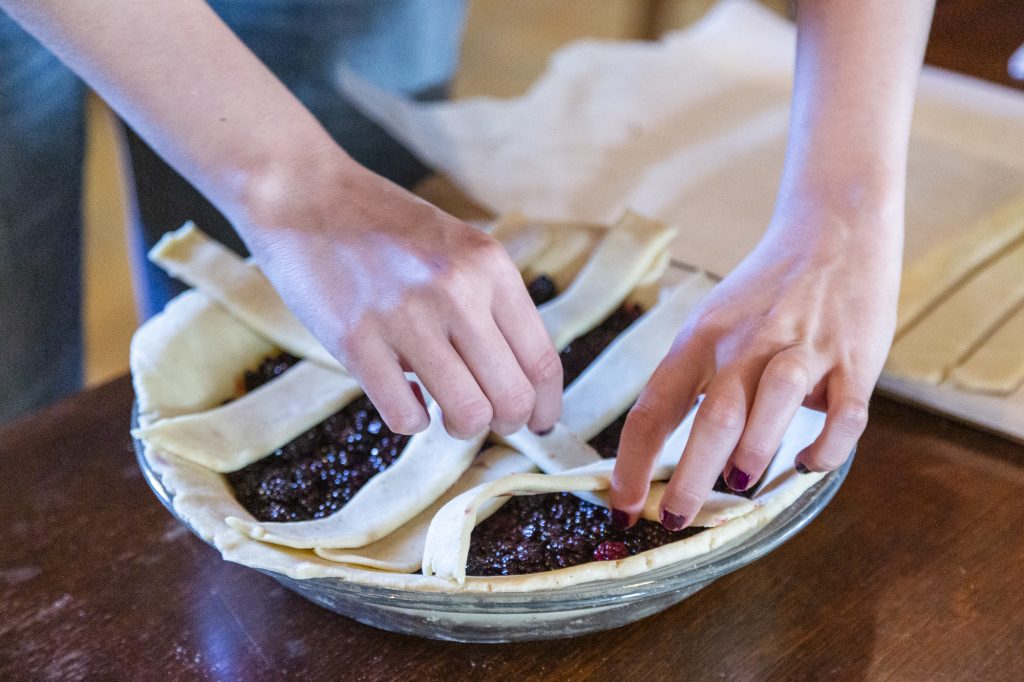
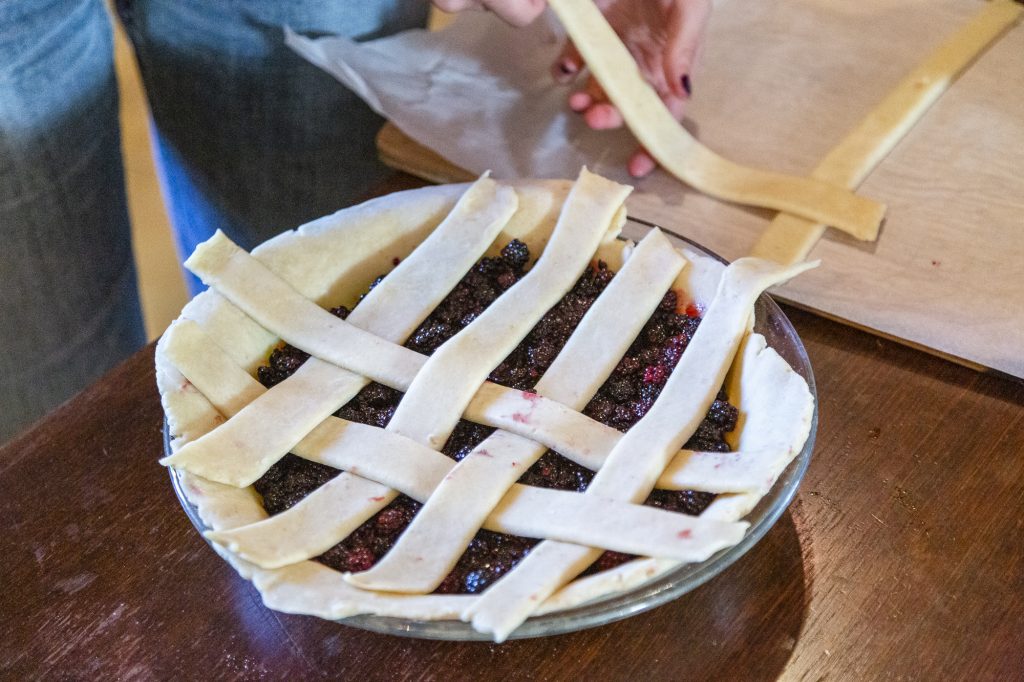
Lay down the remaining 4 strips perpendicular to the first layer and about 1-inch apart.
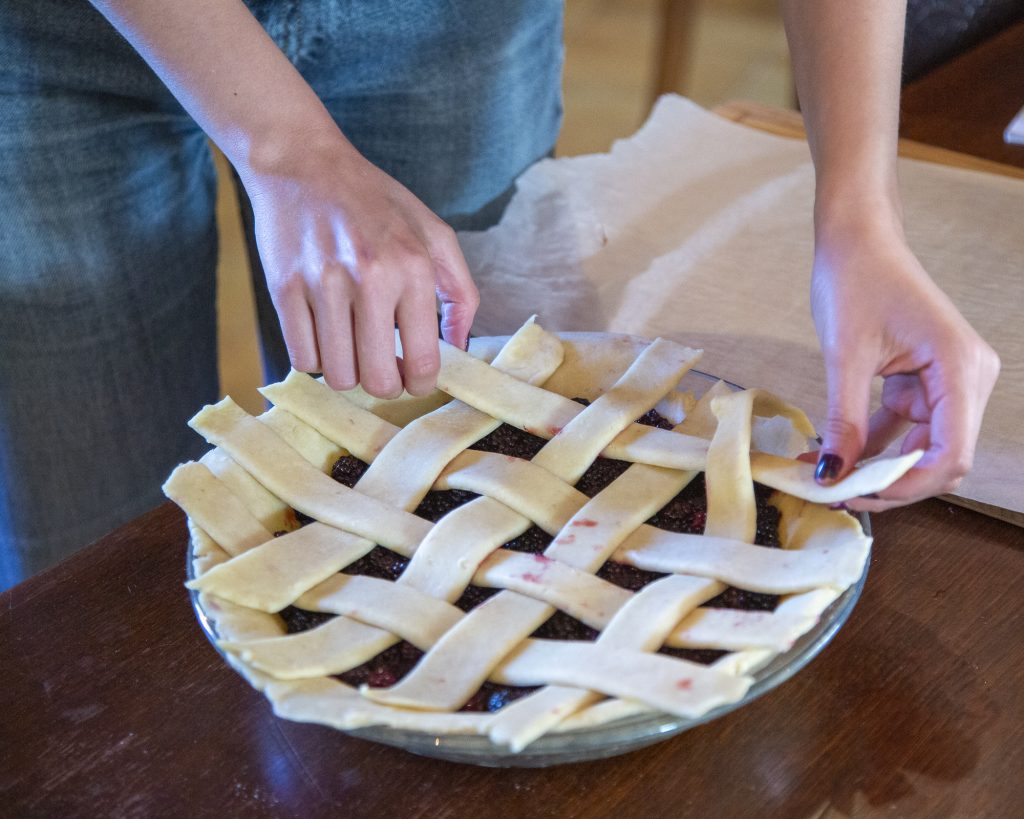
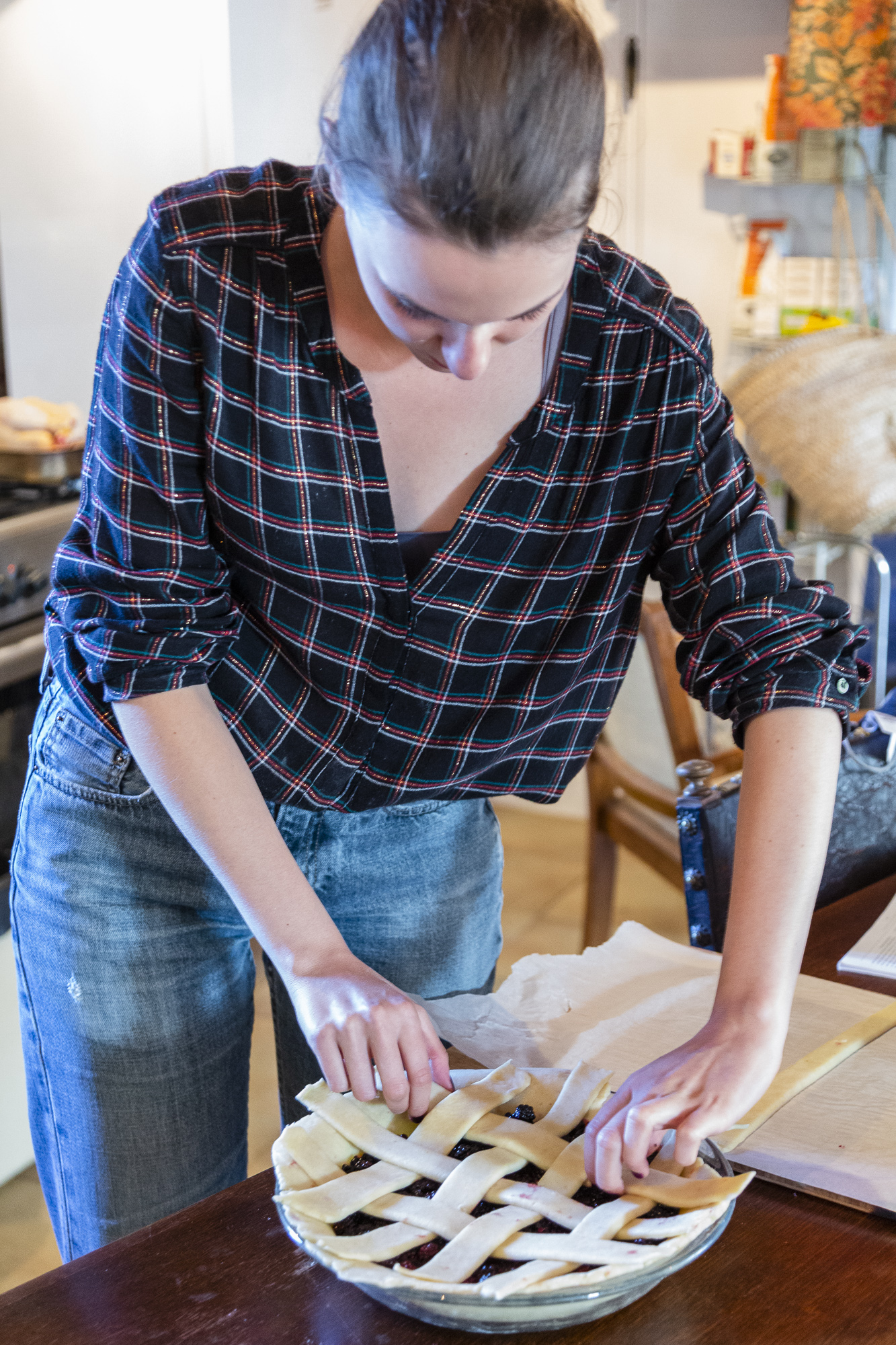
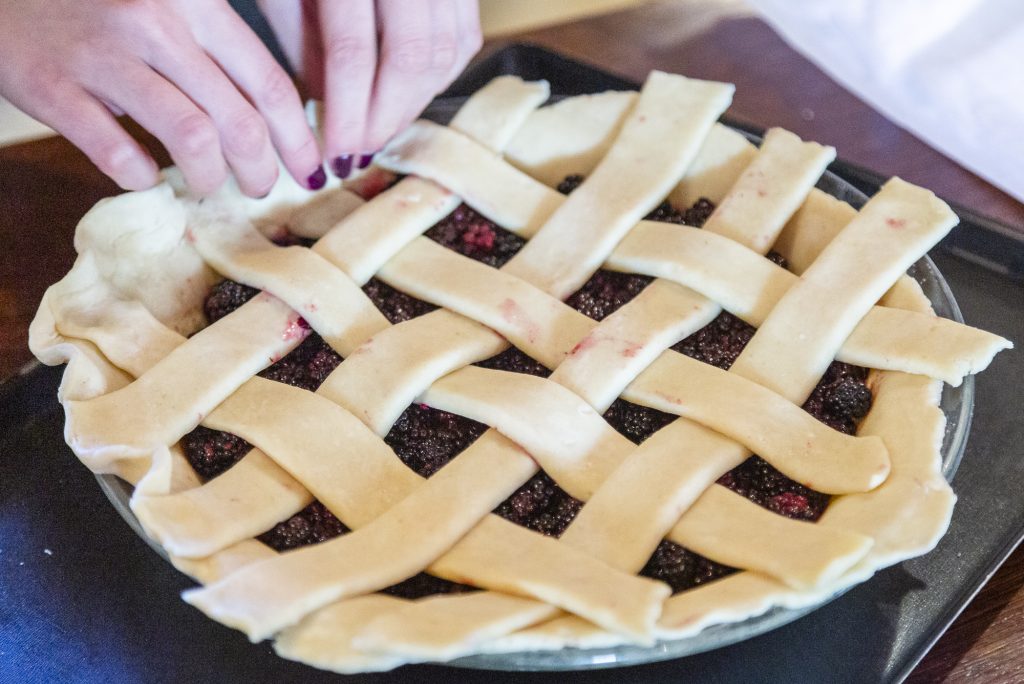
Pinch the edges of the lattice strips firmly to the bottom crust, then crimp the dough evenly around the edge of the pie plate using your fingers.
Brush the lattice top and edges with egg and sprinkle with 1 tablespoon of sugar (optional).
Baking and serving suggestions
Place the entire pie in the freezer for 15 minutes. If it will not fit in the freezer, refrigerate for 30 minutes.
In the meantime, pre-heat your oven to 400°C, oven rack at lower-middle position.
Take the pie out of the freezer and set on a baking sheet.
Bake until the lattice is golden brown and the berry juices are bubbling evenly – about 45 to 50 minutes.
Let cool for at least 4 hours before serving.
Serve this pie at room temperature, or cold, as the berries will only set once the pie has cooled off.
This pie pairs beautifully with the juicy acidity and tannins of our Pinot Noir and the cherry, brambleberry notions that Pinot Noir is famed for enhance this tart to perfection. We suggest a Cuvée Virginia 2017 or 2018 and for those who prefer white wine, our 2018 Blanc de Noirs.
Three Feathers Wines Receives Great Ratings from Renown Wine Critic, James Suckling
Three Feathers Wines Receive Great Ratings from James Suckling! We are proud to announce new ratings from JamesSuckling.com for our 2020 Oregon Pinot Gris and 2017 Three Feathers Oregon Pinot Noir.
Three Feathers 2020 Pinot Gris Receive Great Ratings – 90 Point Score
Our 2020 Pinot Gris is the long-awaited first release of many from Block Three of Three Feathers Vineyard. Planted in 2014, these vines have been pushing roots into the fine iron-rich Laurelwood soil for six years. For this reason, and thanks to our netting strategy, the berries came to perfect ripeness and we had enough gorgeous grapes to make this very exceptional wine.
Crisp and slightly effervescent, our full-bodied Pinot Gris displays characteristic bright floral flavors with notes of white peaches and melon.
Sliced apple, pear, melon and apricot stone on the nose. It’s medium-to full-bodied, fruity and crisp. Drink now. – JamesSuckling.com
One bottle of Three Feathers Vineyard Pinot Noir 2017 vintage, single clone 667
Three Feathers 2017 Pinot Noir Receive Great Ratings – 90 Point Score
Presenting our 2017 Pinot Noir, the second vintage featuring Dijon clone 667. As these plants continue to push their roots into the Laurelwood soil, they bring new depth of flavor to our wine.
An intense ruby color, this wine has an expressive and fruity nose with nutty aromas. Lively and robust in the mouth, its tannins bring structure, power and complexity with flavors of hazelnut and candied fruit, finishing with a subtle note of mushrooms.
About Three Feathers Wines Willamette Valley Oregon
We make wines that reflect our location, soil, elevation and micro-climate. Our 10+ year old vines are digging deep down into Laurelwood soils and achieving a certain level of maturity in aroma and flavor. We nurture every vine grown in wind blown soil high in the Chehalem Mountains, Willamette Valley Oregon. Terroir is what defines us.
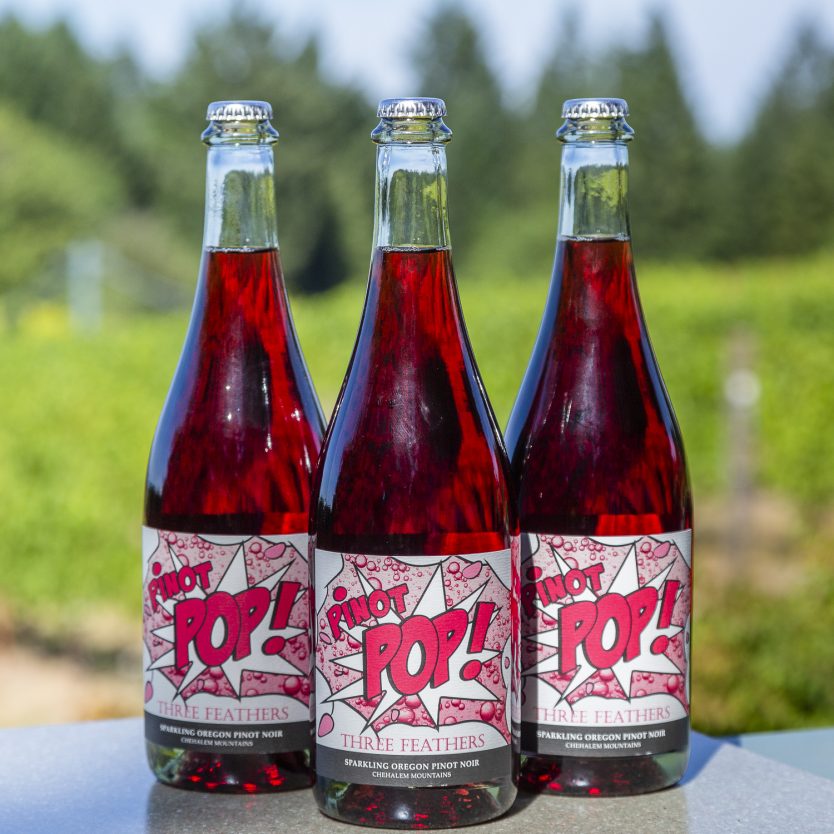
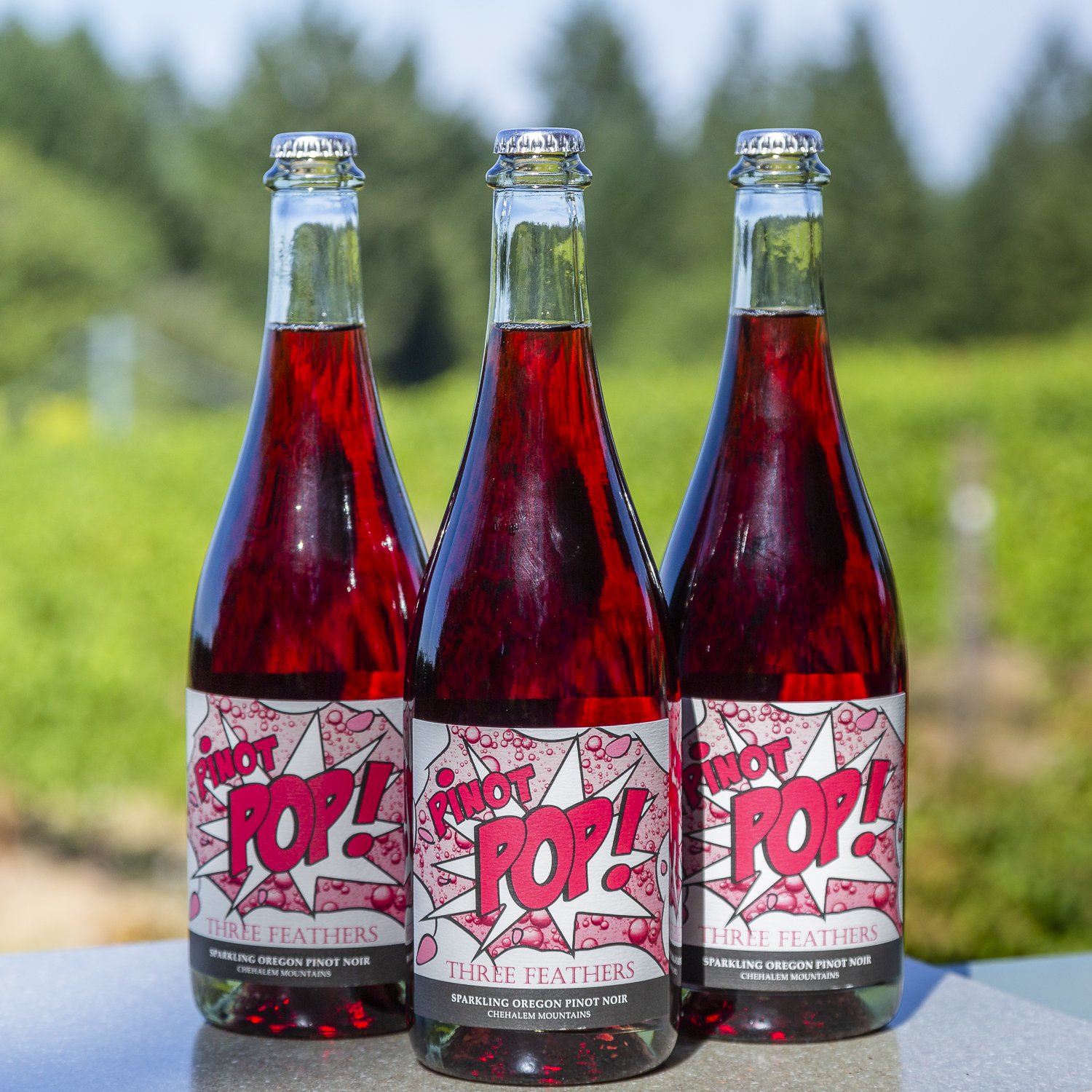
Presenting Three Feathers Pinot POP ™, a lightly sparkling Pommard.
New release! Presenting Three Feathers Pinot POP™
We are excited to present our new release: Pinot POP™. This refreshing lightly sparkling red wine is a playful product of the Pommard clone of Pinot Noir. Fermented in stainless steel, fruit flavors of strawberry and blackberry are laid bare. Not too high in alcohol, this sparkling wine is a fun accompaniment for barbecues and potluck. Nothing stuffy about this wine, just Pop the Top!
Pre-release!
Also scheduled for bottling mid-August is our 2020 Madeleine, named after the clone Pinot Madeleine.
A rare, old-word clone of Pinot Noir, also known as Pinot Noir Précoce, Frühburgunder, this grape has smaller berries and ripens a full two weeks earlier than standard Pinot Noir. We have used 25% whole cluster in this wine to add complexity. The grapes are from our Torio Vineyard site at 1,200 feet in elevation.
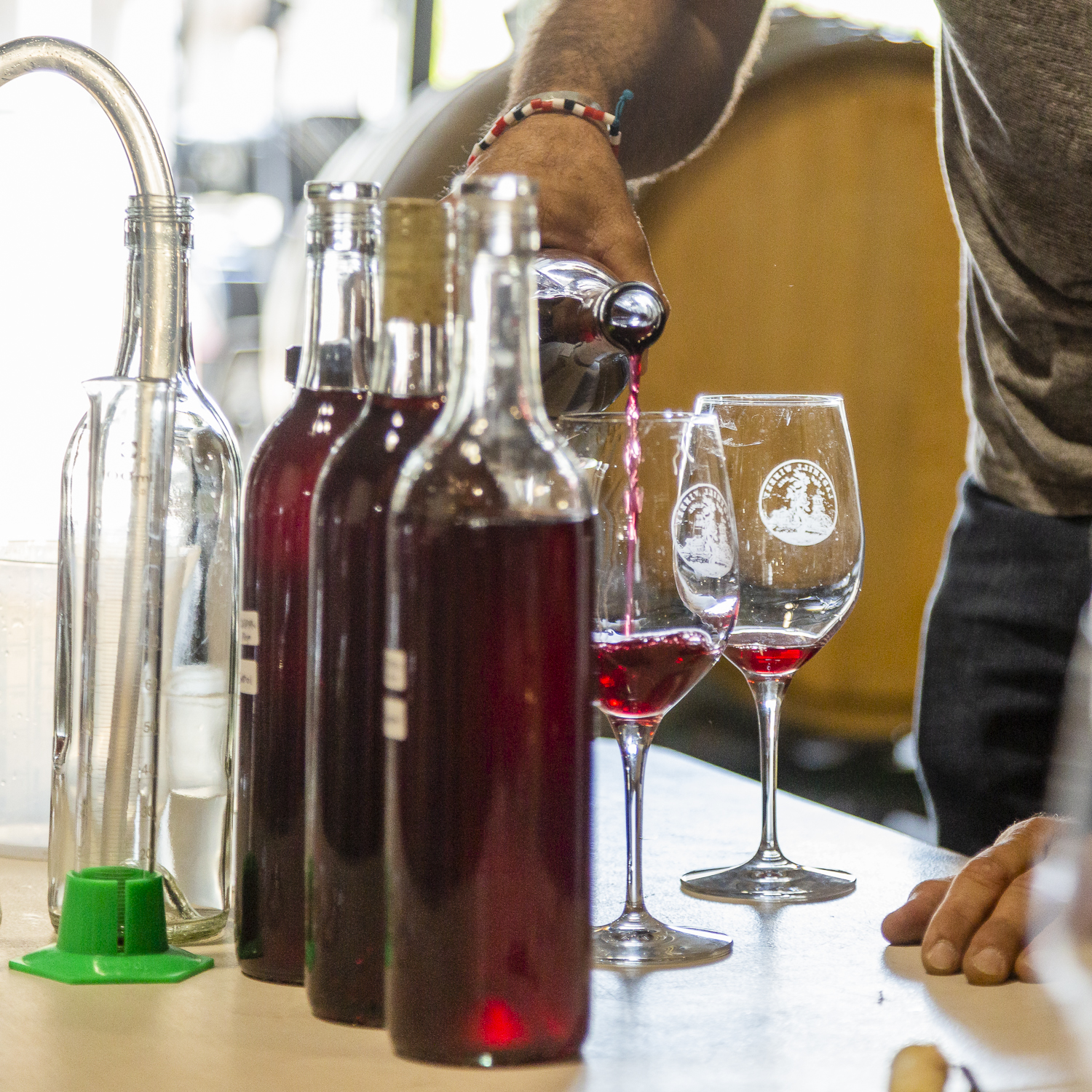
Barrel tasting our Pinot Noir Precoce single clone first vintage
Three Feathers Vineyard Growing Season 2021 overview Block 1
Three Feathers Vineyard Growing Season Report 2021
What a fabulous year we are having so far!
Weather conditions have generally been ideal with a couple of notable exceptions in June. Bud break was the end of April and bloom came mid-June, forecasting harvest at the end of September.
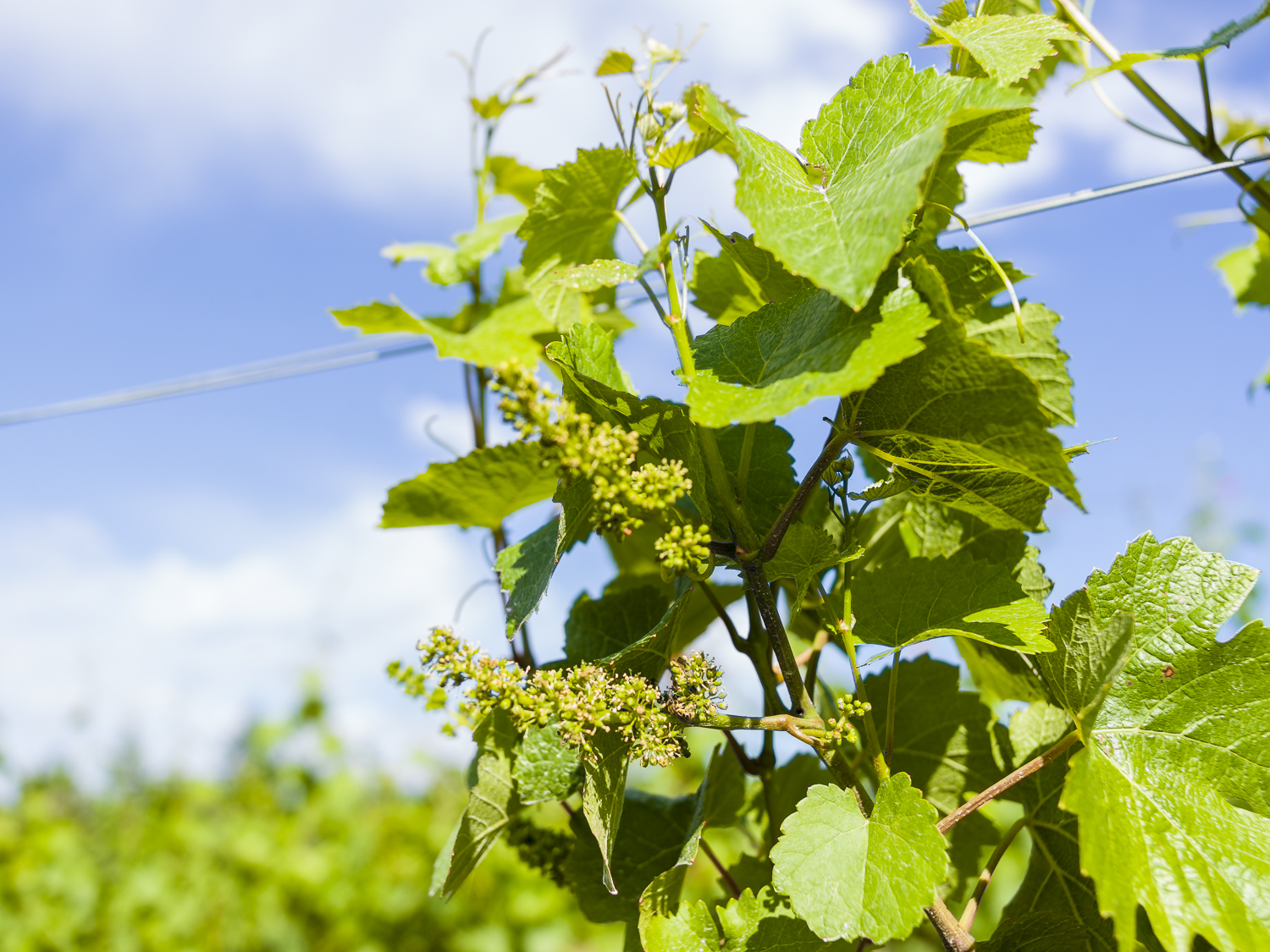
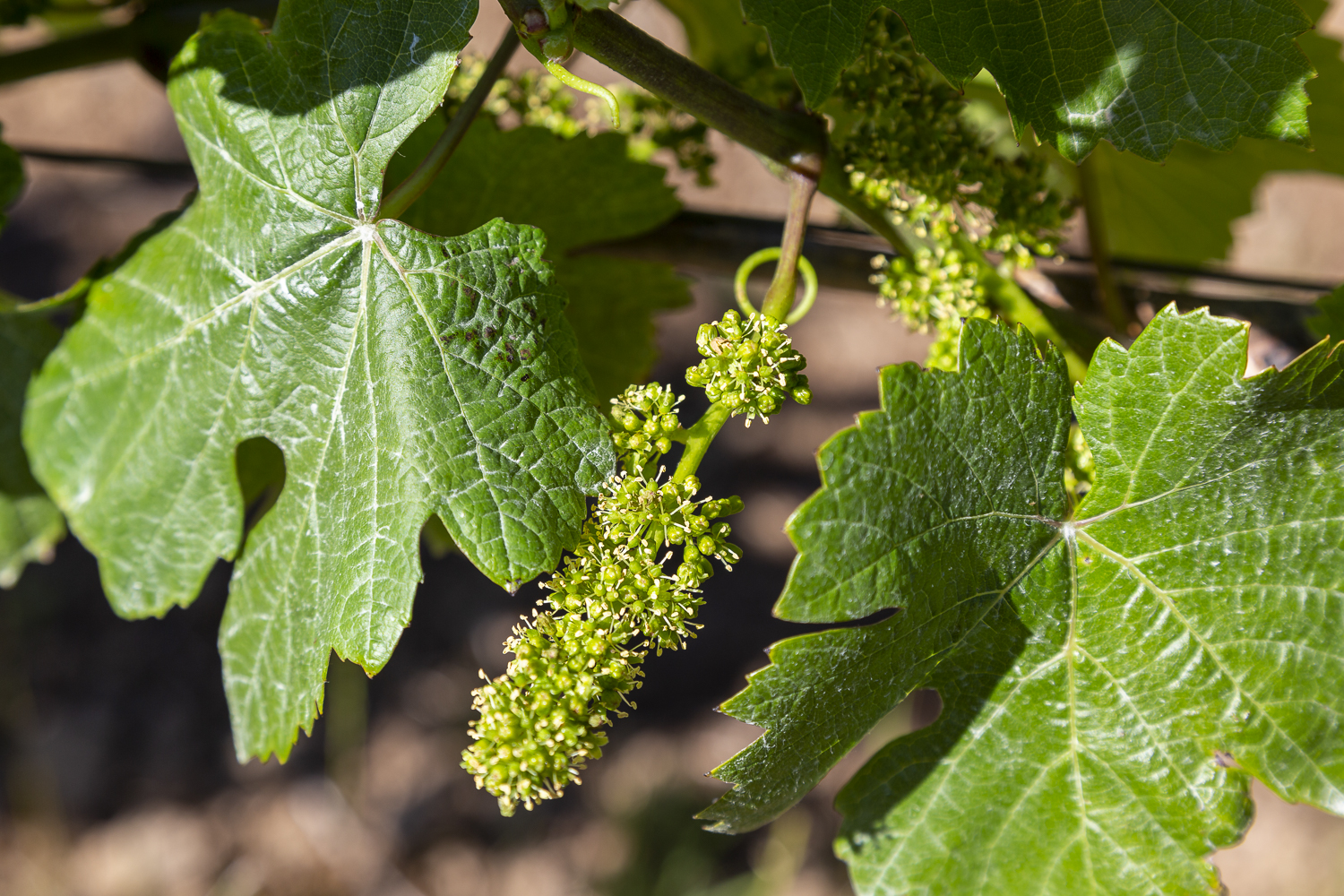
In early June we experienced two days of heavy rain. This was a welcome burst of moisture after a somewhat dry May, but excessive rainfall affects the pollination of the grapes. Grapes are self-pollinators meaning that the formation of the fruit does not require outside factors such as bees. For optimum pollination there should be no rain to wash off the pollen at the critical time. Fortunately, this rain did not coincide here with our bloom cycle and we have had little, if no damage from that event.
Another two weeks later, the entire Northwest was gripped by four days of record breaking temperatures. Temps in the valley reached over 110 degrees during the day and did not cool down very much at night. Once again, our elevation benefited us as our temperatures are 7-10 degrees cooler. Whereas valley vineyards suffered sunburn (black spots on them) and heat stress, we have seen little side effects. Although WE were hot, and some of our garden plants were distressed, the vines just powered on.
At Three Feathers Vineyard, the vines were managed by Jorge Olmedo and his team. This was a tremendous help. Elise and Christine managed the six acres of vines at Torio Vineyard with the help of the vineyard namesake, Torio Sciarratta, our 13-year-old grandson. We pruned, moved wires, sprayed, mowed, weeded, thinned, and controlled shoots for two solid months.
In July, Elise’s husband François and their youngest boy, 16-year-old Felix, joined us from France for canopy work at the top of the vines. Their height and long reach relieved our tired necks.
Click here for a short video of our canopy management team in full swing.
Now the grapes in both vineyards look full and flourishing. While waiting and watching the grapes reach maturity, we beging to think ahead about netting critical vines to ensure a bird-free harvest and to protect the grapes until they are at the perfect ripeness. This chore is difficult as the netting is fine and tends to tangle. You don’t dare put it on the ground.
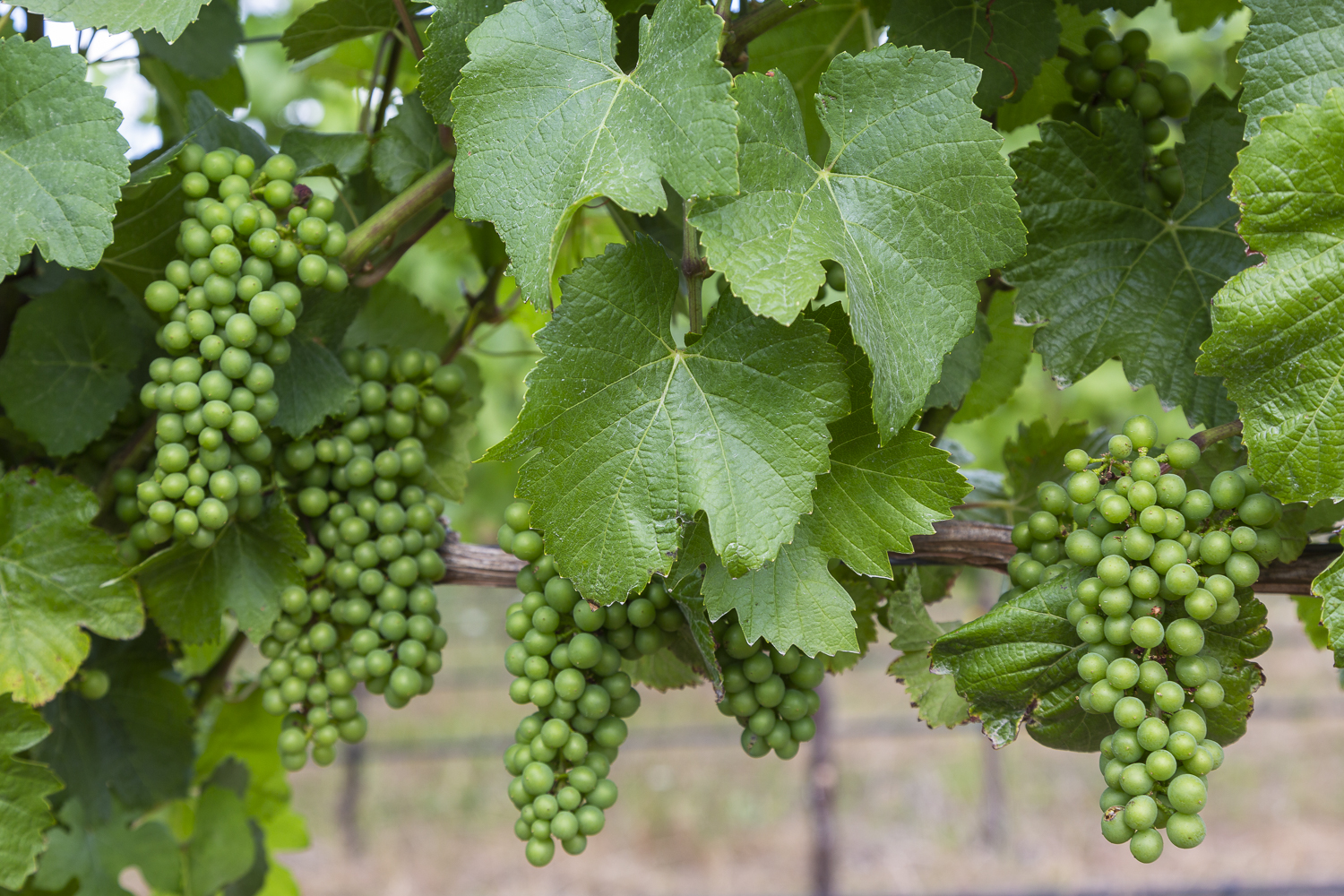
Pommard grapes in Torio Vineyard during growing season 2021.Torio Vineyard Dijon Clones Growing Season 2021
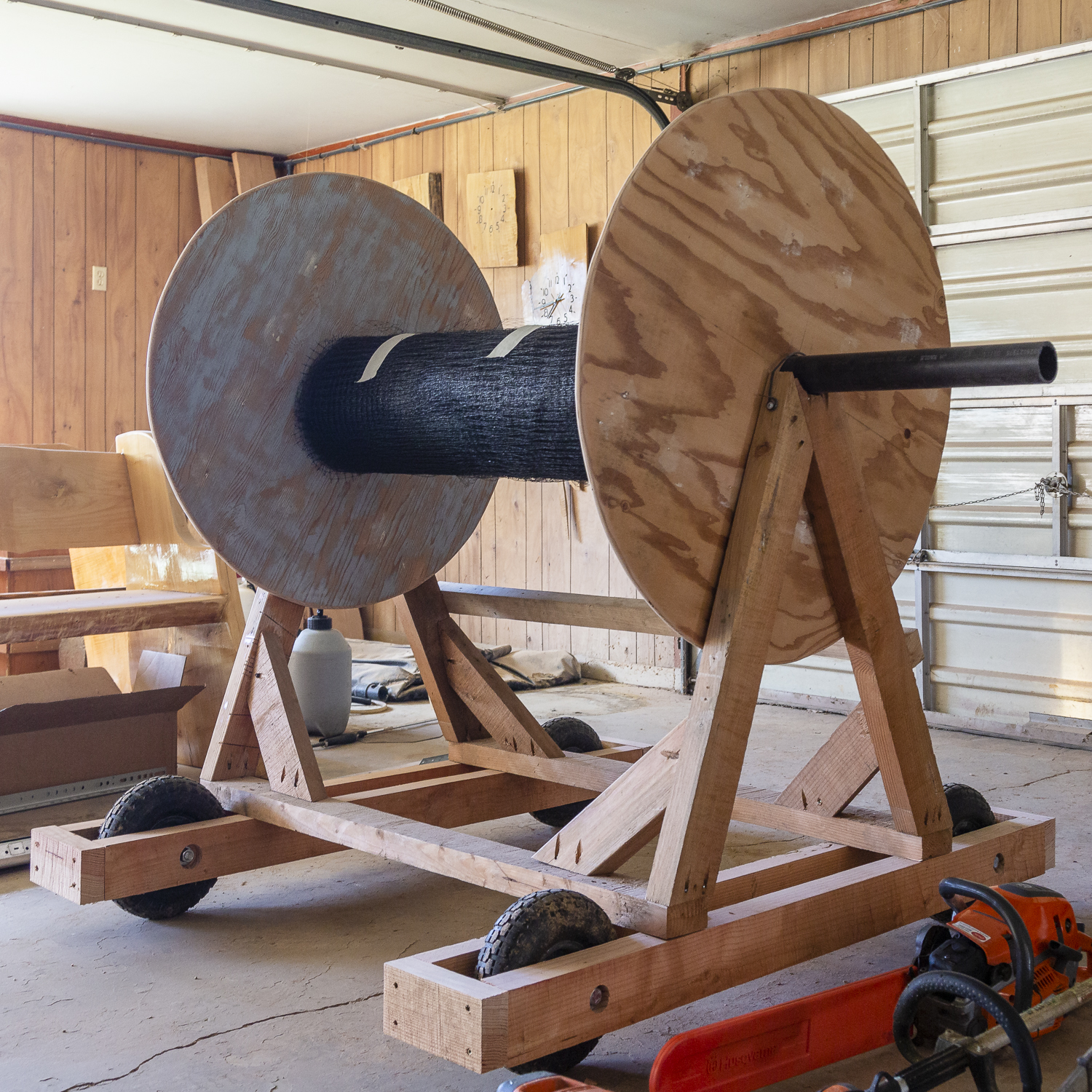
Our foreman, Scott, has created a unique device for deploying the netting that looks rather like a medieval siege engine. We look forward to trying it out.
Three Feathers netting apparatus ready to go to work.
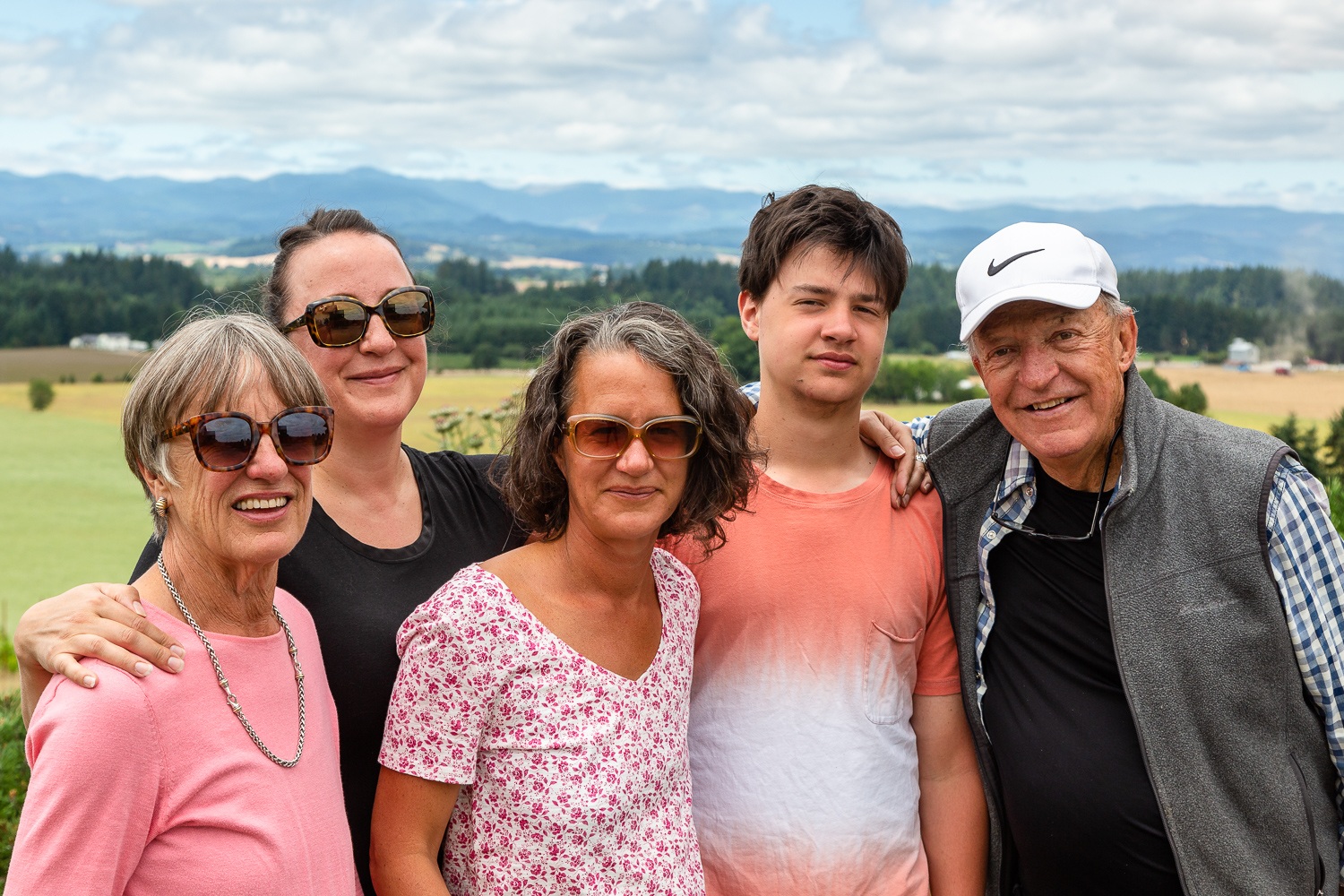
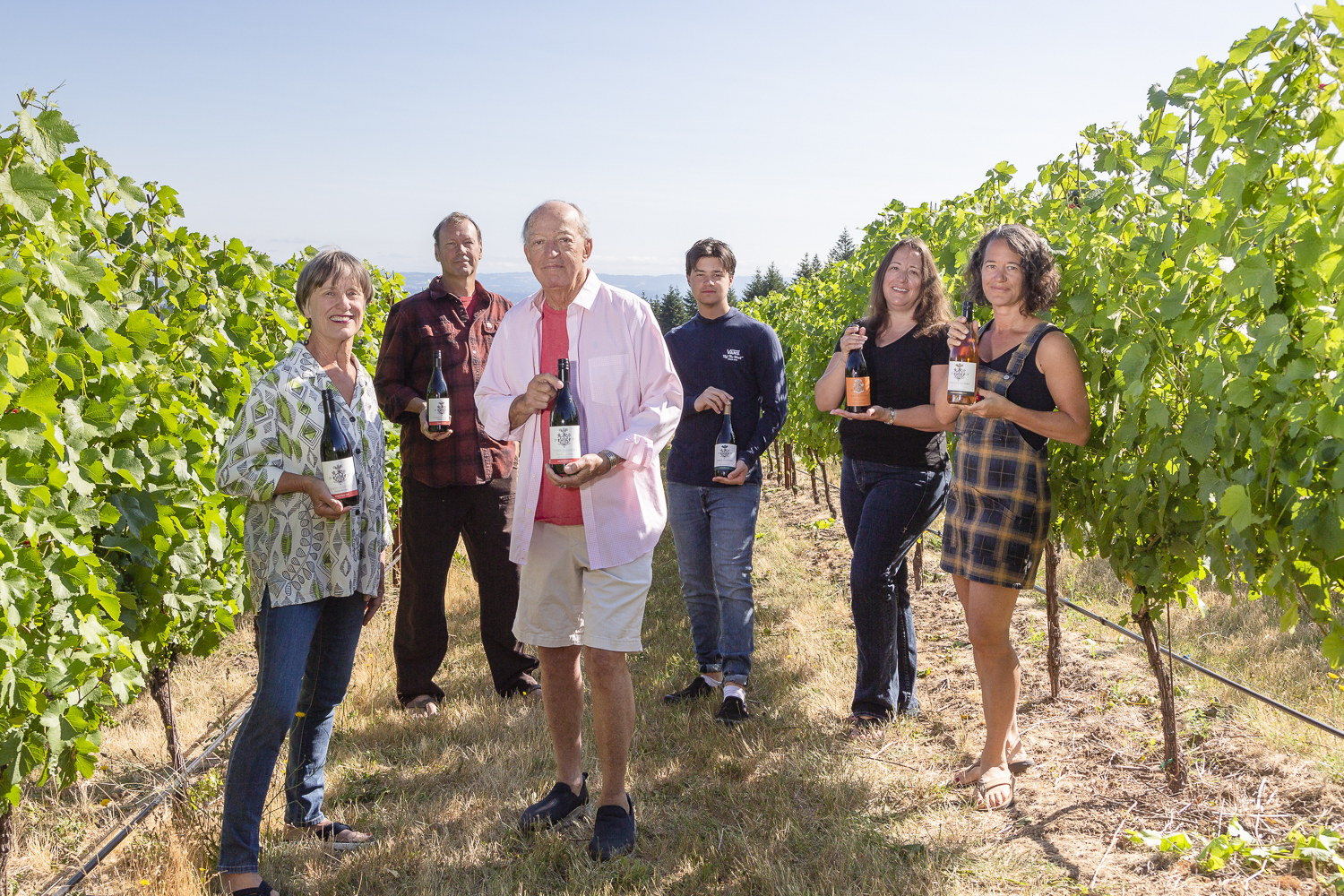
We did have time, during all of this, to organize a family portrait session. Cheers from all of us!
What a beautiful day for an apéritif in the garden! We met up with Vitis Terra Vineyard Services owner Jessica Cortell at her place for a chat over wine and snacks and wanted to share this gorgeous Oregon view with you. There is a French pastorale feeling about it all.
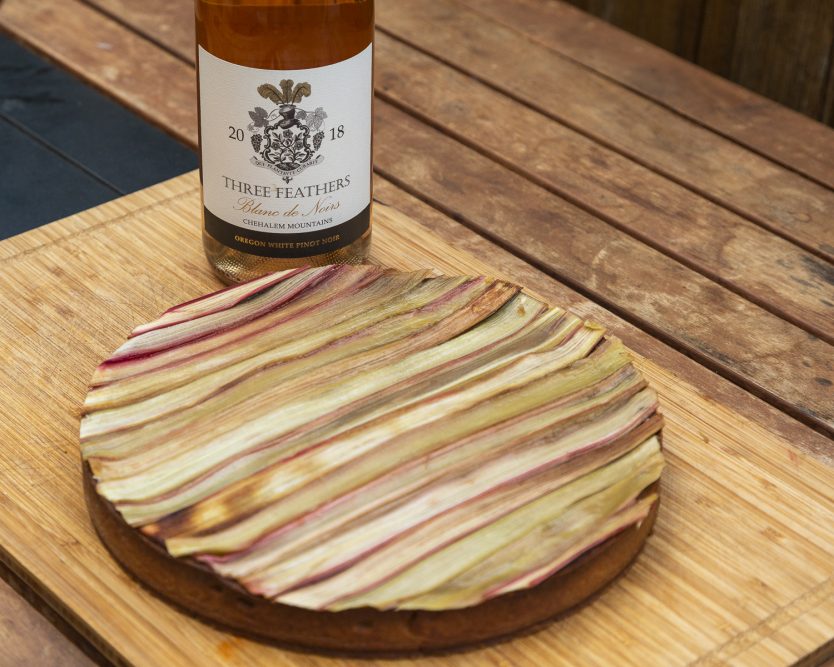
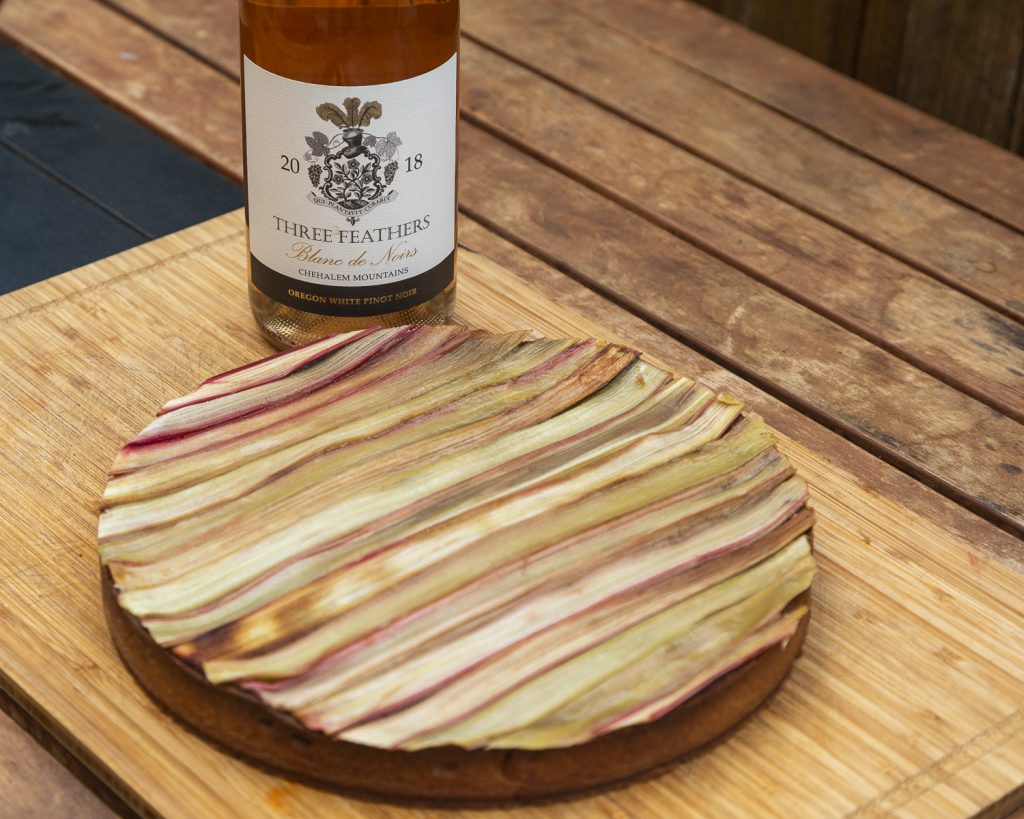
Rhubarb Pie à la Conticini | An elegant, delectable dessert consisting of sweet pastry dough, almond cream and rhubarb compote topped with a caramelized rhubarb lattice
At Three Feathers we are great fans of homegrown rhubarb and right now is the season. Sweet or savory (it’s great simply roasted in the oven as a side dish), this vegetable is a perennial plant that has stalks similar to celery and grows heartily in certain climates. We have a considerably sized rhubarb patch in our orchard and are always on the lookout for intriguing recipes and boy have we found a good one here!
Colin Prudhomme, our Grandson, has become quite passionate about cooking and introduced us to this recipe developed by pastry chef Philippe Conticini in his cookbook Sensations. Not only does this rhubarb pie stimulate the taste buds but the presentation is bluffing!
We will walk you through the detailed steps to make this tart just like the photograph (see photo at the end of recipe); the technique is fundamentally simple and easy to succeed.
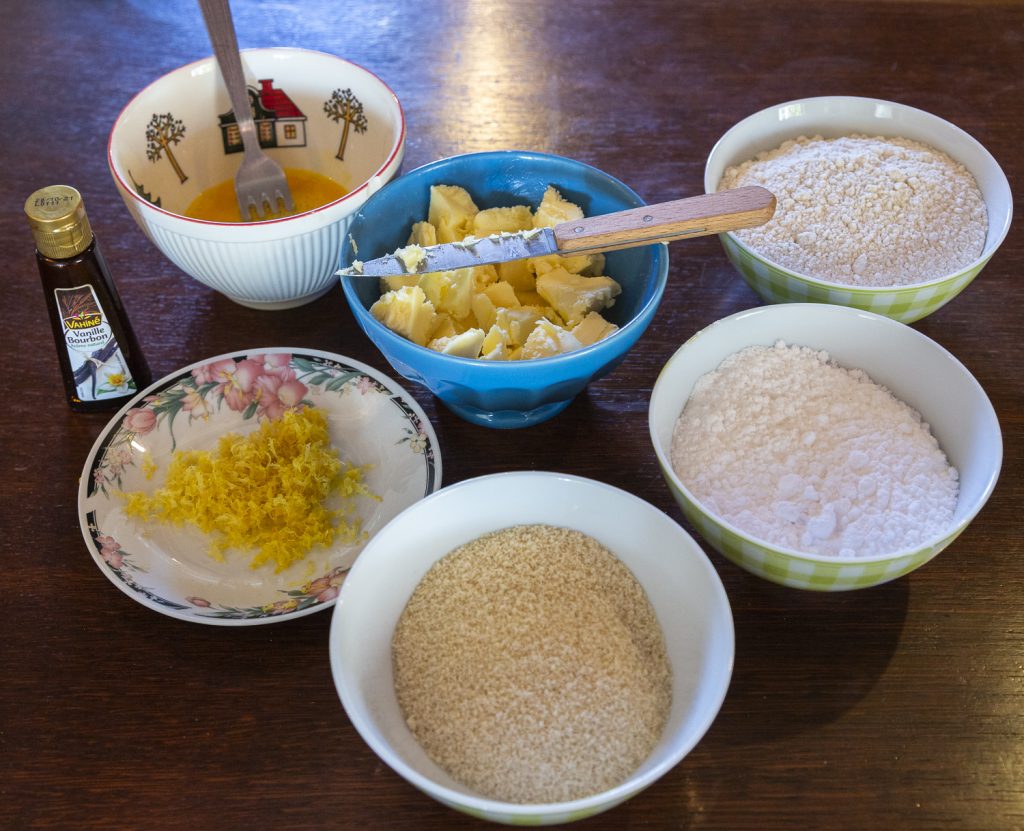
Ingredients: 1) Pâte sucrée, or French sweet pastry dough (prepare the day before) 2 cups (230 grams) all-purpose flour, preferably bread-making flour with less gluten (T55) 5/8 cup (140 grams) softened butter 1 large egg plus 1 egg yolk 3/4 cup (90 grams) confectioner’s sugar 1/3 cup (40 grams) ground almonds a pinch of salt zest of 1 untreated lemon 1/4 teaspoons (5 grams) ground vanilla bean powder
Ingredients for the sweet pastry dough
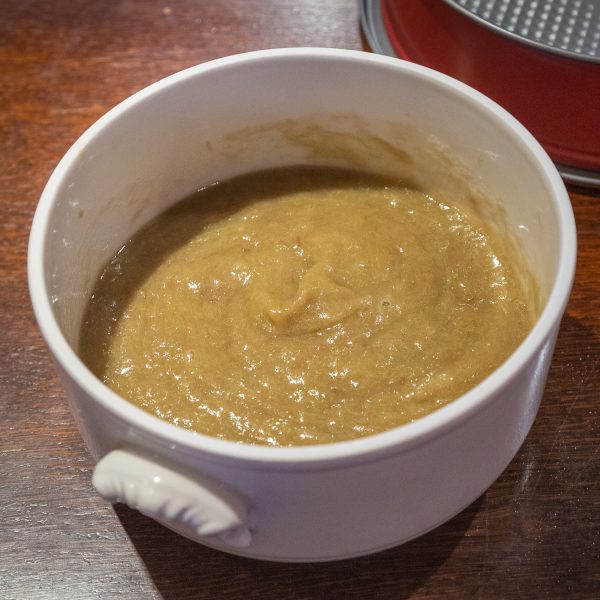
2) Rhubarb compote (can be made the day before) 1 pound (500 grams) rhubarb stalks (leaves and rough ends trimmed away) = 4 large or 8 small stalks = 4 cups trimmed and chopped into 3 cm (1 inch) pieces 5/8 cup (120 grams) sugar (note: this quantity of sugar lets the rhubarb tartness shine through. You can go up to 3/4 cup (150 grams) of sugar if you prefer a sweeter compote) 1 1/2 (5 grams) teaspoons gelatin powder 1/8 cup (25 grams) ice water 3/8 (40 grams) filtered water a pinch of salt
Rhubarb compote for the filling
3) Almond cream 1/4 cup (30 grams) ground almonds 1/4 cup (30 grams) confectioner’s sugar 1/8 cup (30 grams) softened butter 2 tablespoons (30 grams) beaten egg 1 1/2 (8 grams) teaspoons dark rum
4) Caramelized rhubarb lattice 4 stalks of fresh rhubarb Sugar
Preparation :
Pâte sucrée, or French sweet pastry dough (prepare one day before)
Making a French sweet pastry dough for the rhubarb pie.
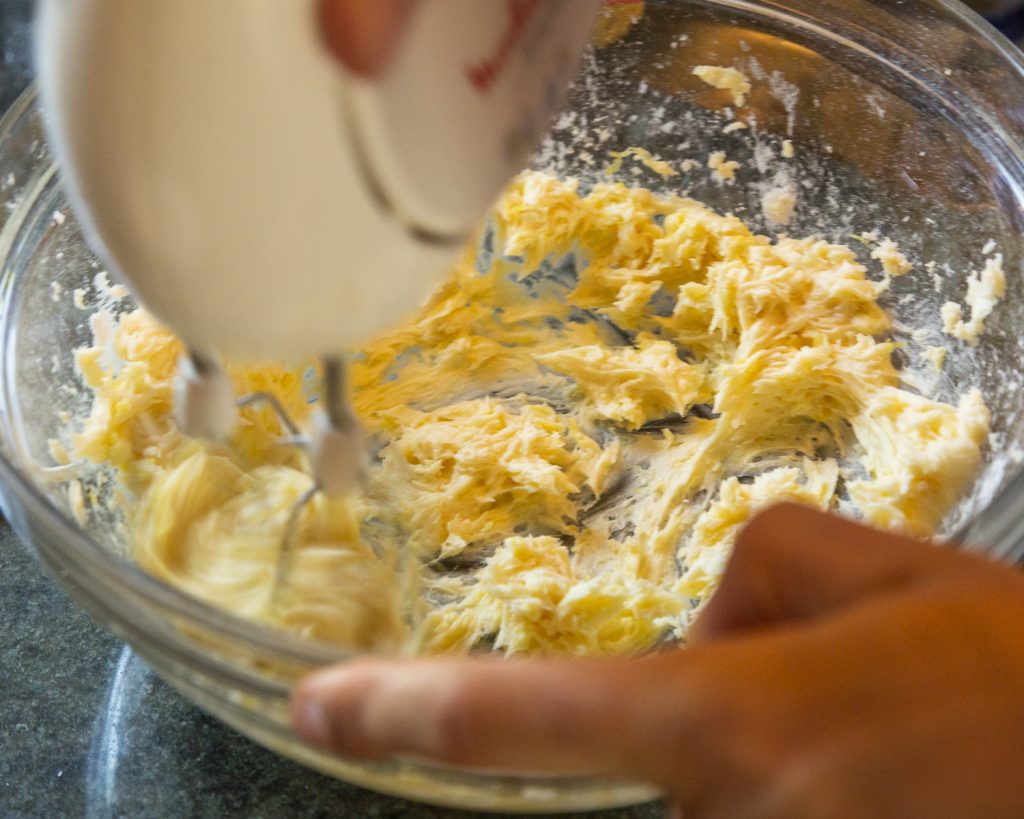
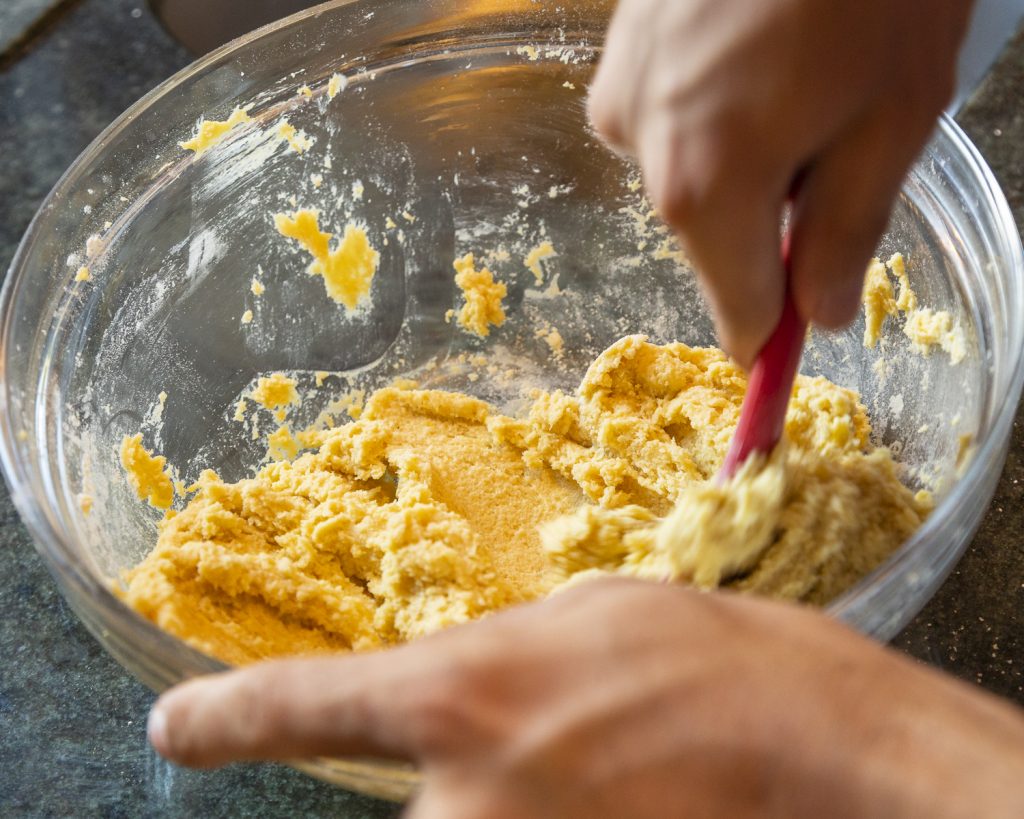
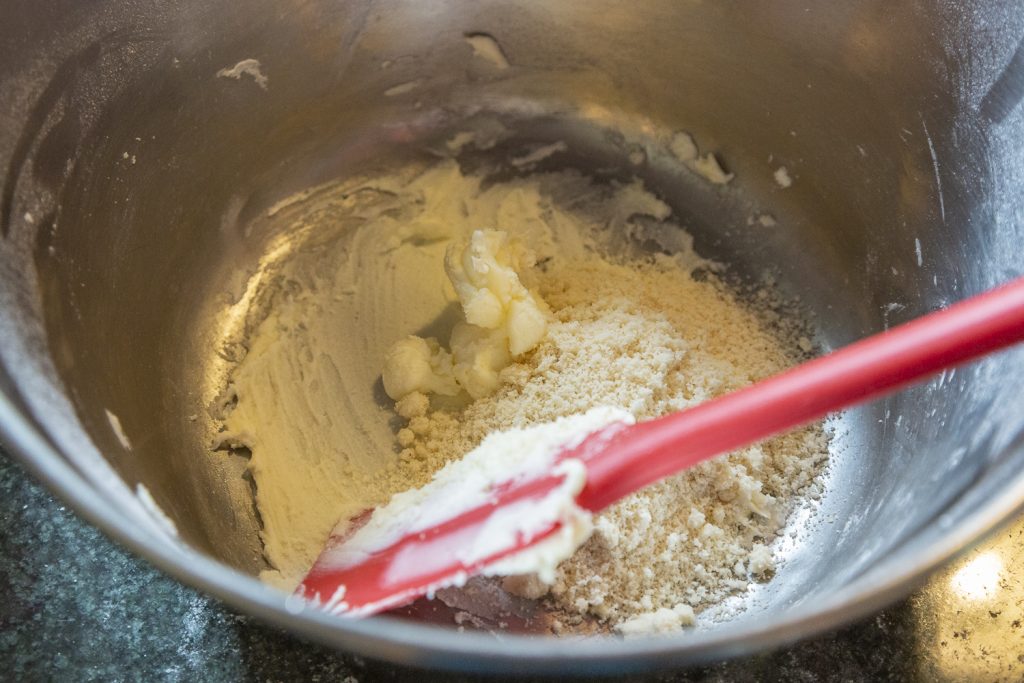
Using a hand-mixer, or stand mixer with the flat beater attachment, cream the confectioner’s sugar with the softened butter, pinch of salt and ground vanilla bean powder for a couple of minutes on slow speed until light in color.
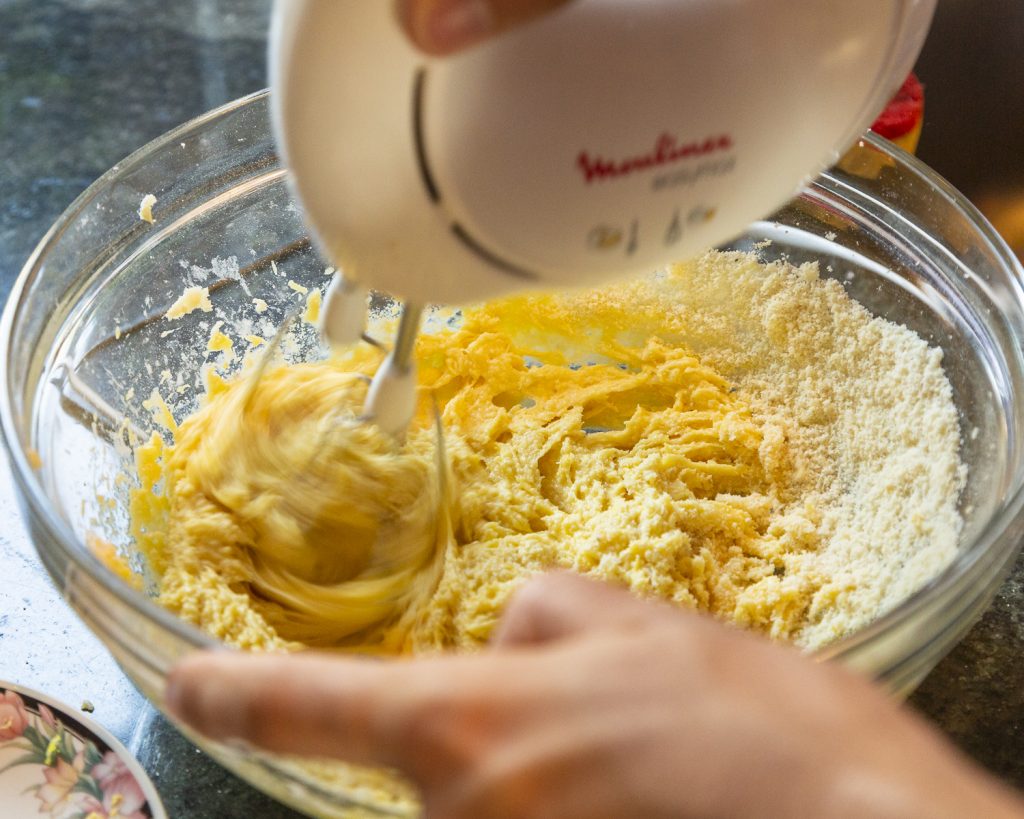
Add the lemon zest and ground almonds and mix until incorporated.
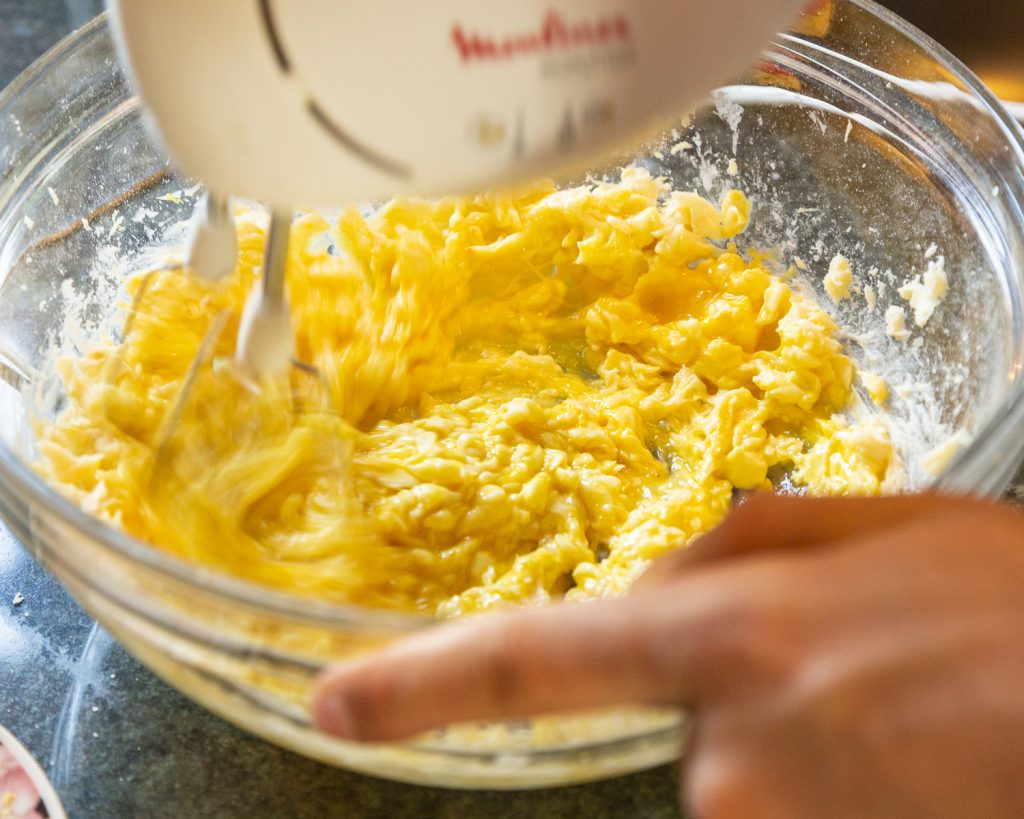
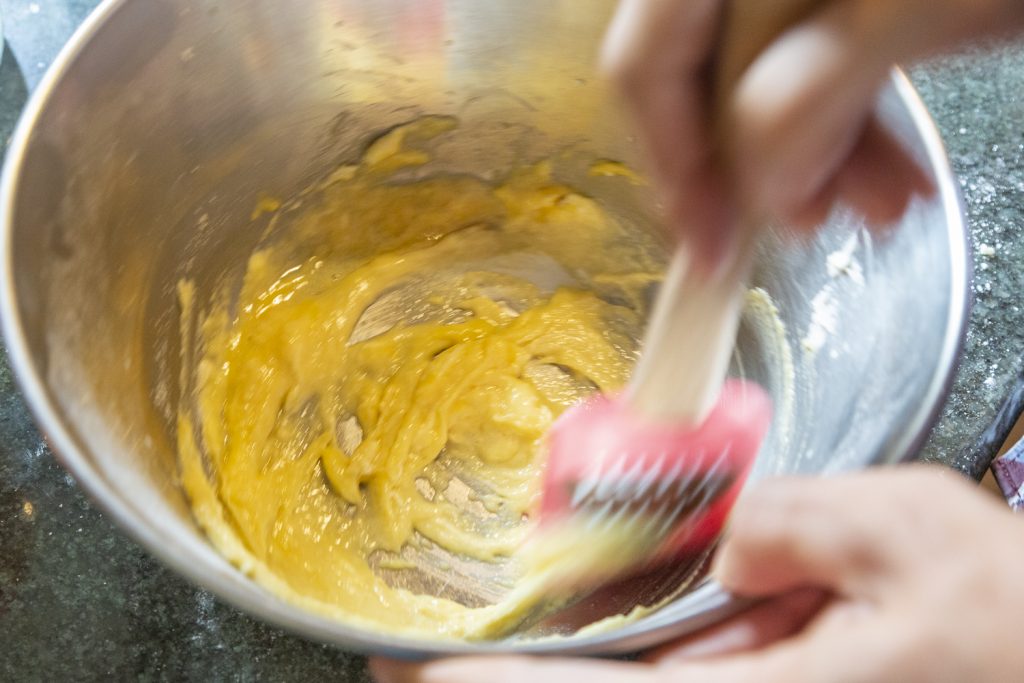
Add the eggs and mix again.
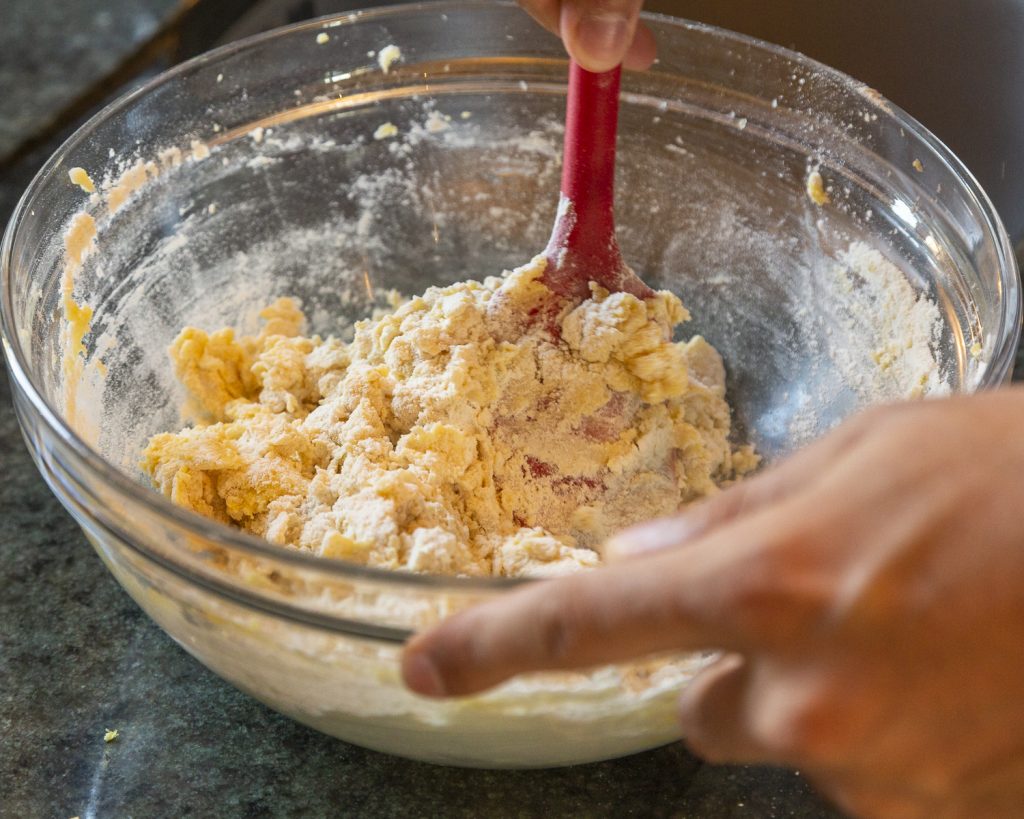
Finally, add the flour – MIX AS LITTLE AS POSSIBLE (2 seconds maximum on slow speed) to avoid shrinkage during baking. The flour does not need to be fully incorporated.
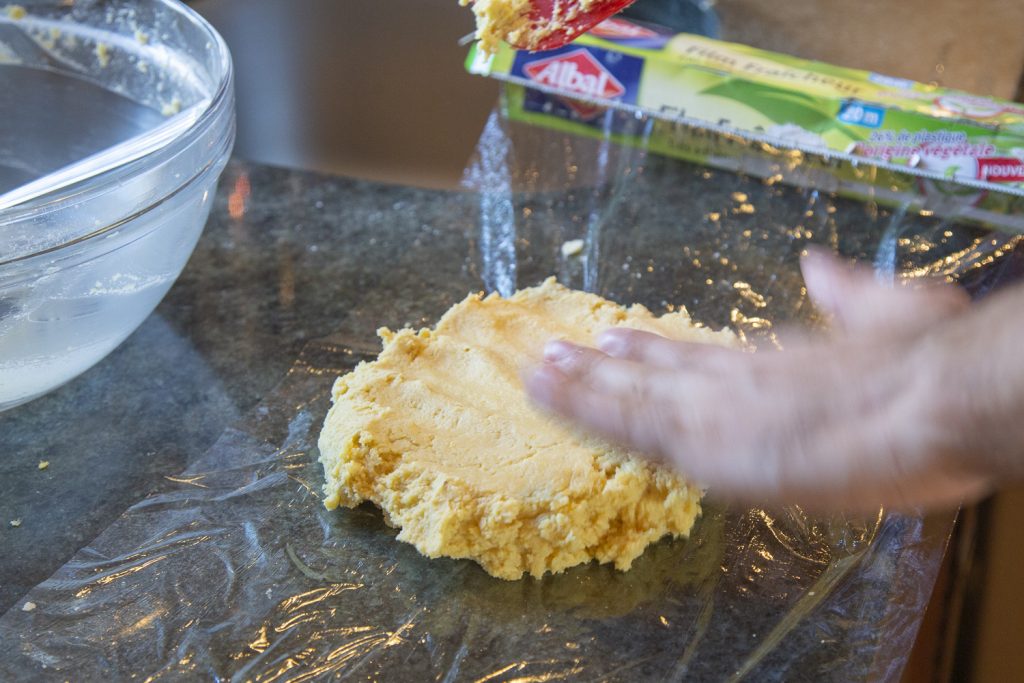
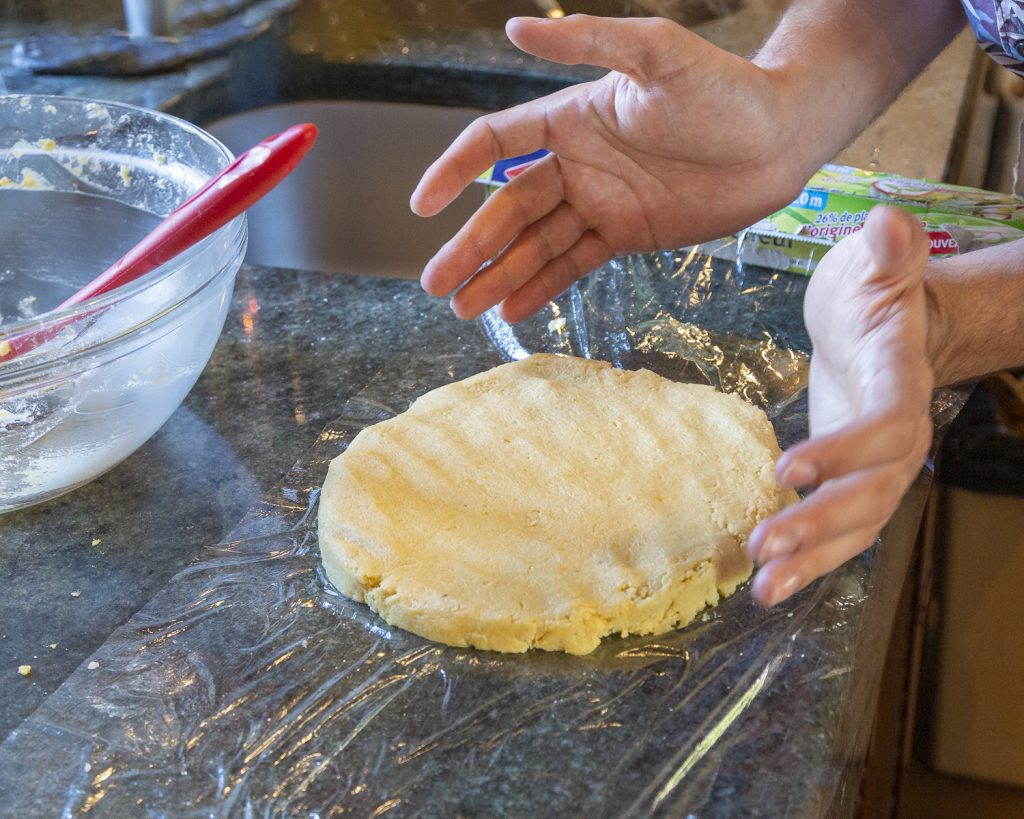
Divide the cold dough in half (there is enough for two pies) and freeze one half for another occasion. Using a spatula, scoop the pastry into a freezer bag or plastic wrap and flatten it out. Place the pastry dough in the refrigerator for 2 hours so that the butter hardens prior to rolling it out.
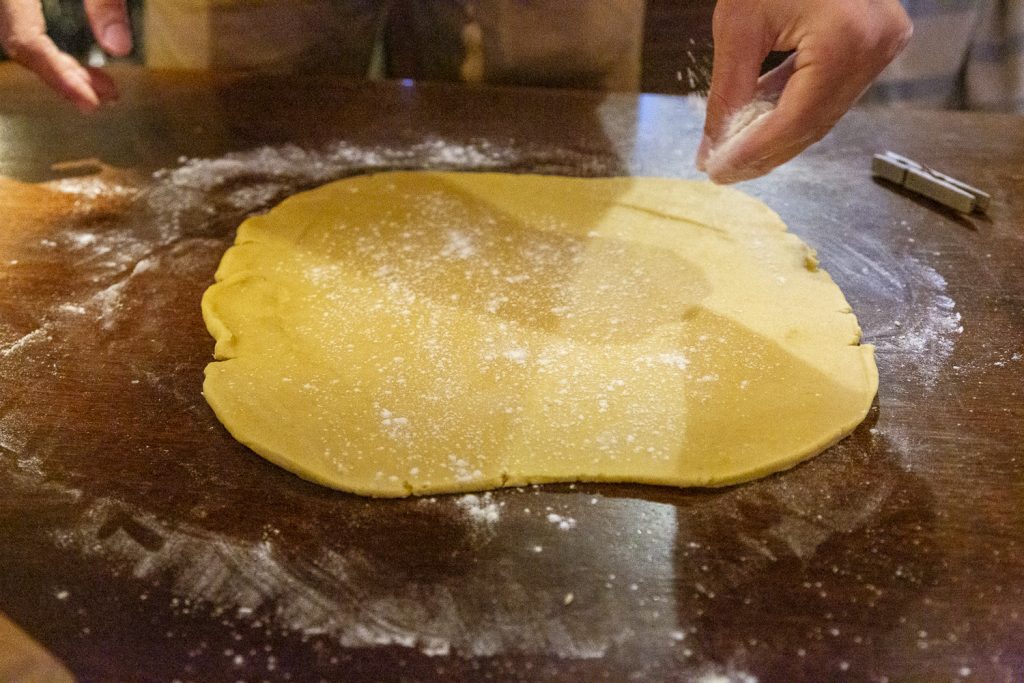
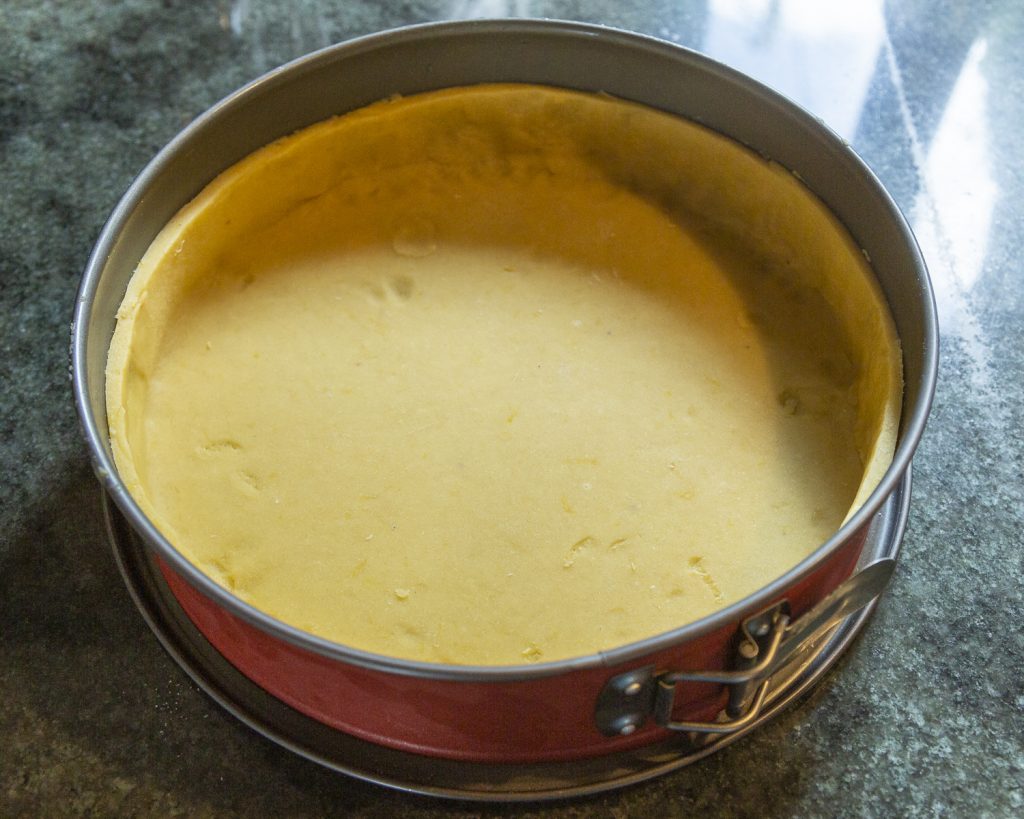
Remove the cold dough from the refrigerator and roll it out to 1/8 inch thick on a smooth and lightly floured surface. Be sure to lightly flour the rolling pin and dough itself to avoid sticking. To transfer the dough to the pie plate, roll the dough around the rolling pin, lift it off the countertop and place it in a 9″ x 1″ pie plate or spring-form baking pan. Form the dough to the pie plate and cut the top edge as evenly as possible as shown. Put the dough back in the refrigerator overnight to ensure that it will not shrink in the oven.
The next day, prick the dough thoroughly with a fork and bake in a convection oven at 300°C for 20 minutes.
Almond cream
Lightly roast the ground almonds in a frying pan, stirring constantly until they start to become lightly colored. Remove the pan from the heat and pour the almonds into a bowl and let cool.
Mix the sugar and softened butter until well blended.
Add the beaten egg, cooled ground almonds and dark rum.
Mix as little as possible to avoid adding air to the almond cream which will cause it to rise when baked.
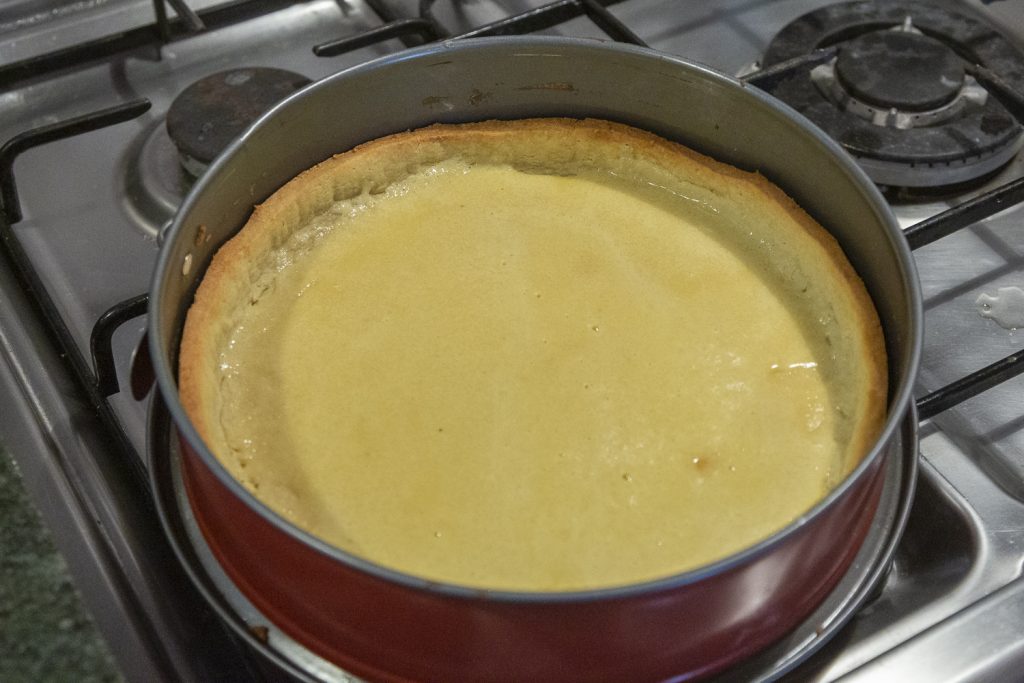
Pour the cream onto the pre-cooked pastry dough and return to the oven at 300°C for another 25 minutes.
Almond cream before baking.
Let the pie cool on a wire rack. You can remove the pastry from the pie plate if you feel comfortable taking it out of the mold.
Rhubarb compote (can be made the day before)
Dilute the powered gelatin in the ice water.
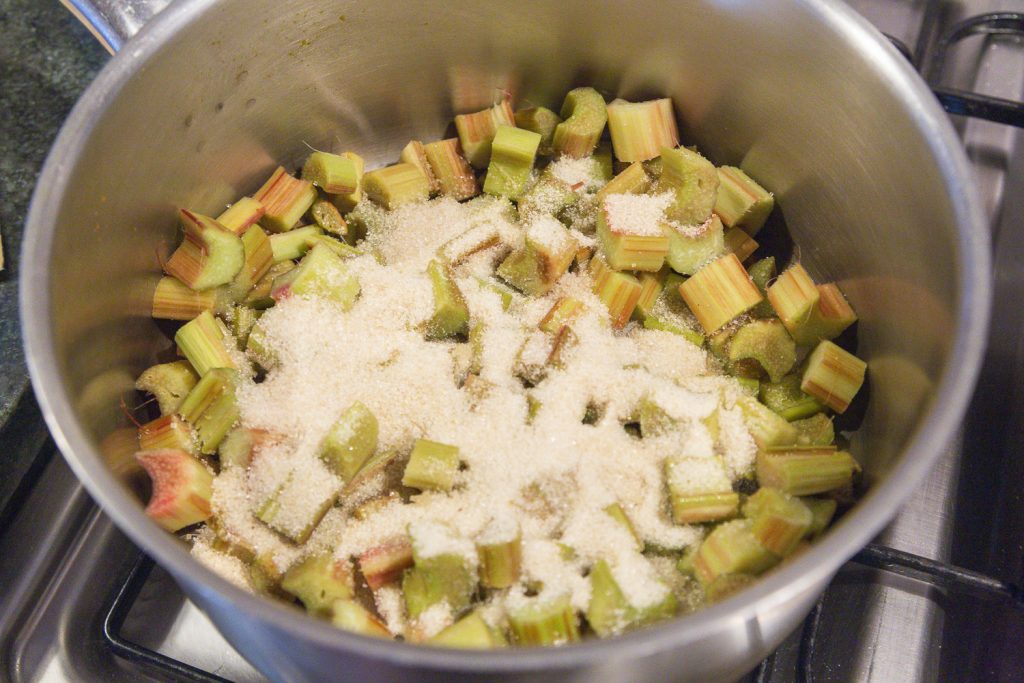
Put the prepared rhubarb into a saucepan with the sugar and filtered water. Mix well and cook on low heat for 45 minutes, stirring regularly to prevent the sugar from caramelizing. The rhubarb should become thick like a jam or compote, without clumps.
Remove the rhubarb from the heat and add the gelatin, mixing well by hand so that it melts.
Set the rhubarb aside (refrigerate if you made it the day before or set aside).
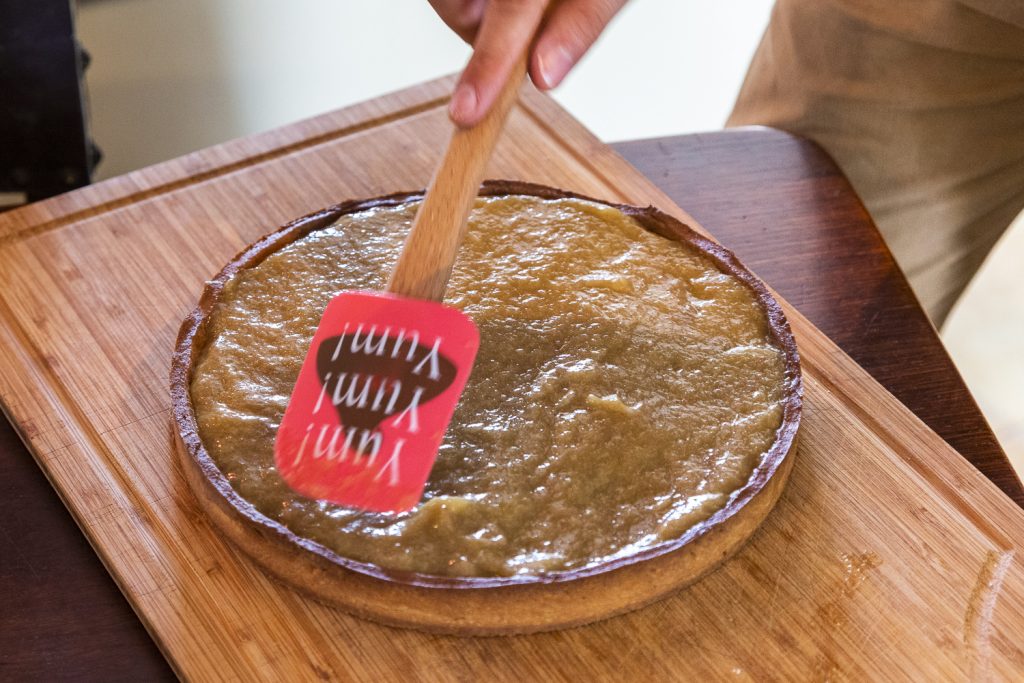
Spread the rhubarb compote on top of the cooked pastry dough with almond cream and smooth it out. Refrigerate.
Adding the rhubarb compote to the cooked pastry shell.
Caramelized rhubarb lattice
Pre-heat your oven to 325°C.
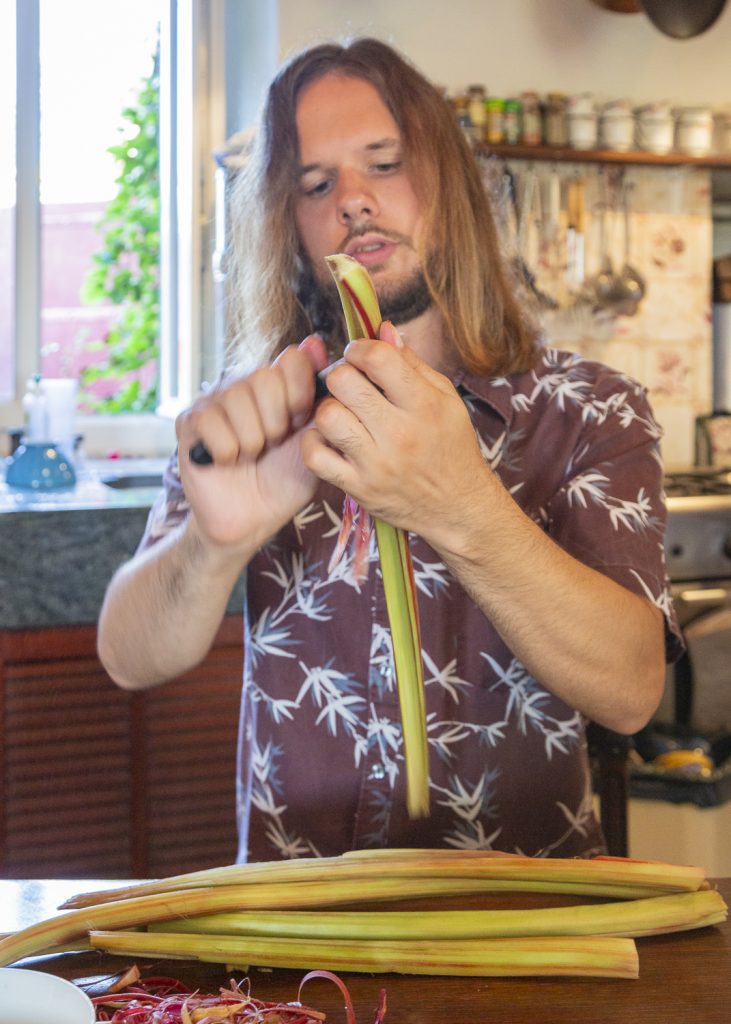
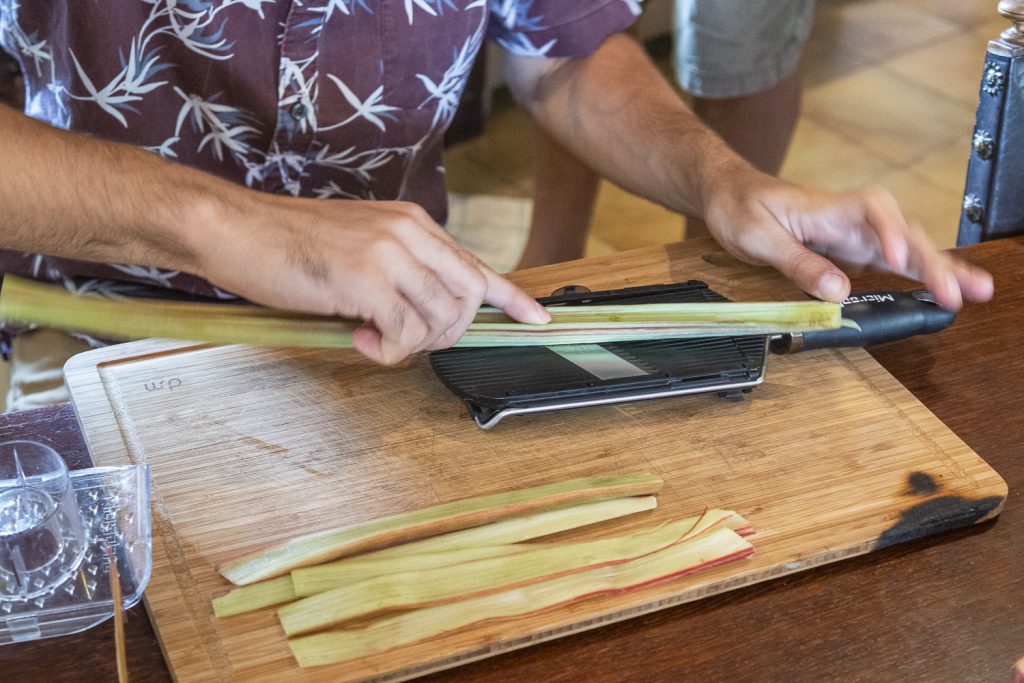
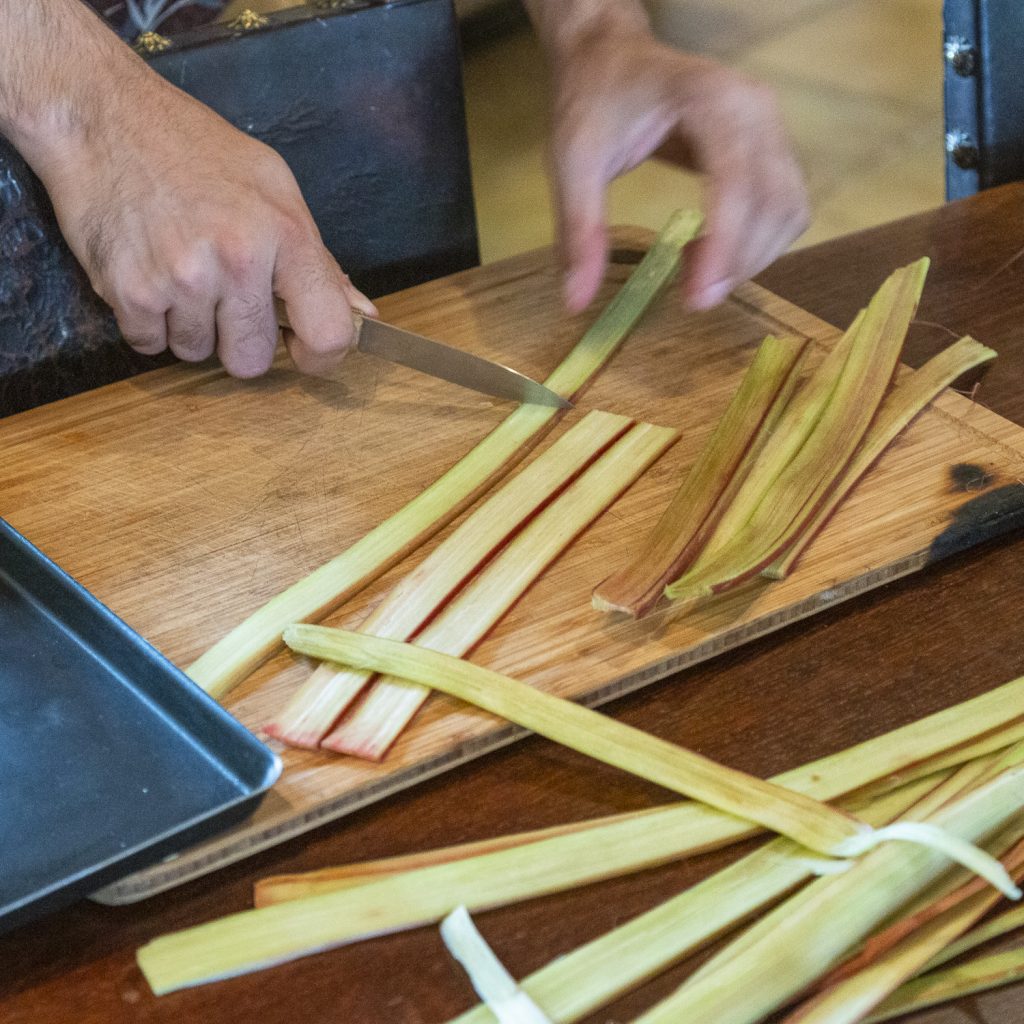
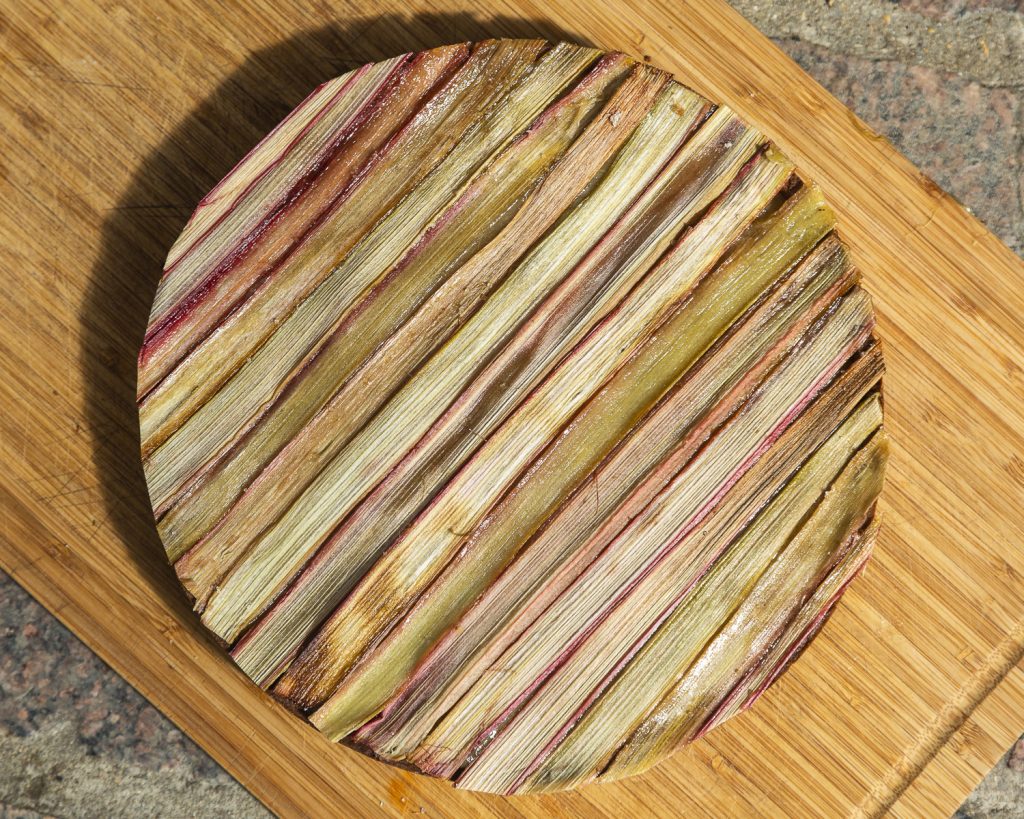
Using a mandolin, create long slices of rhubarb about 1/4 inch thick. They shrink down in the oven, so the thickness should not be too much or too little. We get the best results from a Microplane at the thickest setting or a sharp knife. Do not use a vegetable peeler as the slices will be too thin.
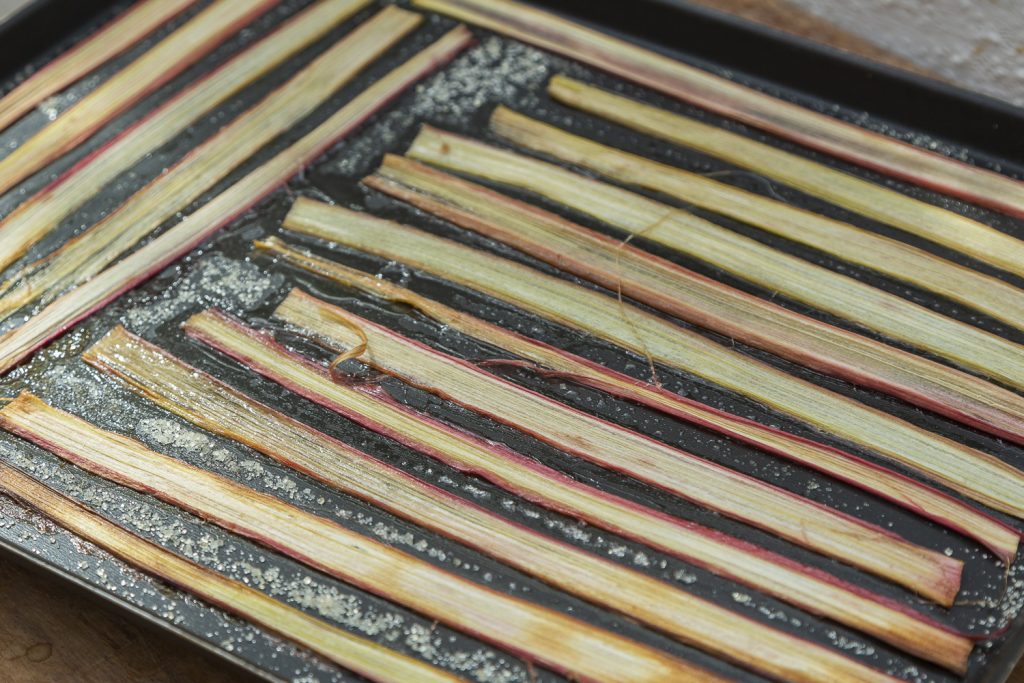
Place the rhubarb strips on parchment paper and powder with sugar.
Bake in the oven for 20 minutes, watching carefully to make sure the sugar does not burn.
The rhubarb lattice strips should be almost transparent, caramelized and fairly supple to work with.
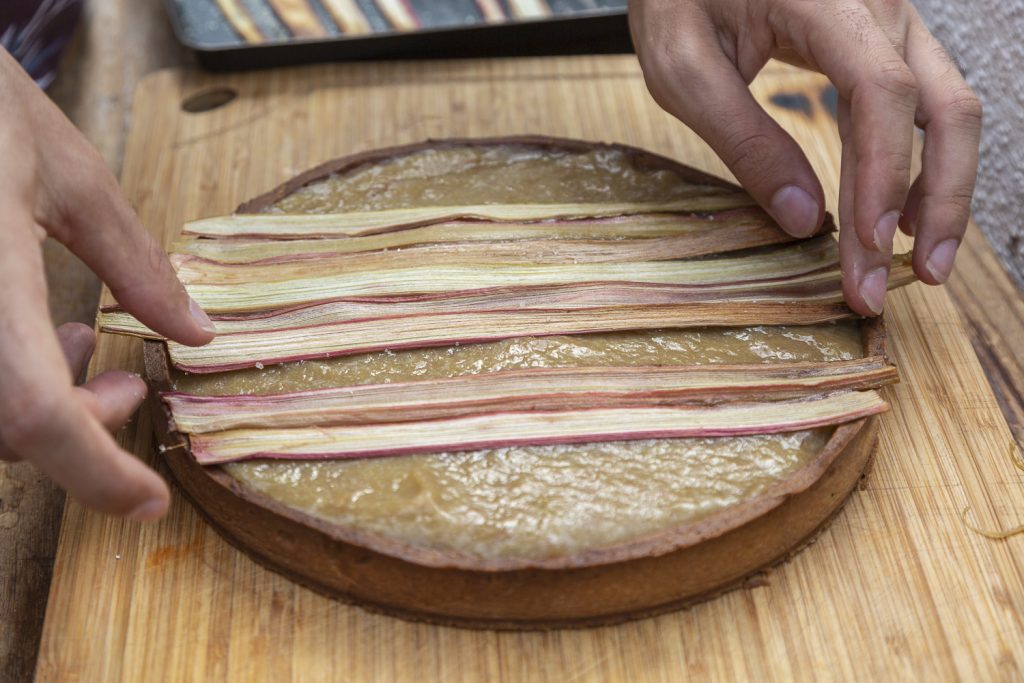
Caramelized rhubarb pie lattice
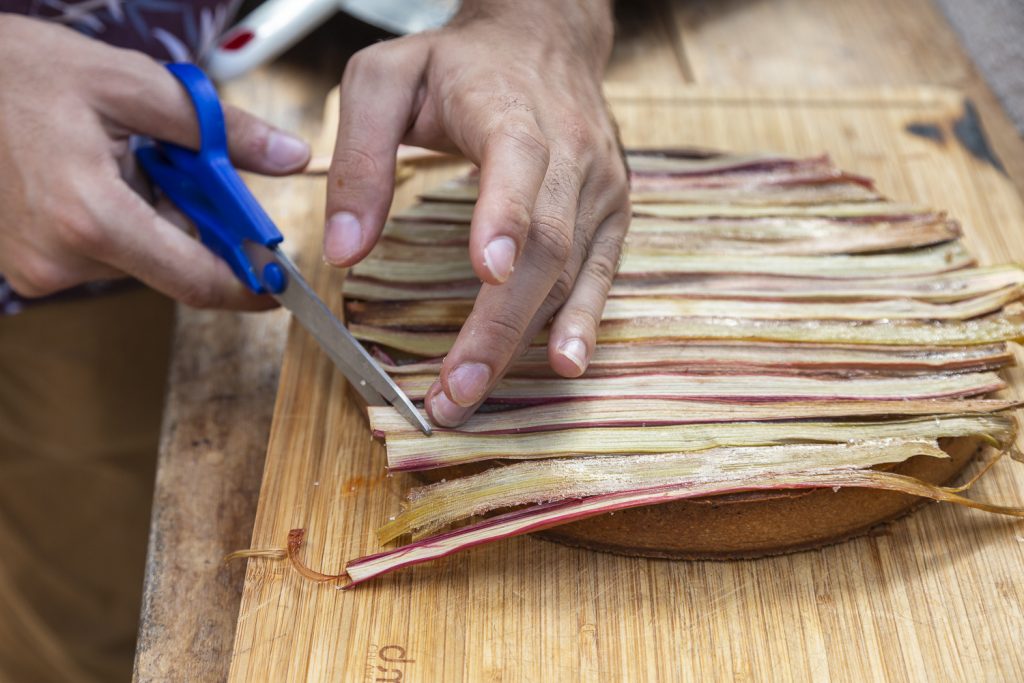
Place the rhubarb lattice, one strip next to the other, on the pie as shown. Cut the remainder of the rhubarb hanging out over the pie with kitchen scissors, turning the pie as you go.
An elegant, delectable pie consisting of sweet pastry dough, almond cream and rhubarb compote topped with a caramelized rhubarb lattice
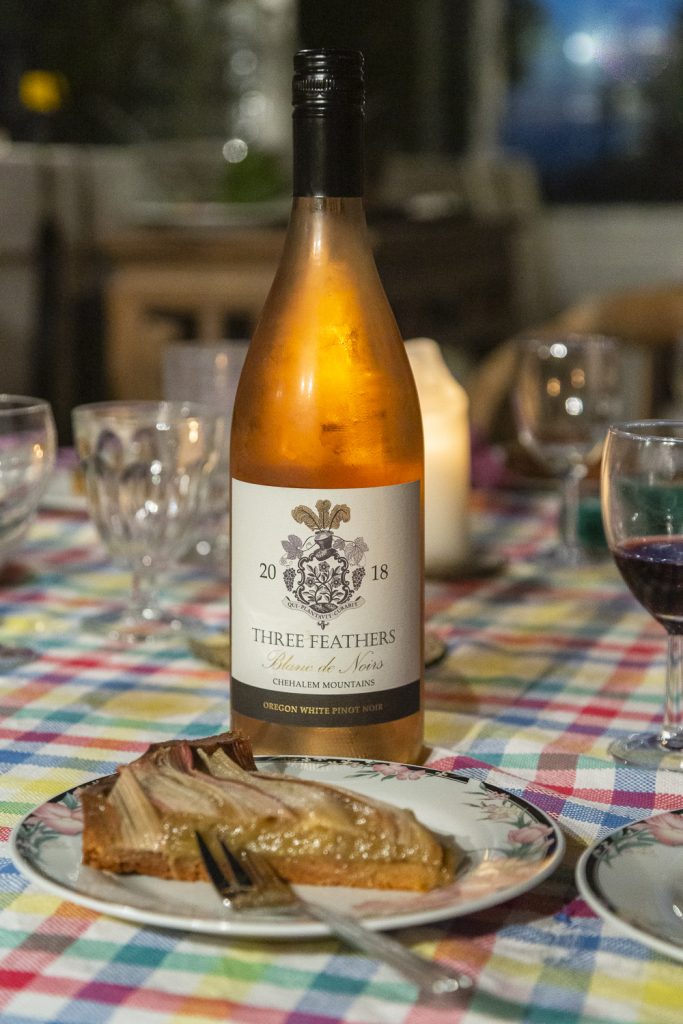
Et voilà! We prefer this beautiful pie with a fresh bottle of our fruity Three Feathers Blanc de Noirs, or tangy Pinot Gris. For those that prefer Pinot Noir, we suggest pairing with a 2018 Cuvée Virginia.
At Three Feathers for our Memorial Weekend Wine Tasting with Mount Saint Helens in the background.
Successful Wine Tasting Open House | Delicious Orzo Chicken Salad Recipe
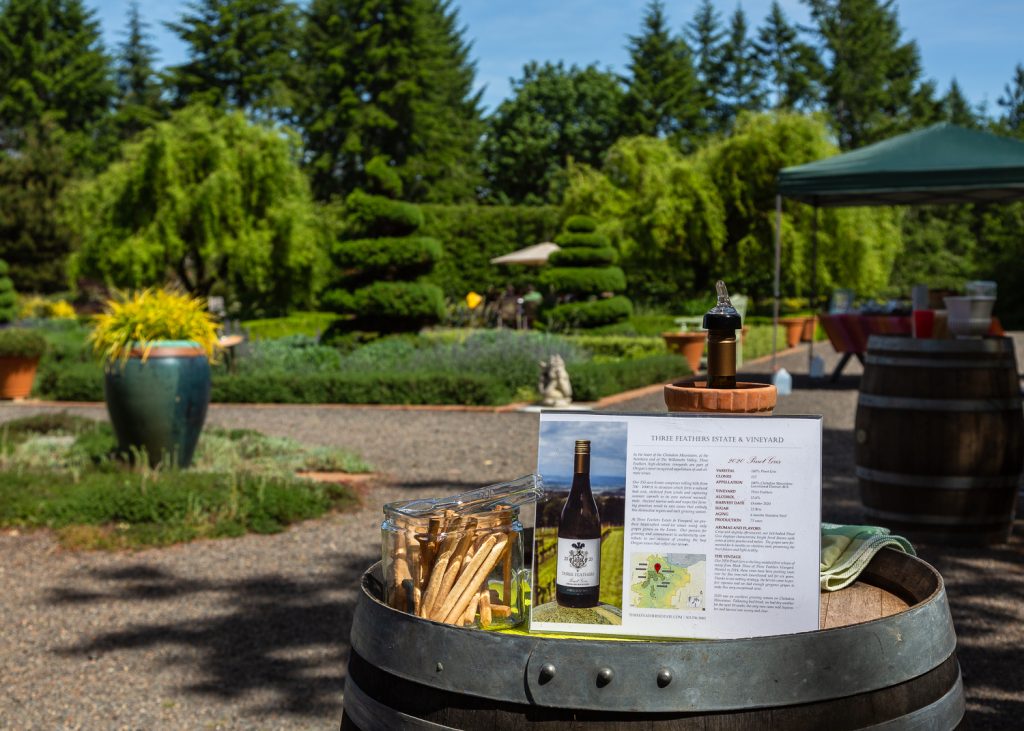
Once again, Three Feathers Wine Tasting Open House on May 30th of Memorial Weekend was blessed with a fabulous day in every respect.
The weather was warm and sunny. Our guests arrived prepared to spend the day in the gardens and vineyard. One brave group even spent a few hours in our “Witches Cove” tree house.
Witches Cove Tree House
Everyone enjoyed the comforts of home, a generous buffet, delicious wines and the company of friends and new acquaintances. There is something about the atmosphere that encourages a feeling of bonhomie, as if one is at a party.
Thanks again to our new Flight Club members for signing up – we’ll do this again in the fall!
three Feathers wine tasting 4th annual memorial day weekend
three Feathers wine tasting 4th annual memorial day weekend
three Feathers wine tasting 4th annual memorial day weekend
three Feathers wine tasting 4th annual memorial day weekend
three Feathers wine tasting 4th annual memorial day weekend
three Feathers wine tasting 4th annual memorial day weekend
three Feathers wine tasting 4th annual memorial day weekend
three Feathers wine tasting 4th annual memorial day weekend
three Feathers wine tasting 4th annual memorial day weekend
three Feathers wine tasting 4th annual memorial day weekend
three Feathers wine tasting 4th annual memorial day weekend
three Feathers wine tasting 4th annual memorial day weekend
Three Feathers wine tasting 4th annual memorial day weekend
three Feathers wine tasting 4th annual memorial day weekend
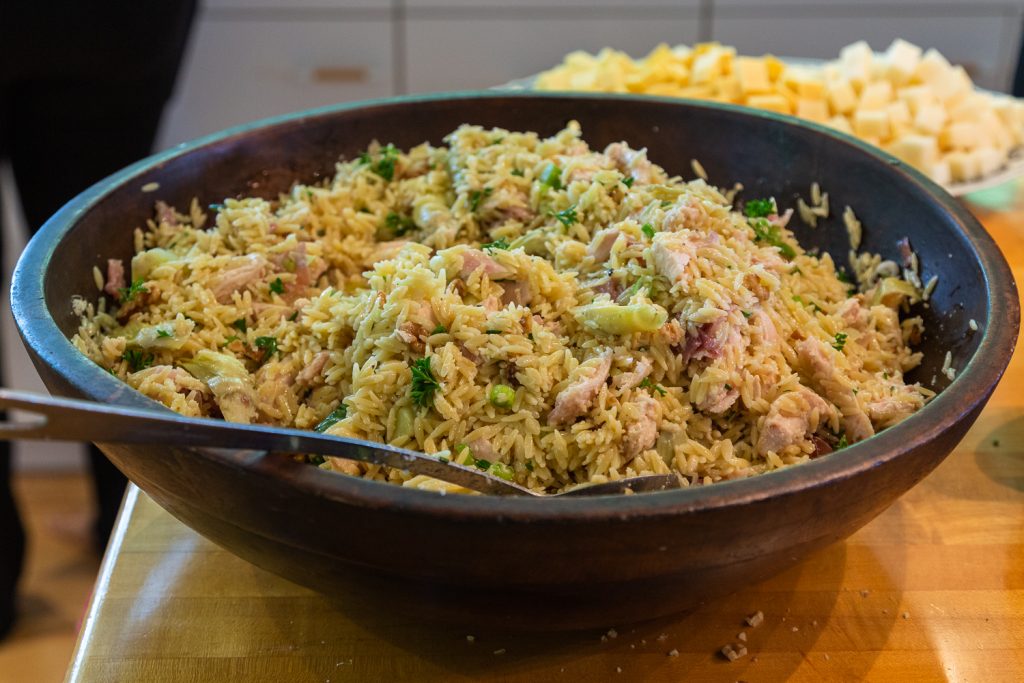
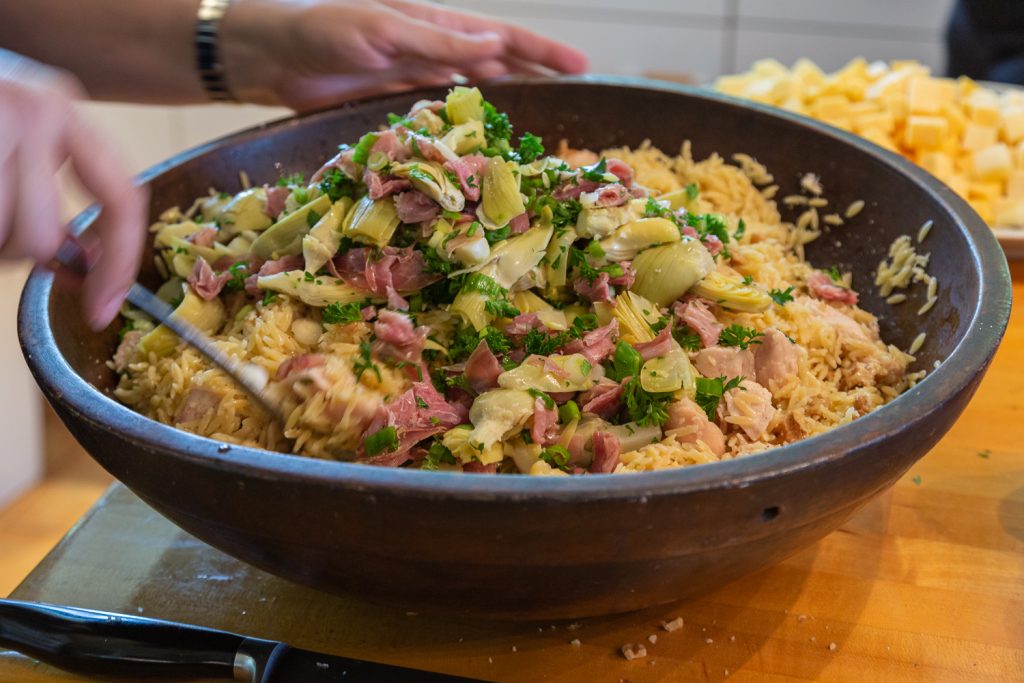
Orzo Chicken Salad, by Cynthia Stimac
By popular request, we are posting this delicious summer salad recipe online which was served at this event. Light and refreshing, it is easy to pair with our fresh and nuanced Pinot Gris or our 2018 Cuvée Virginia Pinot Noir. This salad will grace any summer table and is excellent for picnics or potluck events.
There are several ways to alter this recipe. Normally, I do not have all of the ingredients, so I just use what I have in the refrigerator. You may also want to vary the quantities of some of the ingredients to your taste. I use my own vinaigrette to dress the salad and I have listed some ingredients for that. The dressing gets better with age. To make this salad gluten-free, you can substitute quinoa for the orzo.
Serves 6 people
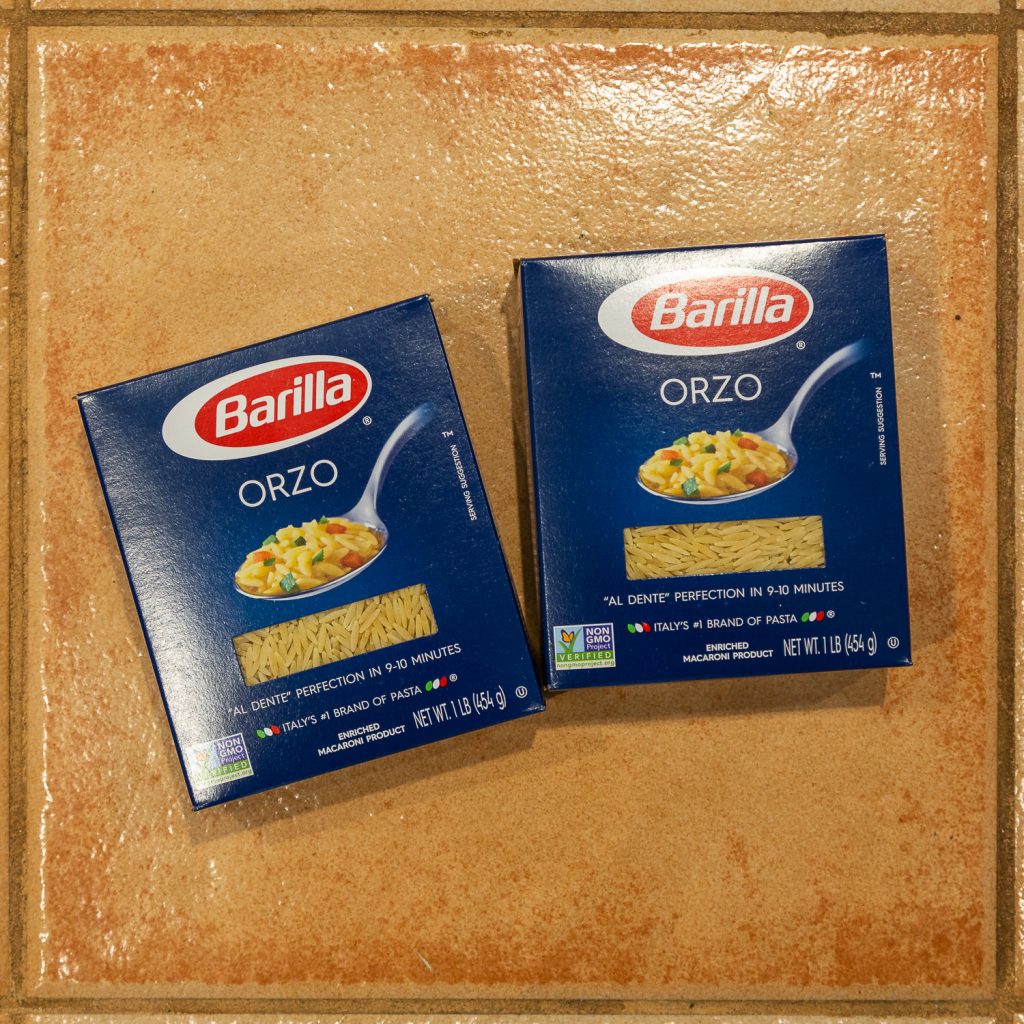
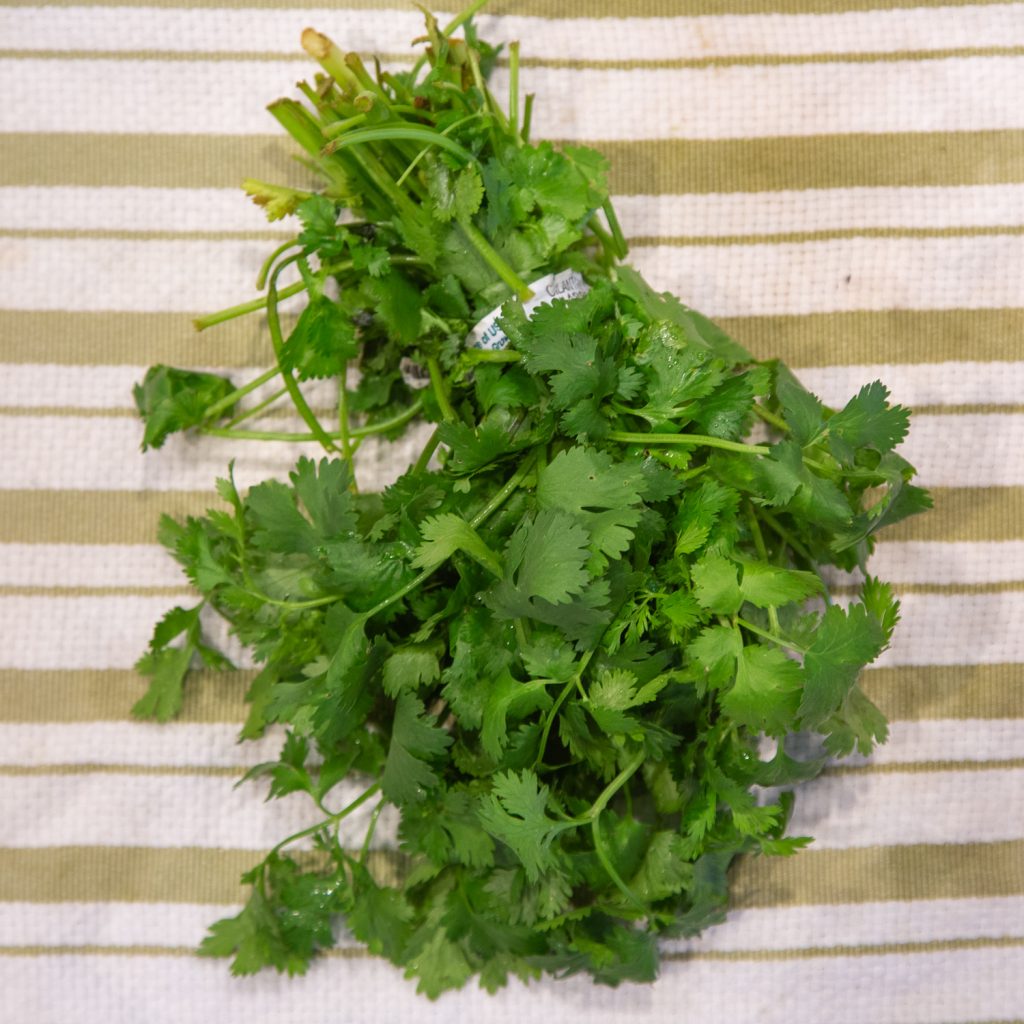
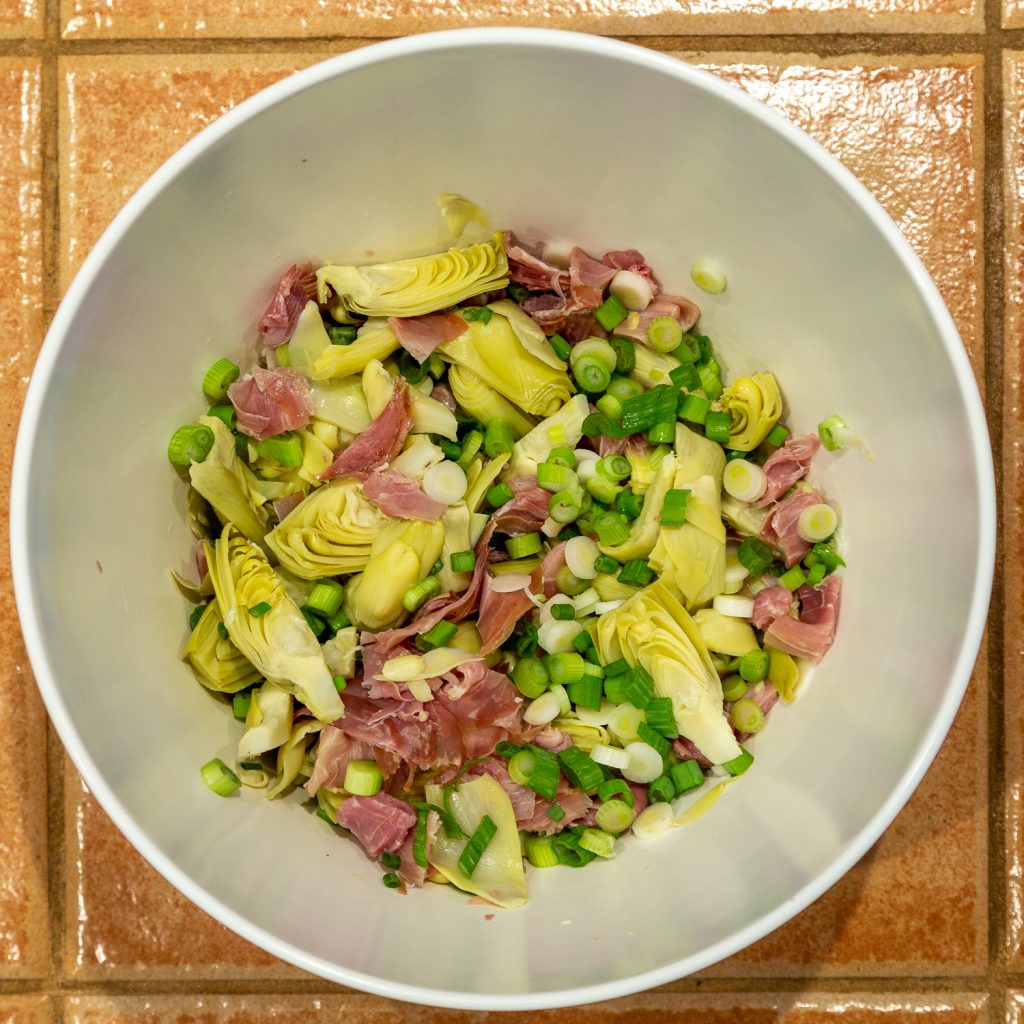
Orzo by BarillaCilantroPrepared garnish
Salad ingredients:
1 – 2 chicken breasts, marinated in:
juice of 2 lemons
olive oil
red wine vinegar
fresh rosemary
salt & pepper
2 cups of orzo pasta
3/4 – 1 cup freshly grated Parmesan cheese
3 – 4 slices of prosciutto, cut into 1/2 inch strips
4 – 5 artichoke hearts, quartered into wedges (if canned, prefer in water to oil)
3 – 4 scallions, minced
1/2 cup minced cilantro or parsley
1/2 cup walnuts, hazelnuts or pine nuts, roughly chopped
Food processor vinaigrette
Vinaigrette:
olive oil
balsamic vinegar or red wine vinegar
lemon juice
mustard with seeds in it
salt & pepper
poppy seeds
dried oregano
dried sage
dried basil
garlic (peeled and cut in half)
Preparation:
Marinate the whole chicken breasts for 2 hours.
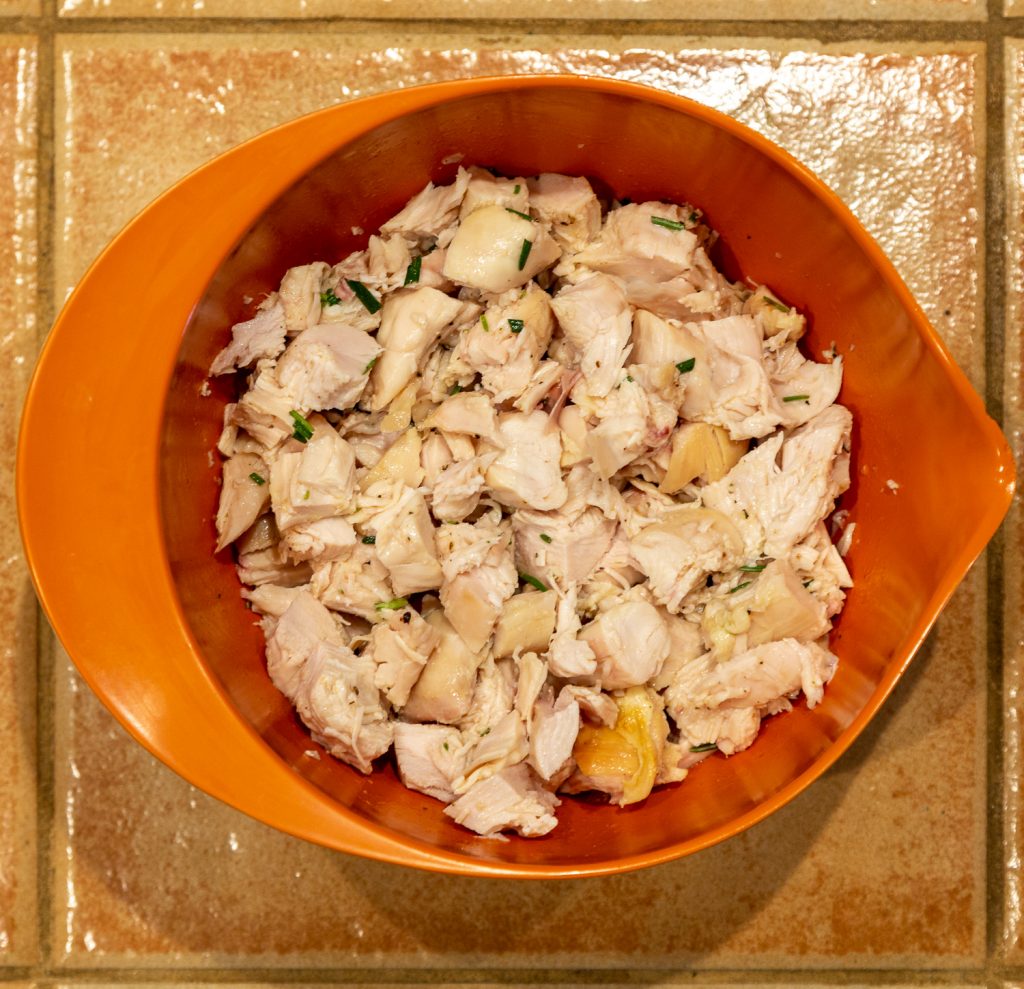
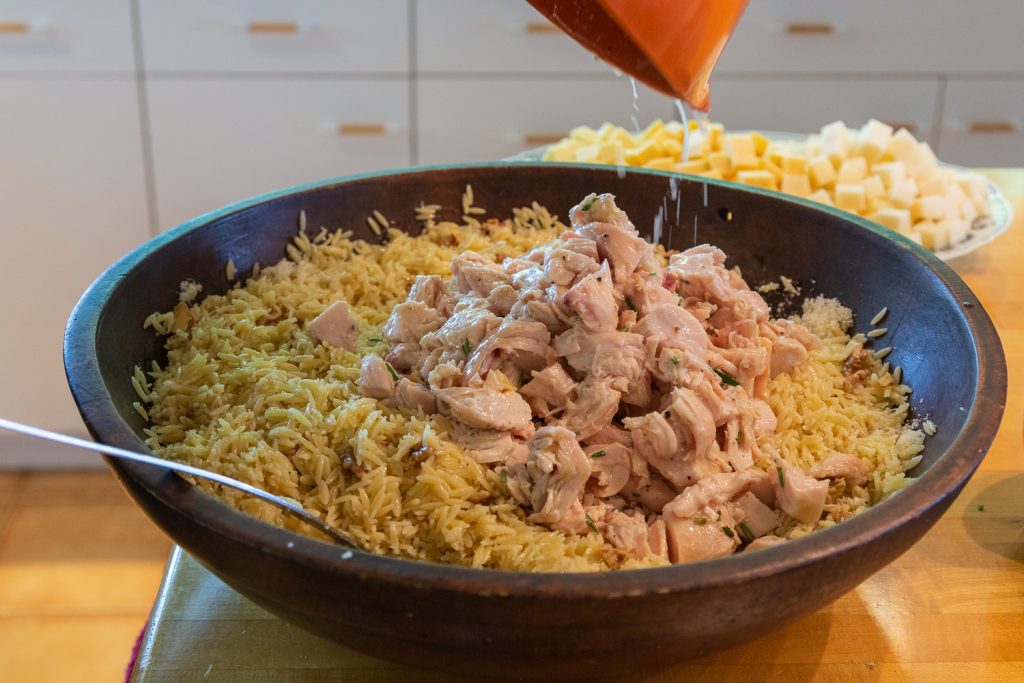
Preheat your broiler for 1/2 hour. Broil the marinated chicken breasts until cooked through, about 5 – 10 minutes on each side. If you need to, de-bone and remove the skin after cooking. Then cut the chicken into chunks.
Note : My broiler makes a huge mess when I do this because the oil spits and flames up, so be very careful. You can also cook the chicken on the barbecue if you like. Recently, I’ve had really good results by just baking the chicken breasts in the oven for 45 minutes on 350 degrees. This works better if the skin and bones are intact.
Marinated and baked chicken breasts cut into cubes
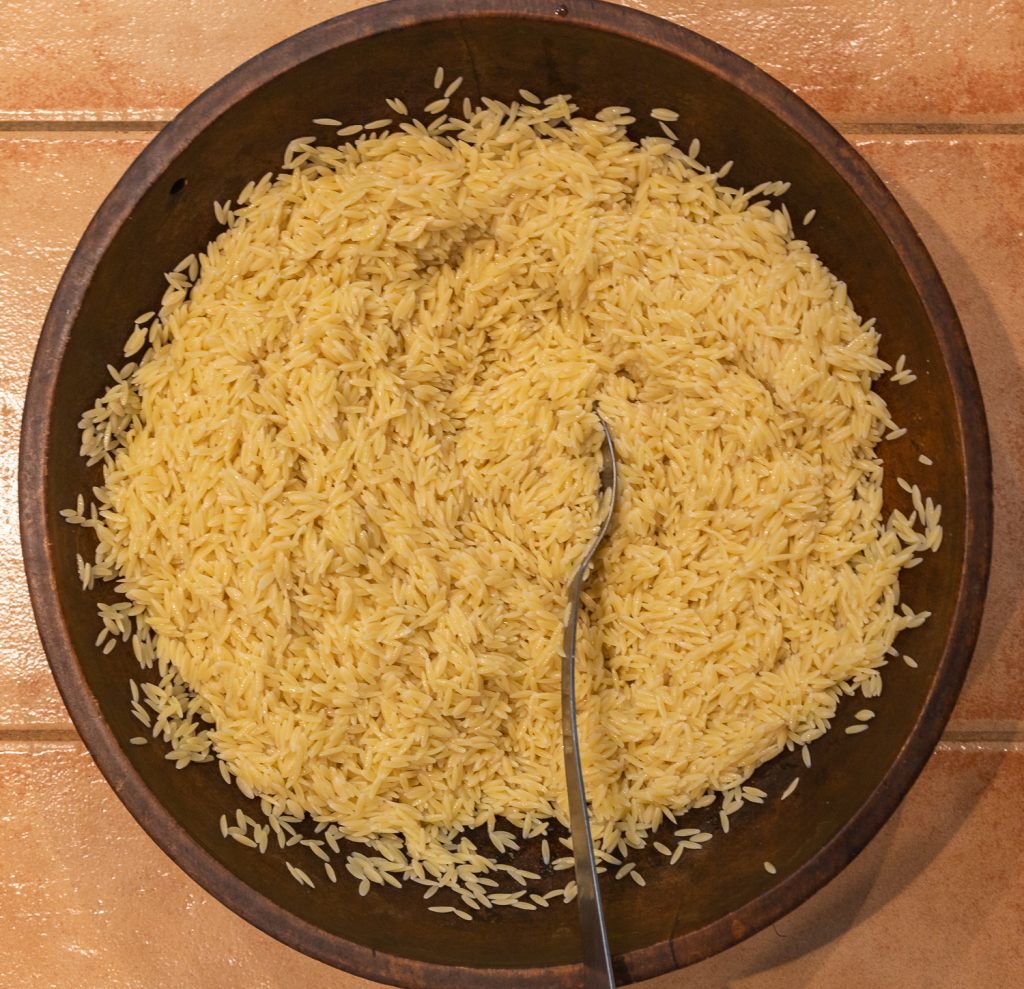
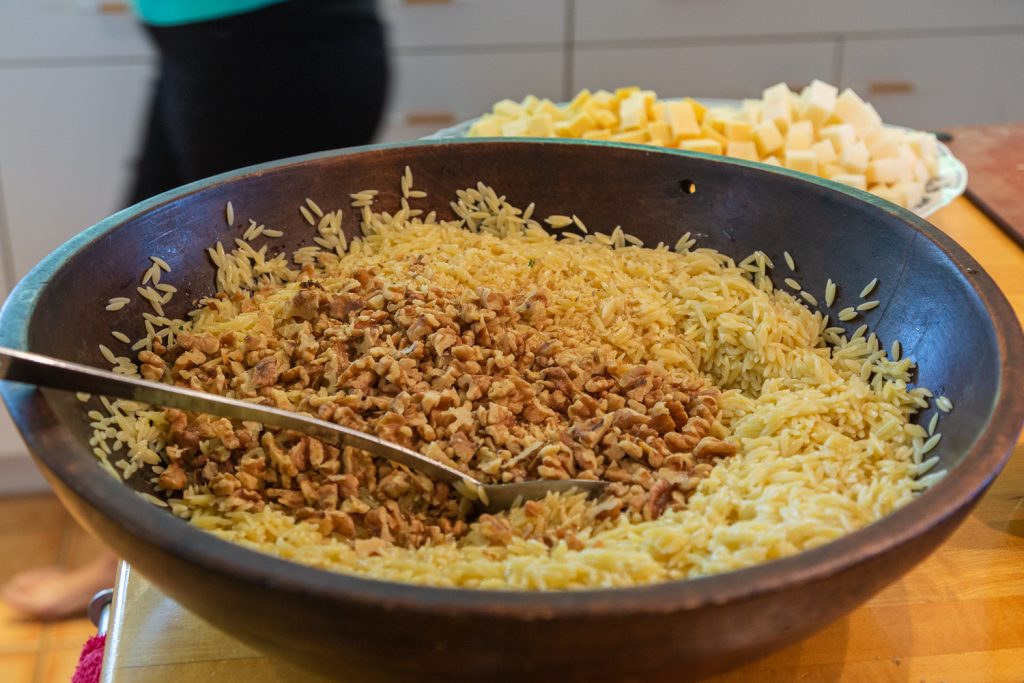
Bring water to boil in a 3 quart saucepan. Put the orzo in the water and boil until the ends are white and the centers are still a little raw. This only takes a few minutes. Drain in a colander and rinse briefly with cold water to stop the pasta from cooking. The pasta can be a little warm.
Orzo pasta cooked al dente
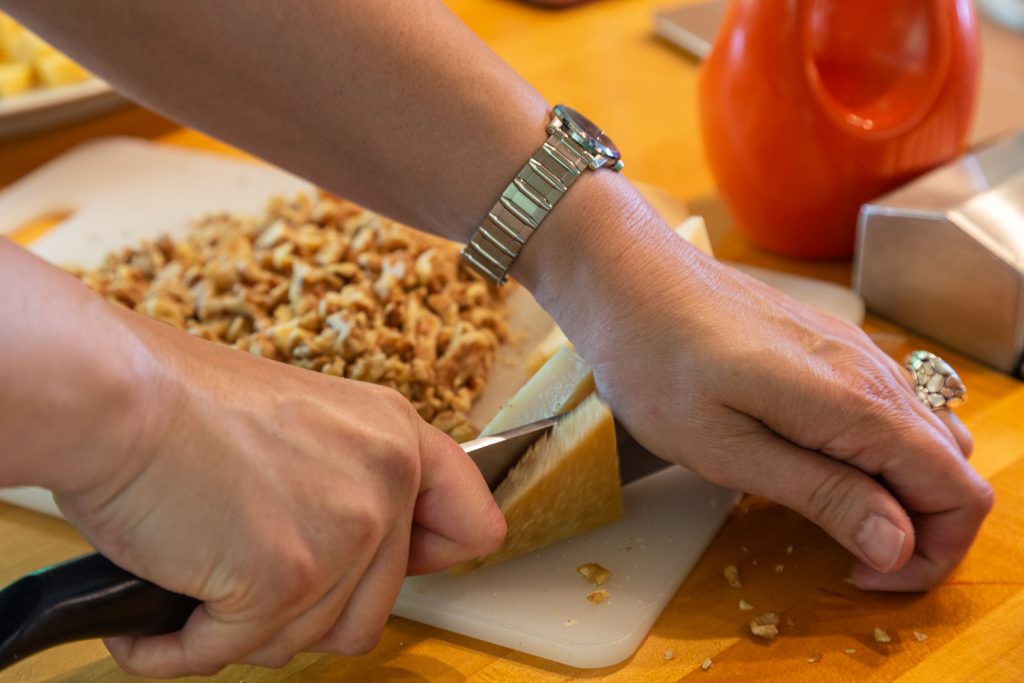
Finely chop the walnuts and finely grate the Parmesan cheese. Add these ingredients to the orzo and mix well.
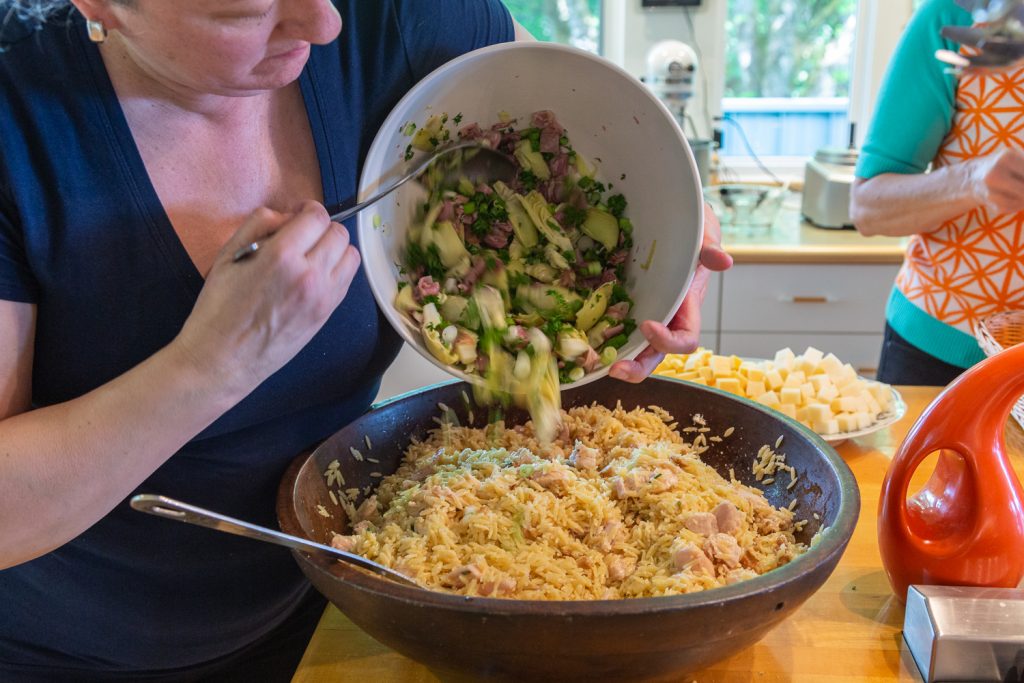
Add the remaining ingredients and mix. Add the vinaigrette salad dressing to taste.
This delightfully light salad pairs well with our Three Feathers whites – 2020 Pinot Gris or 2018 Blanc de Noirs, as well as our lighter single-clone reds – 2016 or 2019 Pinot Noir. Crack open a bottle and Enjoy!