
New World Three Feathers Wines in Old World Paris
photos & text by Elise Prudhomme
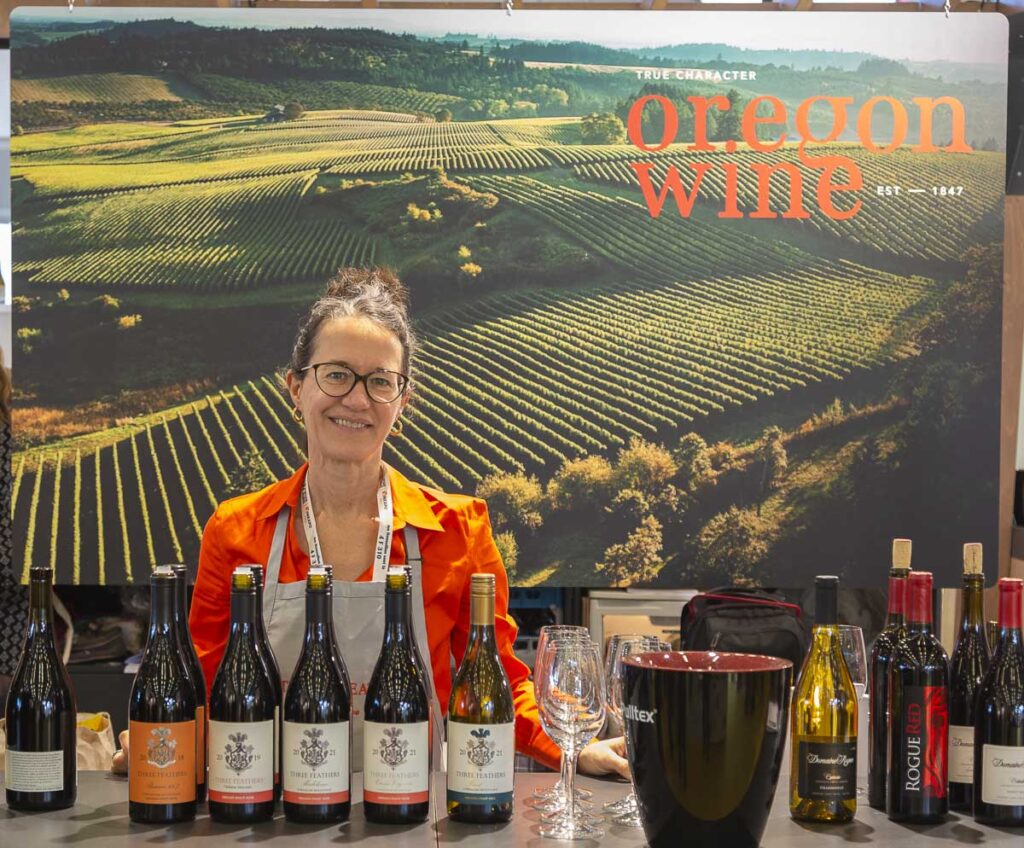
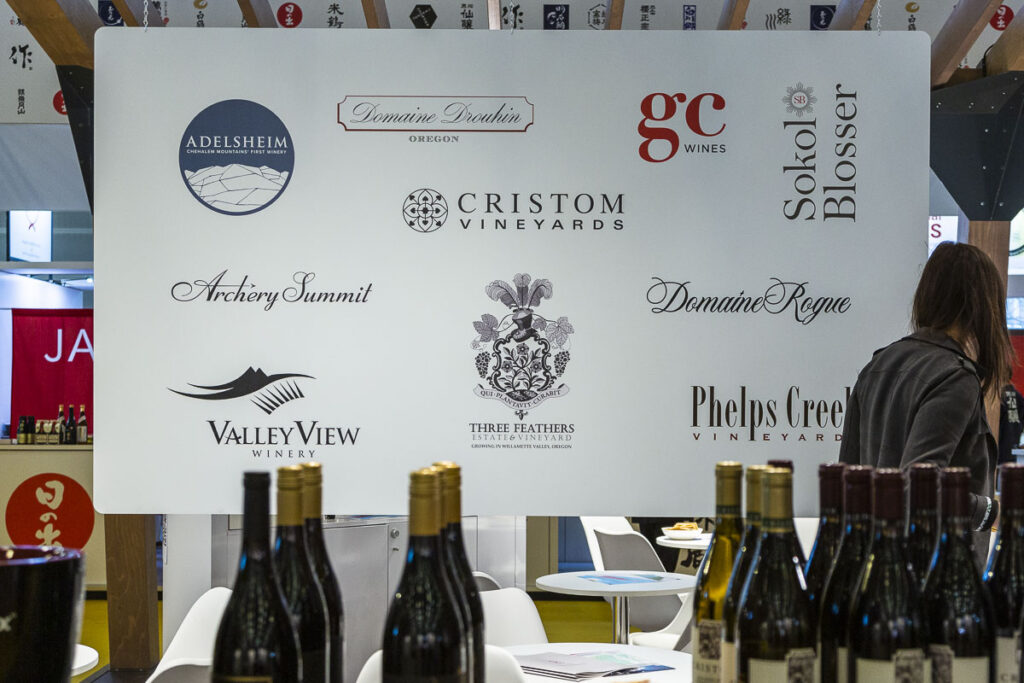
Three Feathers Wines came to Paris, France on February 13 – 15, 2023 during Wine Paris & Vinexpo 2023. François and I feel privileged to have participated in this International Trade Show along with well-established vineyards such as Adelsheim, Cristom, Domaine Drouhin and Grochau Cellars.
Oregon and New York State were invited to share space with the California Wine Institute who retrieved their exhibition stand from Dusseldorf (ProWein) for the occasion. Complete with refrigerators, which happily eliminated the need for ice buckets, we were in close quarters but comfortably so.
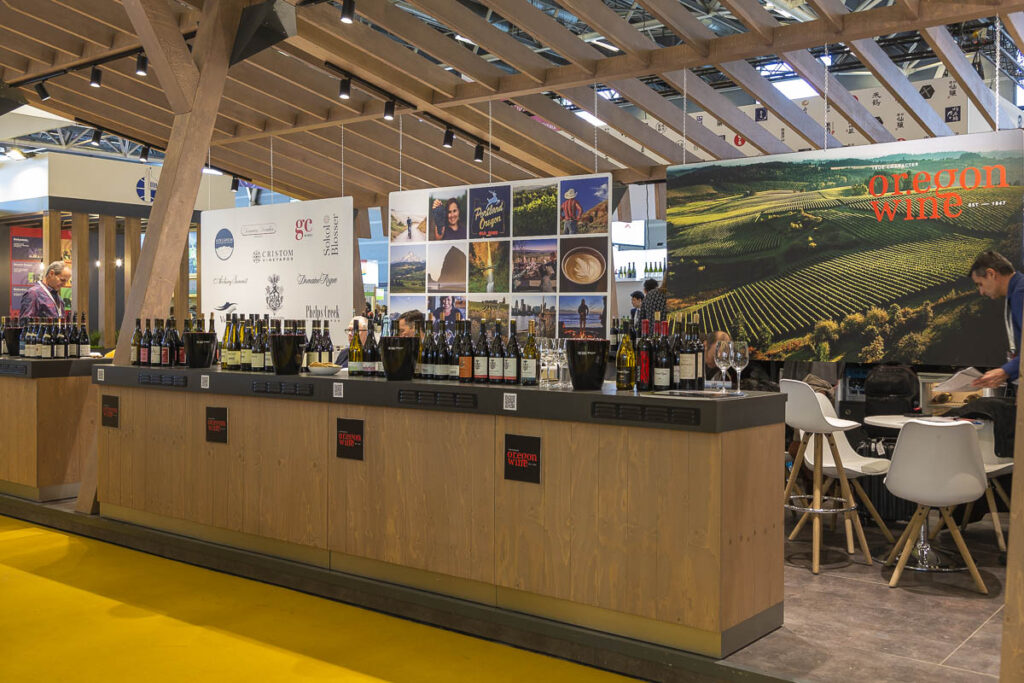
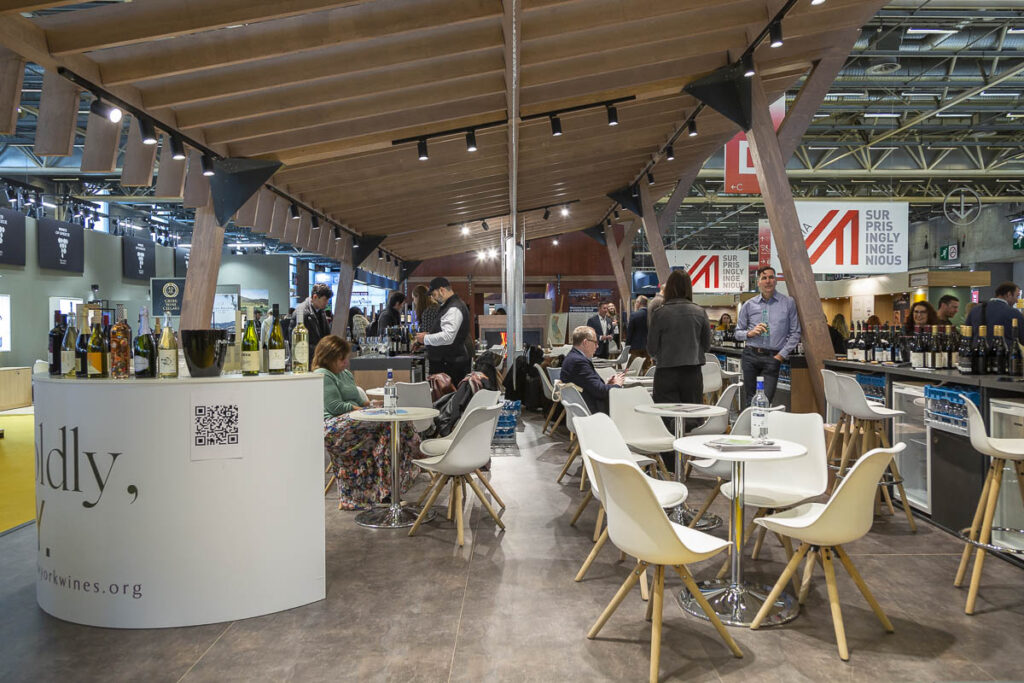
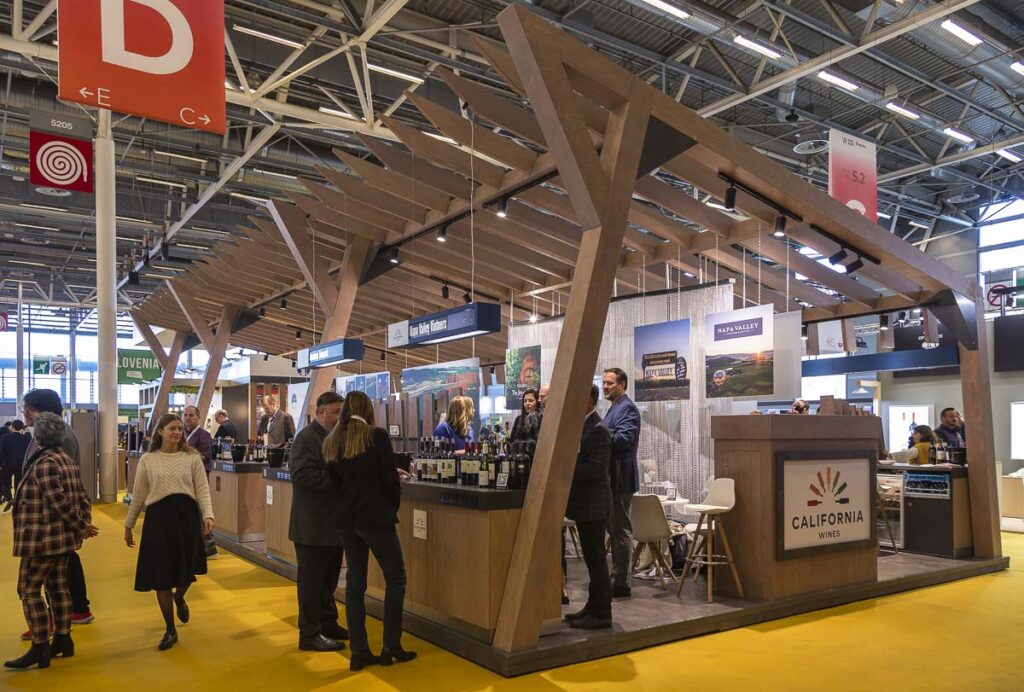
Construction of the exhibition park at Porte de Versailles dates back to 1923 when the traditional “Foire de Paris” (commercial fair) was first held there. Situated just outside of Paris, with seven pavilions to welcome exhibitors, the park underwent a 10 year renovation which will culminate with the Paris Olympic Games in 2024. This Old World exhibition center welcomed New World wines from California, New York and Oregon for the first time this year.
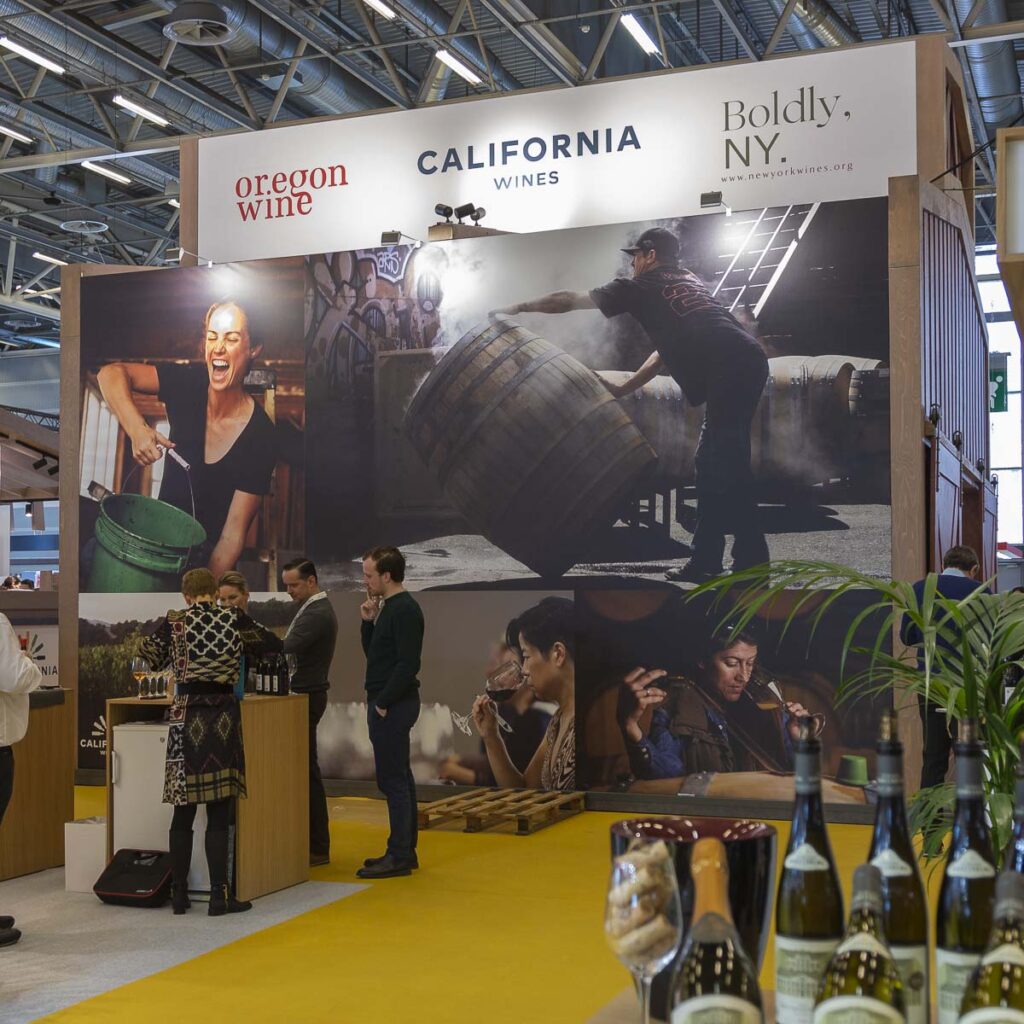
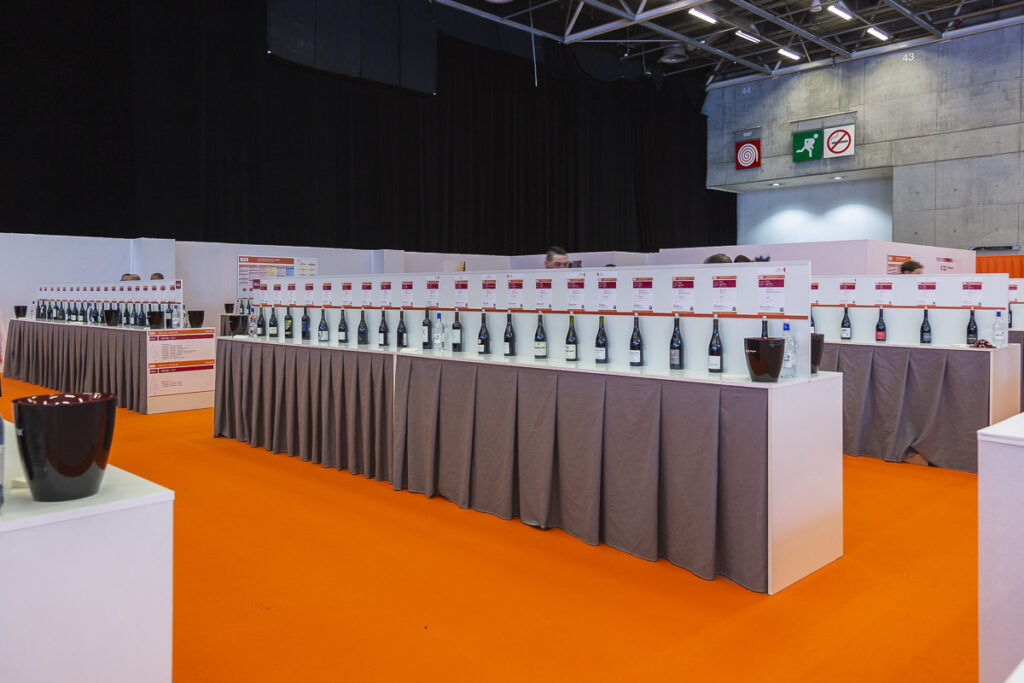
Compared to the other exhibition spaces, Hall 3 – designated as the International Pavilion – felt conducive to wine tasting. Spacious and well-lit, this quickly accessible building opened its arms to several thousand visitors over three full days, including the US Ambassador of France, Denise Campbell Bauer whose charming visit rounded off our previous tasting her residence in Paris in May 2022. (An interesting tidbit is that the US Embassy in Paris is considering building a library of New World wines in their French Commissary!)
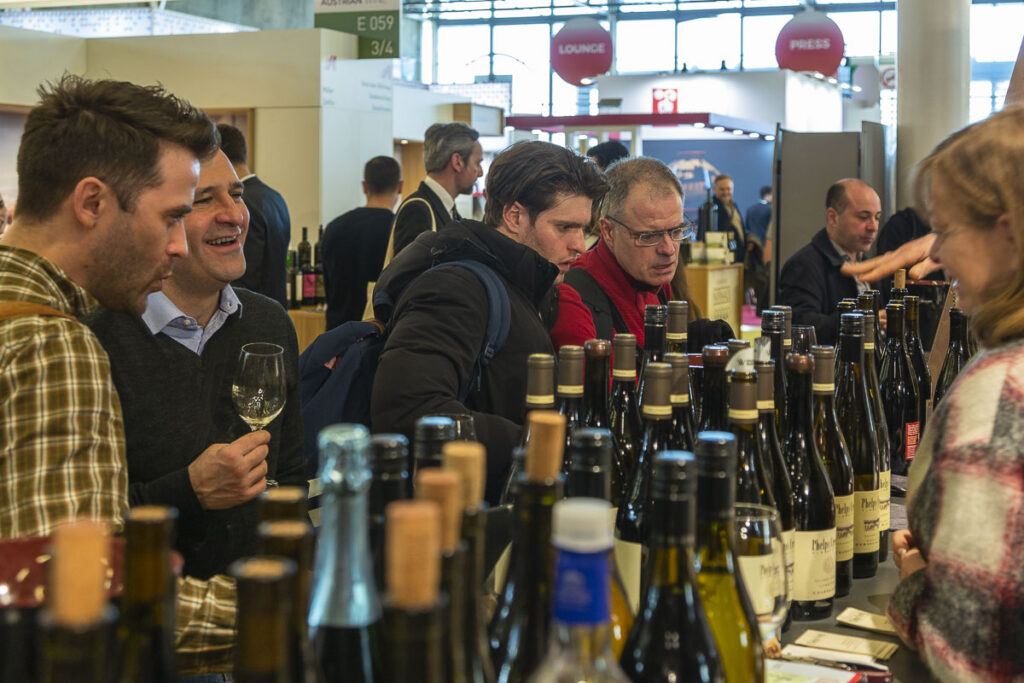
A steady flow of wine tasters from diverse wine-related professions came to taste Three Feathers Wines, including our Austrian and German neighbors who stopped by to exchange notes, curious about our Pinot Madeleine which is a clone they grow regularly.
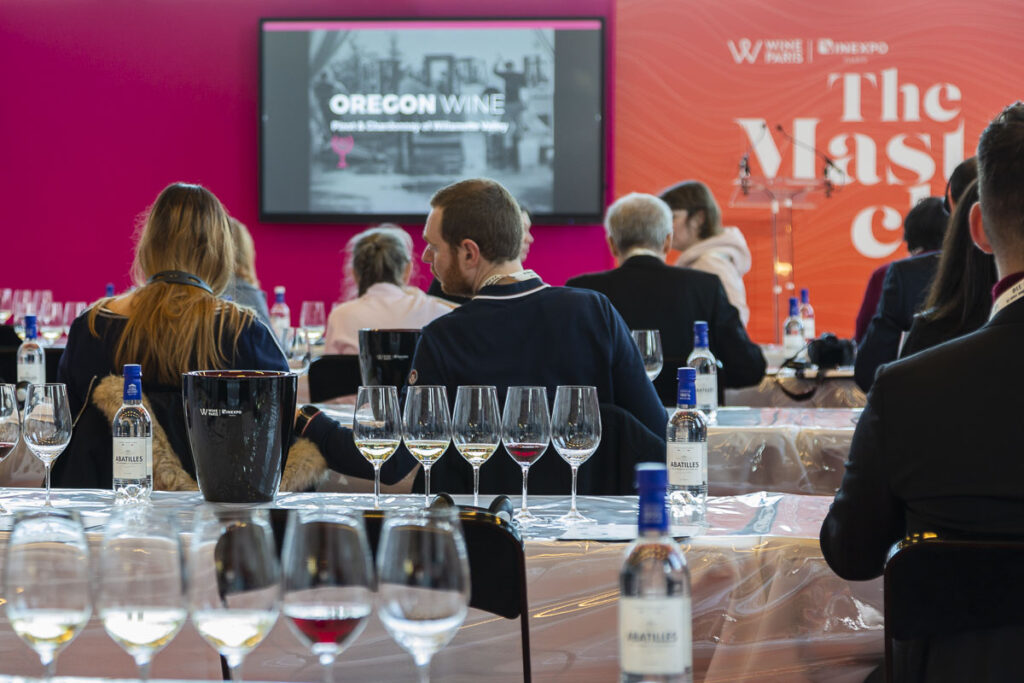
Three Feathers Wines in Masterclass by Elaine Chukan Brown
Continuing education about wine did not end with wine tasting; however, as this international trade show presented a hefty Masterclass program. Speakers from around the world presented their knowledge and wisdom about a large variety of wines, included well-known speaker Elaine Chukan Brown acting on behalf of New World wineries. This Masterclass sold out and was standing room only, however we managed to listen in.
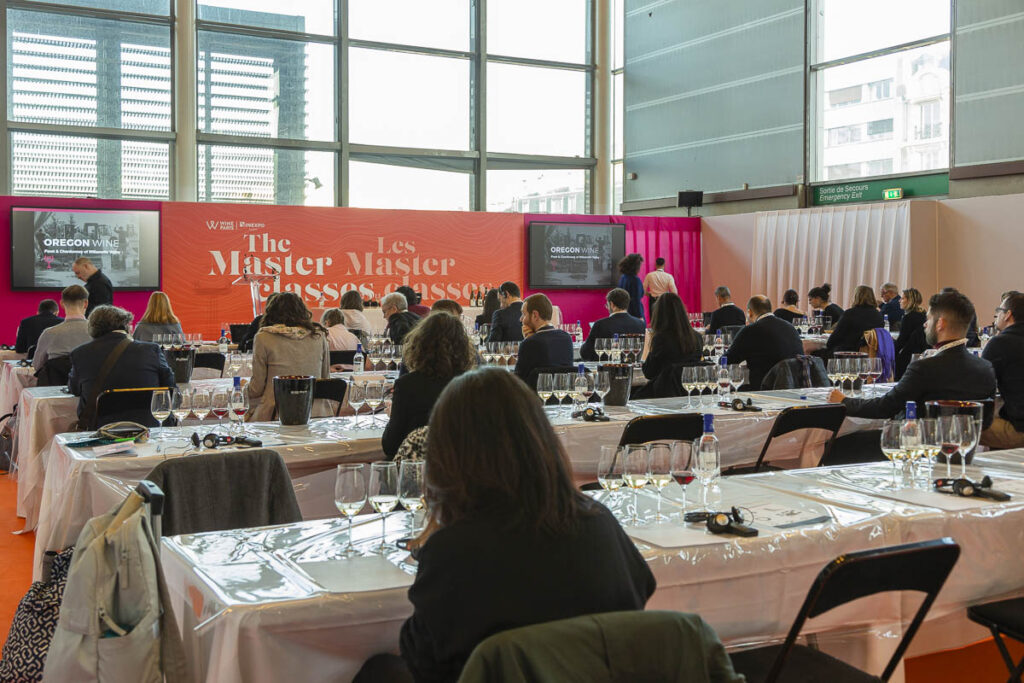
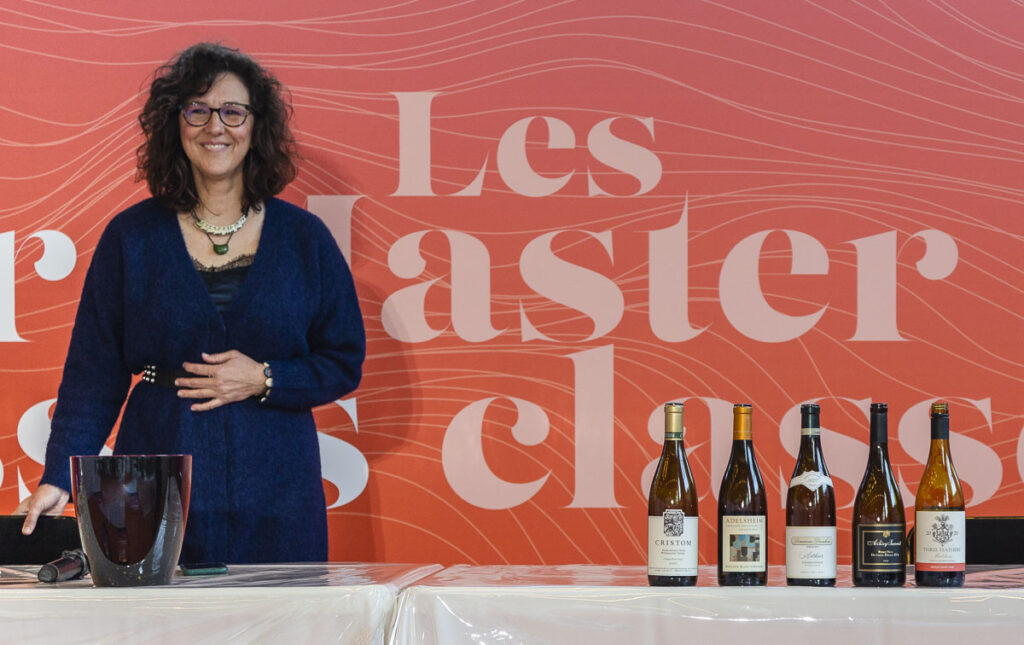
In a 1-hour presentation about Oregon Chardonnay and Willamette Valley Pinots, Elaine gave a fascinating description of the topographical elements surrounding Oregon Pinots, including our Pinot Madeleine. According to Elaine, our high-elevation situation in the volcanic Willamette Valley, on the Eastern side of the Chehalem Mountain / nested Laurelwood District AVA, presents very interesting soil features:
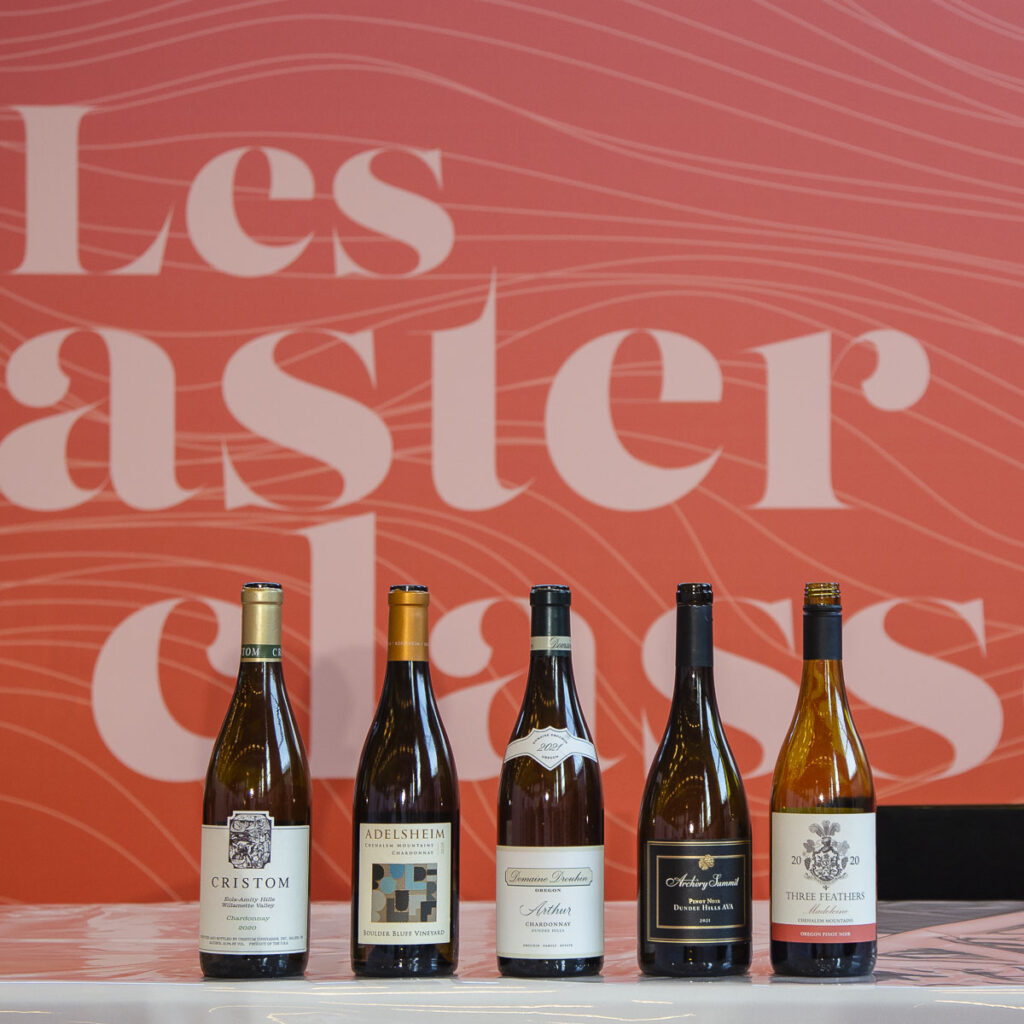
Wine 4 is a Three Feathers Pinot, back here in the belly of the dinosaur, the Chehalem Mountains. And remember I pointed out in beginning that the whole dinosaur belly, the Eastern side of the Chehalem Mountains, is facing the northeast – but remember, too, that means it’s facing the Columbia River.
Columbia River Impact
The Columbia River is an extremely powerful, strong, large river that has carved this winding gorge. Some of you may have heard of the Columbia Gorge, another wine region in this area. But the reason that matters is because a gorge is a long, narrow funnel that wind will blast through. And so that Eastern side of the Chehalem Mountains is very unique in the region because, again it is a steep slope facing that Columbia Gorge that wind is blasting through and depositing sand onto the Chehalem Mountains.
Laurelwood District AVA
So the Eastern side of the Chehalem Mountains, the area that this winery is from, is now called the Laurelwood District AVA. So Laurelwood is nested within Chehalem Mountains and it is planted entirely in windblown loess which is windblown sand. The idea that earth literally blows through the air and forms entirely new regions blows my mind. Sorry, I did not intend that pun – it was totally accidental, but it worked.
Okay, so again, the entire Eastern side of the Chehalem Mountains is windblown loess. So it’s sand that has not been softened by water; very, very coarse rough-sided sand. It can be as much as several meters deep and then underneath is that hard bedrock of basalt again. So if your vines are old enough, they’ll work through this kind of water impoverished topsoil of sand and eventually embed in the water holding capacity of the basalt.
Three Feathers Pinot Madeleine
… The entire feeling of this wine is very different in my mind. Again, if you go back to the first Pinot, you get that iron almost bloody element. This one is more like “bing” – like pure red “bing” – the acid character is very different, the tannic character is very different. Sandy soils, if the wine is not over-extracted it will often create an almost melting tannin. There will be tannin there but it melts through the mouth….
This is a unique clonal selection – that’s the other thing about this particular Pinot, the second of the Pinots, is Pinot Madeleine. Früburgunder, it’s also called Précoce – this is a unique German clonal selection of Pinot. Tends to grow with smaller berries, smaller clusters and it’s been seen as having a very different character than other Pinot selections although it is Pinot. There are not a lot of producers outside of Central Europe that actually make wine fully from this clonal selection, so this is an interesting opportunity to taste that.
Partial Transcript from Masterclass “Chardonnay and Pinot Noir of the Willamette Valley” given by Elaine Chukan Brown
We extend heartfelt thanks to the folks at the Oregon Wine Board – Margaret and Tom – for their careful and attentive organization of this event. In our opinion, Vinexpo Paris was a successful and popular venue; we will participate again!